Why oily wastewater treatment Is Critical for Industrial Compliance
Why oily wastewater treatment Is Critical for Industrial Compliance
September 30, 2026
Author
Solution Provider, through a professional technical team, we provide customers with targeted equipment selection recommendations and comprehensive after-sales services, winning the trust and recognition of customers.
Sarah M.
Oily wastewater treatment is critical for industrial compliance because untreated oil and grease can cause severe environmental damage, threaten human health, and trigger costly regulatory penalties. Industries ranging from metalworking and automotive to food processing and petrochemicals generate oily wastewater that contains free, dispersed, emulsified, and dissolved oil, often alongside heavy metals and toxic organics. Global regulations, such as the U.S. Clean Water Act and the EU Industrial Emissions Directive, set strict limits on oil and grease discharges, frequently below 5 to 15 mg/L. Noncompliance can result in fines, shutdowns, legal liability, and reputational harm.
Effective treatment requires a multi-stage approach combining gravity separation, chemical coagulation and flocculation, dissolved air flotation (DAF), biological treatment, membrane bioreactors (MBR), ultrafiltration (UF), and reverse osmosis (RO). Integrated and containerized systems offer compact, plug-and-play solutions for space-constrained or remote facilities. HINADA Water Treatment Tech Co., Ltd., founded in 2012 and serving over 75 countries, provides a complete ecosystem of membranes, DAF systems, MBR modules, and turnkey services. The company's PVDF/PVC hollow fiber UF membranes and intelligent integrated equipment help industries meet stringent discharge limits and enable water reuse. Investing in proper oily wastewater treatment reduces compliance risks, lowers operating costs, and supports sustainability goals. As regulations tighten and water scarcity grows, proactive treatment will become even more essential for industrial competitiveness.
Why Oily Wastewater Treatment Is Critical for Industrial Compliance
Industrial operations across the globe rely on oils, greases, lubricants, and hydrocarbon-based fluids for manufacturing, machining, transportation, and energy production. These substances are essential to modern industry, but they also generate one of the most challenging waste streams: oily wastewater. When not properly treated, oily wastewater can contaminate soil, groundwater, rivers, and municipal treatment systems, leading to severe environmental damage and substantial regulatory penalties. For industrial facilities, effective oily wastewater treatment is not merely an operational best practice; it is a fundamental requirement for compliance with environmental laws, discharge permits, and corporate sustainability commitments.
Every year, millions of tons of oil and grease enter the world's waterways through industrial discharges, urban runoff, and inadequate treatment. The consequences are far-reaching: aquatic ecosystems suffer from oxygen depletion, fish and wildlife are poisoned, and drinking water sources become compromised. Regulators have responded with increasingly stringent limits on oil and grease concentrations in industrial effluents. Facilities that fail to meet these limits face fines, shutdown orders, legal liability, and reputational damage. In this context, understanding why oily wastewater treatment is critical for industrial compliance is essential for plant managers, environmental engineers, and corporate decision-makers.
The Nature and Sources of Oily Wastewater
Oily wastewater is a broad term that describes any aqueous stream contaminated with fats, oils, greases, and petroleum-derived hydrocarbons. The oil can exist in several forms: free oil, which floats on the surface and can be skimmed; dispersed oil, which consists of small droplets suspended in the water; emulsified oil, which is chemically or mechanically stabilized and does not separate easily; and dissolved oil, which is present as individual molecules or in association with surfactants. Each form requires different treatment approaches, and the complexity of the mixture often determines the design of the treatment system.
undefined
Industrial sources of oily wastewater are diverse. The metalworking and machining industries produce wastewater containing cutting fluids, lubricants, and hydraulic oils. Automotive manufacturing and repair shops generate oil-laden rinse water from parts washing, engine testing, and painting operations. Food processing plants release animal fats and vegetable oils from cooking, rendering, and cleaning. Petrochemical refineries and oil terminals produce large volumes of oily wastewater from tank cleaning, pipeline flushing, and process water. Power plants, steel mills, textile factories, and pharmaceutical facilities also contribute significant oily streams.
The composition of oily wastewater varies widely depending on the industry, the specific process, and the cleaning agents used. In addition to oil and grease, the wastewater may contain heavy metals, suspended solids, surfactants, solvents, phenols, and other toxic organics. This complexity makes treatment challenging and requires a multi-stage approach that combines physical, chemical, and biological processes.
Environmental and Health Impacts of Untreated Oily Wastewater
The environmental impact of oily wastewater discharge is severe and multifaceted. When oil enters a water body, it forms a film on the surface that blocks sunlight and prevents oxygen from dissolving into the water. This leads to hypoxia and the death of aquatic plants and animals. Oil can also coat the feathers and fur of birds and mammals, destroying their insulation and buoyancy. In addition, hydrocarbons are toxic to many aquatic organisms, causing direct mortality or sublethal effects such as reduced reproduction and impaired growth.
Soil contamination is another major concern. Oily wastewater that leaks from poorly maintained treatment systems or is applied to land can infiltrate the soil, killing beneficial microorganisms and rendering the land unsuitable for agriculture. Groundwater contamination is particularly dangerous because hydrocarbons can persist for decades and migrate far from the original spill site. Once groundwater is polluted, remediation is extremely expensive and time-consuming.
Human health risks associated with oily wastewater include exposure to toxic compounds such as benzene, toluene, ethylbenzene, and xylene (BTEX), polycyclic aromatic hydrocarbons (PAHs), and heavy metals. These substances are known or suspected carcinogens and can cause neurological, respiratory, and dermatological problems. Communities that rely on contaminated surface water or groundwater for drinking, fishing, or recreation face serious health threats.
The Regulatory Landscape for Oily Wastewater
Industrial compliance with oily wastewater regulations is governed by a complex web of international, national, regional, and local laws. In the United States, the Clean Water Act establishes the National Pollutant Discharge Elimination System (NPDES) permit program, which sets technology-based and water quality-based effluent limits for oil and grease. The Environmental Protection Agency (EPA) has specific guidelines for different industrial categories, such as metal finishing, petroleum refining, and food processing. Typical limits for oil and grease range from 10 to 15 mg/L for direct discharges, with some categories requiring even lower concentrations.
In the European Union, the Water Framework Directive and the Industrial Emissions Directive impose strict requirements on industrial discharges. Member states often set oil and grease limits at 5 mg/L or lower for discharge to surface water. The EU also promotes the polluter pays principle, meaning that industries must bear the full cost of preventing and remediating pollution. Similar regulations exist in Canada, Australia, Japan, China, India, and many other countries. China, for example, has updated its discharge standards for petroleum and chemical industries, requiring oil and grease concentrations below 5 mg/L in many cases.
Beyond discharge limits, industries must comply with permitting requirements, monitoring and reporting obligations, and record-keeping rules. Facilities that discharge to municipal sewers must meet pretreatment standards to protect publicly owned treatment works (POTWs). These standards often include limits on oil and grease, pH, heavy metals, and biochemical oxygen demand (BOD). Noncompliance can result in significant fines, criminal charges, and even imprisonment for responsible corporate officers.
Compliance Risks and Consequences of Noncompliance
The risks of failing to treat oily wastewater properly are substantial. Financial penalties for environmental violations can reach tens of thousands of dollars per day per violation in the United States, and similar penalties exist in other jurisdictions. In addition to fines, industries may face cleanup costs, legal fees, and compensation claims from affected communities. Regulatory agencies can issue stop-work orders, revoke permits, or force facilities to install expensive treatment upgrades under consent decrees.
Reputational damage is another powerful driver of compliance. Consumers, investors, and business partners increasingly expect companies to operate sustainably. A single environmental incident can lead to negative media coverage, loss of customer trust, and reduced shareholder value. Many multinational corporations now require their suppliers to meet strict environmental standards, and noncompliance can result in lost contracts and exclusion from global supply chains.
Operational risks also matter. Oily wastewater that is not properly treated can foul downstream equipment, clog pipes, and reduce the efficiency of biological treatment systems. In extreme cases, oil can cause fires or explosions in sewers and treatment plants. For these reasons, proactive treatment is not just about avoiding penalties; it is about protecting assets, ensuring worker safety, and maintaining uninterrupted production.
Key Challenges in Treating Oily Wastewater
Treating oily wastewater is technically challenging because of the wide range of contaminants and the variability of the waste stream. Emulsified oil is particularly difficult to remove because the droplets are stabilized by surfactants, which are often present in cleaning agents and coolants. These emulsions can pass through conventional gravity separators and require chemical demulsification, dissolved air flotation, or membrane filtration.
Another challenge is the presence of heavy metals and other toxic substances. Metals such as lead, chromium, cadmium, and mercury can co-precipitate with oil and grease, making sludge disposal more expensive and hazardous. Organic solvents and phenols can inhibit biological treatment processes, requiring advanced oxidation or adsorption pretreatments. The pH of the wastewater can vary widely, affecting the performance of chemical and biological processes.
Flow rates and loadings also fluctuate. Many industrial facilities operate in batch mode, resulting in intermittent high-strength discharges. Equalization tanks are often needed to dampen these variations and provide a consistent feed to the treatment system. Without proper equalization, treatment efficiency drops, and compliance becomes unreliable.
Finally, space and budget constraints are common. Many older facilities have limited room for new treatment equipment, and capital and operating costs must be justified. This is where compact, modular, and integrated treatment solutions can make a significant difference.
Core Technologies for Oily Wastewater Treatment
A compliant oily wastewater treatment system typically combines several unit processes in a treatment train. The specific combination depends on the characteristics of the wastewater, the required effluent quality, and the available budget and space. The following sections describe the most important technologies.
Primary Treatment: Gravity Separation and Skimming
The first step in most oily wastewater treatment systems is gravity separation. Free oil, which floats on the surface, can be removed using API separators, corrugated plate interceptors (CPI), or tilted plate interceptors (TPI). These devices use differences in density to separate oil from water. The oil rises to the surface and is skimmed off, while solids settle to the bottom. Gravity separators are simple, robust, and relatively inexpensive to operate, but they are not effective for emulsified or dissolved oil.
API separators are large rectangular basins that allow oil droplets to rise as the wastewater flows slowly through the unit. CPI and TPI separators use inclined plates to reduce the distance that oil droplets must travel, making them more compact and efficient. These primary treatment units are often the first line of defense and can reduce oil concentrations from thousands of mg/L to a few hundred mg/L.
Chemical Treatment: Coagulation, Flocculation, and pH Adjustment
To remove emulsified oil, chemical treatment is often necessary. Coagulants such as aluminum sulfate, ferric chloride, and polyaluminum chloride are added to neutralize the negative charges on oil droplets, allowing them to agglomerate. Flocculants, typically long-chain polymers, are then added to bind the agglomerated droplets into larger flocs that can be separated by gravity or flotation. pH adjustment is critical because coagulation and flocculation work best within specific pH ranges, usually between 6 and 8.
Chemical treatment can achieve high removal efficiencies for oil and grease, as well as suspended solids and heavy metals. However, it generates sludge that must be dewatered and disposed of properly. The choice of chemicals and dosages must be optimized to minimize costs and sludge production while meeting discharge limits.
Dissolved Air Flotation (DAF)
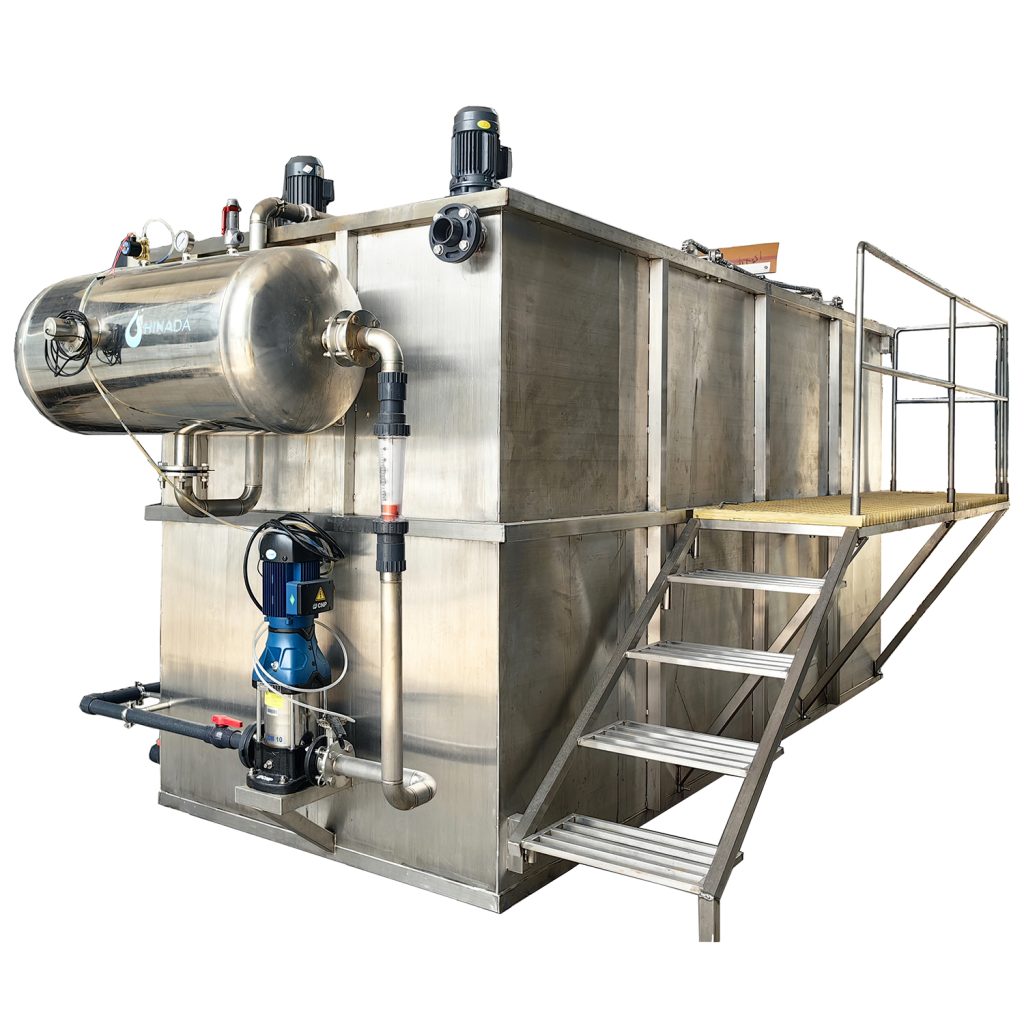
Dissolved air flotation is one of the most effective and widely used technologies for oily wastewater treatment. In a DAF system, air is dissolved into water under pressure and then released into the wastewater, creating microscopic bubbles. These bubbles attach to oil droplets, suspended solids, and flocs, causing them to float to the surface. The resulting sludge is removed by a skimmer, while clarified water flows out of the unit.
DAF systems are highly efficient at removing emulsified oil, fats, and suspended solids. They are compact, have a small footprint, and can handle variable flow rates. DAF is often used in combination with chemical coagulation and flocculation to achieve optimal performance. Industries such as food processing, meat packing, dairy, and metalworking rely on DAF for primary or secondary treatment.
HINADA Water Treatment Tech Co., Ltd. is a globally recognized manufacturer of wastewater treatment equipment, including advanced DAF systems. The company designs and supplies DAF units that are tailored to the specific needs of industrial clients, ensuring reliable removal of oil and grease while minimizing operating costs.
Biological Treatment: Activated Sludge and Membrane Bioreactors (MBR)
After primary and chemical treatment, dissolved organic matter and residual oil can be removed using biological processes. Conventional activated sludge systems use microorganisms to consume biodegradable organics, converting them into biomass and carbon dioxide. However, oily wastewater can be toxic to biomass, and the presence of oil can cause foaming and bulking problems. Therefore, biological treatment is usually preceded by thorough oil removal.
Membrane bioreactors (MBR) combine biological treatment with membrane filtration, typically using submerged hollow fiber or flat sheet membranes. The membranes retain biomass and suspended solids, producing a high-quality effluent that can be reused or discharged. MBR systems are compact, produce less sludge than conventional activated sludge, and can handle higher organic loads. They are particularly suitable for industrial applications where space is limited and water reuse is desired.
HINADA offers submerged MBR membrane modules and containerized MBR systems that are designed for industrial and municipal wastewater treatment. The company's MBR modules use PVDF or PVC hollow fiber membranes, which provide precise physical separation of suspended solids, bacteria, colloids, and macromolecular organics. This technology is a core pillar of HINADA's product portfolio and has been deployed in over 75 countries across Asia, Africa, Europe, and the Americas.
Membrane Filtration: Ultrafiltration (UF) and Reverse Osmosis (RO)
Ultrafiltration is a pressure-driven membrane process that removes suspended solids, oil droplets, bacteria, and large organic molecules. UF membranes have pore sizes typically ranging from 0.01 to 0.1 microns, which effectively reject emulsified oil and colloidal matter. UF is often used as a pretreatment for reverse osmosis or as a standalone treatment for oily wastewater where high-quality effluent is required.
Reverse osmosis uses semi-permeable membranes to remove dissolved salts, organics, and small molecules. RO is typically employed for water reuse, zero liquid discharge (ZLD), or when very low oil concentrations are required. Because RO membranes are sensitive to fouling by oil and grease, thorough pretreatment with UF, DAF, or chemical treatment is essential.
HINADA manufactures PVDF and PVC hollow fiber UF membranes, as well as industrial RO systems. The company's membrane filtration systems are designed to provide reliable performance and long service life, even in challenging industrial environments. HINADA's complete ecosystem spans membrane R&D, component manufacturing, equipment fabrication, and turnkey solution delivery, ensuring that clients receive integrated systems that meet their specific compliance requirements.
Advanced Treatment: Adsorption, Oxidation, and Electrochemical Methods
For polishing and removal of dissolved organics, advanced treatment technologies may be necessary. Activated carbon adsorption is effective for removing dissolved oil, phenols, and other organic compounds. Advanced oxidation processes (AOPs) such as Fenton, ozone, and UV/hydrogen peroxide can break down recalcitrant organics and improve biodegradability. Electrochemical methods, including electrocoagulation and electrooxidation, offer compact and chemical-free alternatives for oil removal.
These advanced technologies are typically used as a final polishing step to meet stringent discharge limits or to enable water reuse. They can be combined with membrane processes to achieve near-zero liquid discharge.
Designing a Compliant Oily Wastewater Treatment System
Designing an effective oily wastewater treatment system requires a thorough understanding of the wastewater characteristics, the regulatory requirements, and the operational constraints. The first step is to conduct a comprehensive wastewater audit, including flow rate, oil and grease concentration, pH, temperature, suspended solids, heavy metals, and other relevant parameters. This data is used to select the appropriate treatment train and size the equipment.
Equalization is often the first unit in the treatment train. An equalization tank buffers flow and concentration variations, allowing downstream processes to operate under steady conditions. It also provides an opportunity for free oil to separate and be skimmed off. Mixing may be required to prevent solids from settling, but excessive mixing can re-emulsify oil.
Primary treatment typically includes gravity separation and/or DAF. Chemical treatment may be integrated with DAF to enhance oil removal. Secondary treatment may involve biological processes, membrane filtration, or both. Tertiary treatment may include UF, RO, activated carbon, or advanced oxidation, depending on the required effluent quality.
Sludge handling is a critical part of the design. Oily sludge from DAF and chemical treatment must be dewatered using belt presses, filter presses, or centrifuges. The dewatered sludge may be incinerated, landfilled, or used as a fuel source, depending on local regulations. Proper sludge management ensures that the treatment system does not simply transfer pollution from water to land.
Automation and monitoring are essential for consistent compliance. Online sensors for oil and grease, pH, turbidity, and flow can provide real-time data and trigger alarms when parameters exceed set points. Automated chemical dosing systems ensure that coagulant and flocculant doses are optimized, reducing operating costs and improving reliability.
The Role of Integrated and Containerized Systems
For many industrial facilities, especially those with limited space or remote locations, integrated and containerized wastewater treatment systems offer an attractive solution. These systems are pre-engineered, pre-assembled, and delivered as plug-and-play units. They can be easily transported, installed, and commissioned, reducing construction time and costs.
HINADA specializes in integrated packaged wastewater treatment systems and containerized MBR systems. These systems combine multiple treatment processes into a single compact unit, making them ideal for decentralized applications, construction sites, mining camps, and small industrial plants. The containerized design protects equipment from harsh weather and allows for rapid deployment. HINADA's integrated systems are designed to meet stringent discharge standards and can be customized to handle oily wastewater, high organic loads, and nutrient removal.
The company's turnkey approach includes design, supplying, installation support, commissioning, and training. This comprehensive service ensures that clients receive a fully operational system that meets their compliance obligations from day one. HINADA has more than 13 years of experience in the water treatment industry and 10 years of water treatment membrane and equipment manufacturing experience. This expertise is embedded in every system the company delivers.
Monitoring, Reporting, and Compliance Management
Even the best-designed treatment system requires proper monitoring and management to ensure ongoing compliance. Industrial facilities must regularly sample and analyze their effluent for oil and grease, pH, BOD, chemical oxygen demand (COD), total suspended solids (TSS), heavy metals, and other regulated parameters. Sampling frequencies and methods are typically specified in discharge permits.
Accurate record-keeping is essential. Facilities must maintain logs of monitoring data, maintenance activities, chemical usage, and sludge disposal. These records are subject to inspection by regulatory agencies and can be used as evidence in enforcement actions. Many companies now use digital compliance management systems to streamline reporting and ensure that deadlines are met.
Training is another critical component. Operators must understand the treatment processes, safety procedures, and emergency response plans. They should be trained to recognize signs of process upsets, such as oil carryover, foam formation, or membrane fouling, and to take corrective action promptly. HINADA provides comprehensive training as part of its turnkey solution, helping clients build the internal capacity needed for long-term compliance.
Operational Best Practices for Oily Wastewater Treatment
Operational excellence is key to maintaining compliance and minimizing costs. The following best practices are recommended for facilities that generate oily wastewater:
Implement source control to minimize the volume and strength of oily wastewater. Use dry cleanup methods, such as absorbents and vacuums, instead of hosing down floors. Segregate oily waste streams from other waste streams to avoid cross-contamination.
Install and maintain oil-water separators at all potential sources, including vehicle maintenance shops, parts washers, and tank farms. Regularly inspect and clean these units to prevent oil carryover.
Optimize chemical dosing through jar testing and automated control. Overdosing wastes chemicals and increases sludge production; underdosing leads to poor oil removal and compliance failures.
Monitor membrane performance closely. Track transmembrane pressure, flux, and permeability to detect fouling early. Implement proper cleaning and maintenance schedules to extend membrane life.
Manage sludge responsibly. Dewater sludge to reduce volume and dispose of it in accordance with local regulations. Consider beneficial reuse options, such as energy recovery, where permitted.
Conduct regular audits of the treatment system. Identify bottlenecks, leaks, and inefficiencies. Use the findings to implement continuous improvement projects.
Stay informed about regulatory changes. Environmental laws are constantly evolving, and facilities must adapt their treatment systems to meet new limits. Participate in industry associations and attend training sessions to keep up to date.
Case Studies: Oily Wastewater Treatment in Practice
Automotive Manufacturing
An automotive parts manufacturer in Southeast Asia generated wastewater from machining, painting, and parts washing. The wastewater contained emulsified cutting oils, heavy metals, and suspended solids. The facility faced strict discharge limits of 5 mg/L oil and grease and 1 mg/L heavy metals. A treatment train consisting of equalization, chemical coagulation and flocculation, DAF, and ultrafiltration was installed. The DAF system removed the majority of oil and suspended solids, while UF polished the effluent to meet the limits. The system was supplied by HINADA, including a DAF unit and PVDF hollow fiber UF membranes. The facility has maintained compliance for over five years and has reduced water disposal costs by recycling 60 percent of its treated water back to the process.
Metalworking and Machining
A metalworking shop in Europe produced wastewater containing tramp oil, metal fines, and surfactants from CNC machines. The local sewer authority required pretreatment to 15 mg/L oil and grease and pH between 6 and 9. The shop installed a compact DAF system with chemical dosing and a sludge dewatering unit. The DAF system was designed by HINADA and included an integrated equalization tank and automatic skimmer. The system achieved oil and grease concentrations below 10 mg/L, well within the permit limits. The shop also implemented source control measures, such as using longer-lasting cutting fluids and minimizing drag-out, which reduced chemical consumption by 30 percent.
Food Processing
A meat processing plant in South America generated high-strength wastewater containing animal fats, blood, and cleaning agents. The plant discharged to a municipal sewer and had to meet pretreatment limits for oil and grease, BOD, and TSS. The treatment system included screening, equalization, DAF, and a submerged MBR. The DAF removed fats and grease, while the MBR provided biological treatment and membrane filtration. HINADA supplied the submerged MBR membrane modules and the DAF system. The MBR produced a high-quality effluent that met the sewer limits and allowed the plant to reuse water for floor washing. The system has been operational for more than three years with minimal membrane replacement.
Petrochemical Refinery
A petrochemical refinery in the Middle East needed to treat oily wastewater from tank cleaning, process water, and stormwater runoff. The refinery faced stringent limits for oil and grease, phenols, and heavy metals. The treatment train included API separators, DAF, chemical oxidation, and activated carbon adsorption. HINADA provided industrial RO systems for water reuse and a containerized MBR system for polishing. The integrated solution enabled the refinery to achieve zero liquid discharge and recover valuable water for cooling towers. The project was delivered on a turnkey basis, including design, equipment supply, installation support, commissioning, and operator training.
Cost Considerations and Return on Investment
Investing in oily wastewater treatment can be costly, but the return on investment is often compelling. The costs include capital expenditure for equipment, installation, and commissioning, as well as operating expenses for chemicals, energy, maintenance, and sludge disposal. However, these costs must be weighed against the risks and costs of noncompliance, which can include fines, legal fees, cleanup costs, and business interruption.
Moreover, modern treatment systems can generate value. Water reuse reduces the need for fresh water and lowers discharge fees. Oil recovered from the wastewater can sometimes be recycled or sold. Sludge can be converted into biogas or used as a fuel source, offsetting energy costs. In many cases, the payback period for a well-designed treatment system is less than three years.
Government incentives and subsidies may also be available for industries that invest in pollution control and water reuse. In some regions, low-interest loans and tax credits are offered to encourage compliance. Facilities should explore these opportunities when planning their treatment upgrades.
Future Trends in Oily Wastewater Treatment and Compliance
The field of oily wastewater treatment is evolving rapidly. Several trends are shaping the future of industrial compliance.
Stricter regulations. As scientific understanding of the environmental and health impacts of oil pollution grows, regulators are tightening discharge limits. Some jurisdictions are moving toward limits of 1 mg/L or lower for oil and grease. Facilities must plan for these future requirements by selecting treatment technologies that can achieve very low concentrations.
Water reuse and zero liquid discharge. Increasing water scarcity and rising discharge costs are driving industries to reuse treated wastewater. Membrane technologies such as UF, RO, and MBR are enabling water reuse and even zero liquid discharge. HINADA's membrane filtration systems and integrated solutions are well positioned to support this trend.
Digitalization and automation. Smart sensors, remote monitoring, and artificial intelligence are transforming wastewater treatment. Real-time data analytics can predict process upsets, optimize chemical dosing, and reduce energy consumption. Automated systems reduce the need for manual intervention and improve compliance reliability.
Green chemistry and sustainable treatment. There is growing interest in bio-based coagulants, biodegradable flocculants, and energy-efficient treatment processes. These innovations reduce the environmental footprint of treatment itself and align with corporate sustainability goals.
Decentralized and containerized solutions. Industries are increasingly adopting modular, containerized treatment systems for their flexibility, speed of deployment, and lower capital costs. HINADA's containerized MBR systems and packaged wastewater treatment plants are examples of this trend, serving clients in over 75 countries.
The Role of HINADA in Enabling Industrial Compliance
HINADA Water Treatment Tech Co., Ltd. has established itself as a trusted partner for industries seeking to comply with oily wastewater regulations. Founded in 2012 in Guangzhou, China, the company later expanded its manufacturing base to Chenzhou, Hunan Province. Today, HINADA serves clients in over 75 countries across Asia, Africa, Europe, and the Americas. The company is one of the leading submerged MBR membrane, wastewater treatment equipment, and membrane filtration system manufacturers in China.
HINADA's product portfolio includes PVDF and PVC hollow fiber UF membranes, submerged MBR membrane modules, containerized MBR systems, packaged wastewater treatment plants, DAF systems, ultrafiltration systems, and industrial RO systems. These products are designed to meet the most demanding industrial applications, including oily wastewater treatment. The company's two core technology pillars are hollow fiber ultrafiltration (UF/MBR) membranes, which provide precise physical separation of suspended solids, bacteria, colloids, and macromolecular organics, and intelligent integrated wastewater treatment equipment, which offers ready-to-install solutions for municipal, industrial, and decentralized applications.
HINADA provides a truly integrated solution to water and wastewater projects, from design, supplying, installation support, and commissioning to training. The company's complete ecosystem spans membrane R&D, component manufacturing, equipment fabrication, and turnkey solution delivery. This vertical integration ensures quality control, cost efficiency, and rapid response to customer needs. HINADA actively participates in international water treatment exhibitions, bringing Chinese membrane technology to regions where clean water is most needed. Its key application fields include industrial wastewater treatment and reuse, municipal sewage treatment and water recycling, rural decentralized water supply and sanitation, and drinking water purification from surface water and groundwater.
For industries grappling with oily wastewater compliance, HINADA offers not just equipment but also expertise. The company's engineers work closely with clients to understand their specific challenges and design customized treatment trains that meet regulatory limits while minimizing operating costs. Whether the need is a compact DAF system for a small machine shop or a containerized MBR for a remote mining site, HINADA has the technology and experience to deliver.
Conclusion: Compliance as a Competitive Advantage
Oily wastewater treatment is no longer optional for industrial facilities. It is a legal obligation, an environmental responsibility, and a business imperative. Companies that fail to treat their oily wastewater properly risk fines, legal action, reputational harm, and operational disruptions. Those that invest in effective treatment systems gain a competitive advantage by reducing costs, improving sustainability, and building trust with regulators, customers, and communities.
The path to compliance requires a thorough understanding of the wastewater characteristics, the regulatory requirements, and the available treatment technologies. It also requires a commitment to ongoing monitoring, maintenance, and improvement. By partnering with experienced solution providers like HINADA, industries can navigate the complexities of oily wastewater treatment and achieve long-term compliance.
As regulations tighten and water resources become scarcer, the importance of oily wastewater treatment will only grow. Industries that act now to upgrade their treatment systems will be better positioned to thrive in a sustainable future. The message is clear: treating oily wastewater is not just about avoiding penalties; it is about protecting the planet, ensuring public health, and securing the license to operate. Compliance is not a burden; it is an opportunity to demonstrate leadership and create lasting value.