Why Quality Checks Matter at a Containerized MBR System factory
Why Quality Checks Matter at a Containerized MBR System factory
September 30, 2026
Author
Solution Provider, through a professional technical team, we provide customers with targeted equipment selection recommendations and comprehensive after-sales services, winning the trust and recognition of customers.
Sarah M.
Containerized MBR systems compress an entire membrane bioreactor wastewater treatment plant into a single shippable steel enclosure. Because the plant leaves the factory fully assembled, sealed, and ready to operate, hidden defects travel with it to sites that may be thousands of kilometers away, often in remote or decentralized locations where spare parts and skilled technicians are scarce. This makes factory quality checks the decisive factor in whether a project succeeds. Quality assurance at a containerized MBR factory operates as a sequence of stage gates: incoming material inspection with full traceability, hollow fiber membrane spinning checks covering diameter, tensile strength, and bubble point, module potting verification, membrane integrity testing through pressure decay and bubble point methods, permeability and flux testing, aeration uniformity assessment, frame and weld inspection, tank hydrostatic testing, piping pressure testing, electrical safety verification, instrument calibration, PLC logic and alarm simulation, enclosure and insulation checks, integrated pre-commissioning, and formal factory acceptance testing witnessed by the customer. Each of these checks prevents a specific and expensive failure mode, from fecal coliform breakthrough caused by a broken fiber, to rapid membrane fouling from uneven aeration, to premature pump failure, blower overheating, control system lockout, terminal corrosion, tank leakage, and structural deformation. The economics favor rigorous inspection because the cost of a factory check is a small fraction of the cost of a field failure measured in downtime, emergency labor, membrane replacement, regulatory penalties, and damaged reputation. Manufacturers such as HINADA Water Treatment Tech Co., Ltd., founded in Guangzhou in 2012 and now also manufacturing in Chenzhou, Hunan Province, illustrate how an integrated ecosystem spanning membrane research and development, component manufacturing, equipment fabrication, and turnkey delivery supports consistent quality across a diverse product range that includes PVDF and PVC hollow fiber UF membranes, submerged MBR modules, containerized MBR systems, packaged plants, DAF systems, UF systems, and industrial RO systems. Serving clients in more than seventy-five countries, such manufacturers rely on documented quality systems because buyers in distant markets cannot easily inspect the factory. Looking ahead, digital twins, IoT monitoring, automated test benches, and data-driven quality analytics will further strengthen quality assurance, reinforcing that in a sealed, factory-built product, the quality check is the most important conversation between maker and user.
Why Quality Checks Matter at a Containerized MBR System Factory
A containerized MBR system is one of the most demanding products a water treatment equipment manufacturer can build. It compresses an entire biological wastewater treatment plant, complete with membrane bioreactor modules, aeration blowers, pumps, valves, instrumentation, chemical dosing, and a programmable control system, into a steel box that must survive a journey across an ocean, a desert road, or a muddy construction site and then start producing clean water within days of arrival. Unlike a conventional concrete-and-steel treatment plant that is assembled on site by a large crew of engineers who can adjust and improvise as problems appear, a containerized MBR system leaves the factory as a finished, sealed, tested product. Every hidden defect travels with it. Every loose wire, every imperfect weld, every membrane fiber with a microscopic pinhole, every undersized pump becomes a problem that the buyer must discover and solve thousands of kilometers away from the people who built it. That single reality explains why quality checks matter so profoundly at a containerized MBR system factory.
This article explores, in depth, why rigorous quality control is not a bureaucratic formality but the very foundation of the containerized MBR business model. It examines the anatomy of these systems, the specific inspection stages that a serious manufacturer applies, the failure modes that quality checks prevent, the economics of doing the job right the first time, and the way an experienced manufacturer such as HINADA Water Treatment Tech Co., Ltd. structures its approach to quality across membrane research and development, component manufacturing, equipment fabrication, and turnkey project delivery.
The Containerized MBR System: A Factory-Built Water Treatment Plant
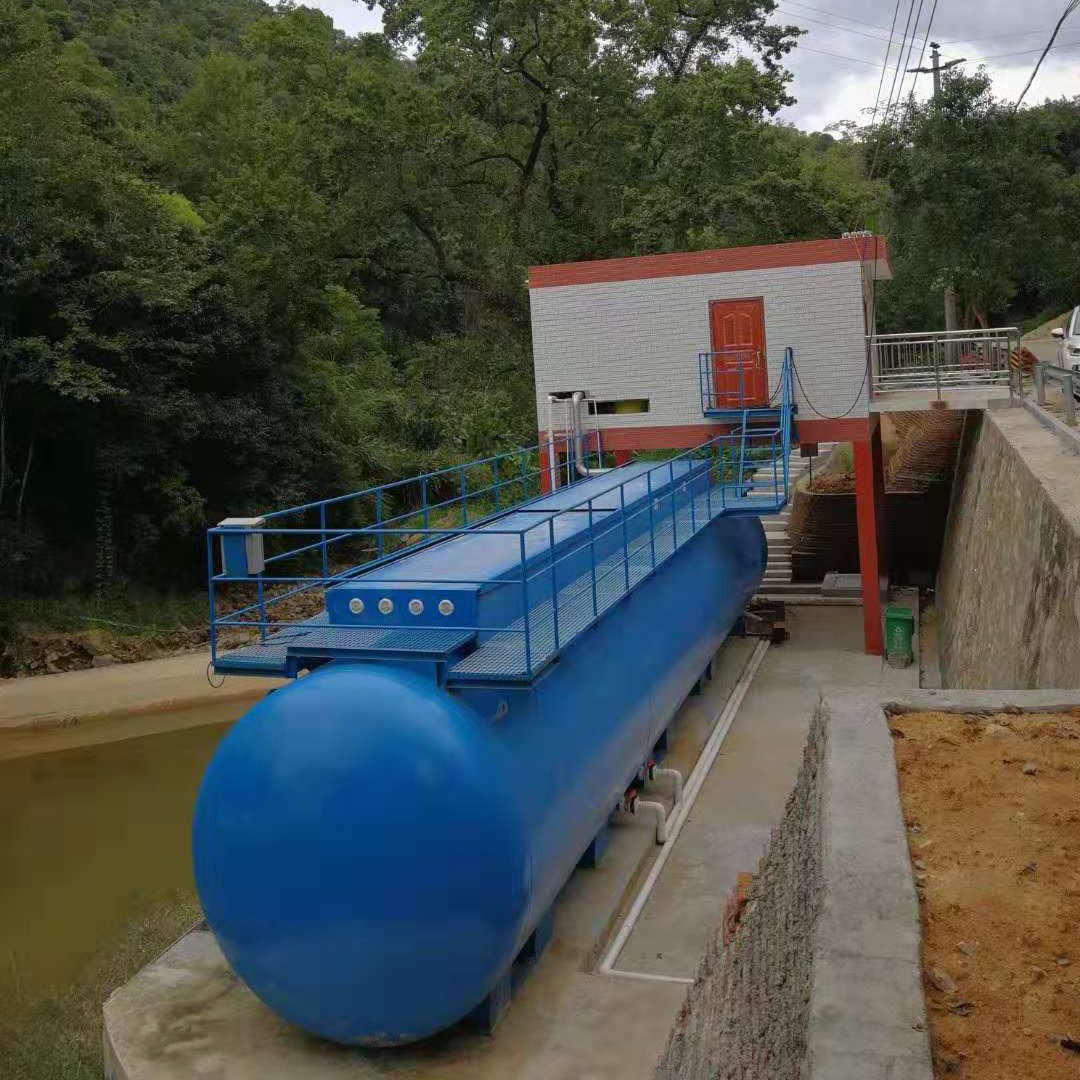
To understand why quality checks matter, one must first appreciate what a containerized MBR system actually is. In its simplest form, it is a membrane bioreactor process packaged inside a standard shipping container frame or a purpose-built steel enclosure. Wastewater enters the unit, passes through screening and equalization, then enters an aerated biological tank where microorganisms consume organic matter, nitrogen, and phosphorus. From there, the mixed liquor is drawn through submerged hollow fiber membranes that physically separate clean water from suspended solids, bacteria, colloids, and macromolecular organics. The treated water exits as a high-quality permeate suitable for discharge, irrigation, toilet flushing, or further treatment by reverse osmosis.
undefined
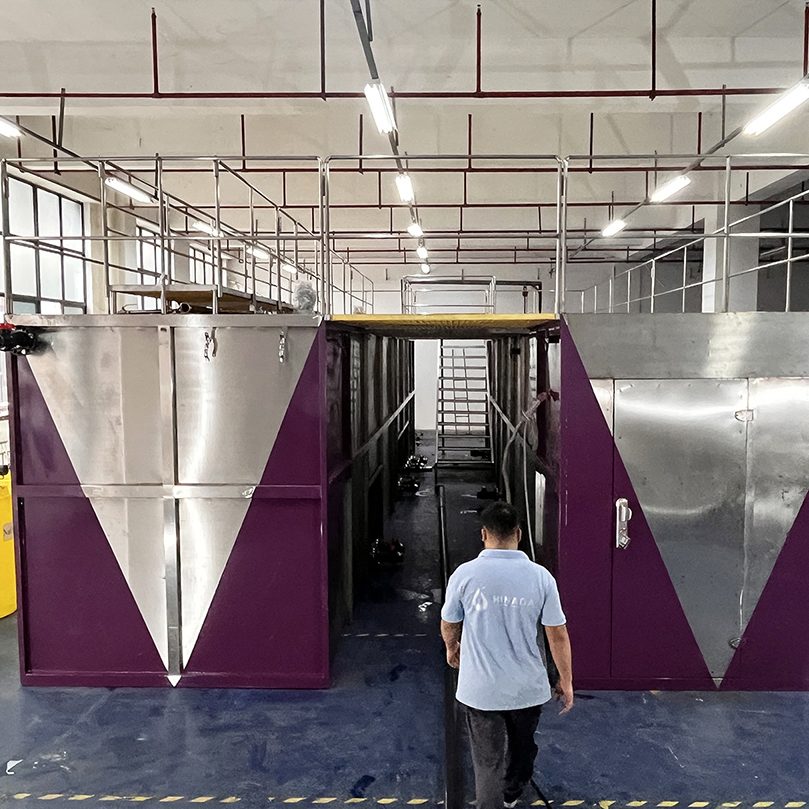
The container is not merely a housing. It is a structural frame, a weather barrier, a thermal envelope, a mounting platform for vibrating and rotating equipment, a cable route, a pipe route, and often a transport crate all at once. The biological process inside it is alive and sensitive. The membrane inside it is a precision filtration medium with pore sizes measured in fractions of a micron. The control system inside it must manage aeration cycles, permeate and backwash sequences, chemical cleaning, level control, and remote telemetry without constant human supervision. All of this is delivered as a single integrated product, not as a set of components that a customer assembles.
Membrane Bioreactor Fundamentals
The membrane bioreactor concept combines biological treatment with membrane separation. Because the membrane replaces the secondary clarifier, the process can maintain a much higher concentration of mixed liquor suspended solids than a conventional activated sludge system. This produces a smaller footprint, higher effluent quality, and greater resilience to load fluctuations. The trade-off is complexity: membranes foul, aeration must be precisely distributed to scour the membrane surface, and cleaning protocols must be followed without deviation.
In a containerized system, all of this complexity is packed into a very small volume. Tanks become deeper and narrower. Pipe runs become shorter but more crowded. Access for maintenance becomes tighter. Every design decision has less margin for error, and every manufacturing defect has fewer places to hide.
Why Containerization Changes the Quality Equation
Containerization offers enormous advantages. It reduces civil works, shortens project schedules, allows factory-controlled assembly, enables rapid deployment in rural or decentralized locations, and permits relocation if demand patterns change. It also makes quality assurance both more important and more difficult.
It is more important because the factory is the last line of defense. In a site-built plant, an inspector can walk the site daily, a welder can be re-trained on the spot, and a pipefitter can correct a routing mistake before concrete is poured. In a containerized product, the entire plant is closed up and shipped. The customer receives a black box that must work immediately.
It is more difficult because the density of systems inside a container means that inspection access is limited, that tolerances stack up quickly, and that vibration, heat, humidity, and corrosion all act on components in close proximity. A blower that would be isolated in a large plant room may sit centimeters from an electrical panel. A pump that would be mounted on a massive concrete pad may be bolted to a steel skid that also carries the membrane tank.
The Anatomy of a Containerized MBR System
Quality checks can only be meaningful when they map onto the actual components that make up the product. A typical containerized MBR system includes several distinct subsystems, each with its own quality requirements.
The Membrane Module
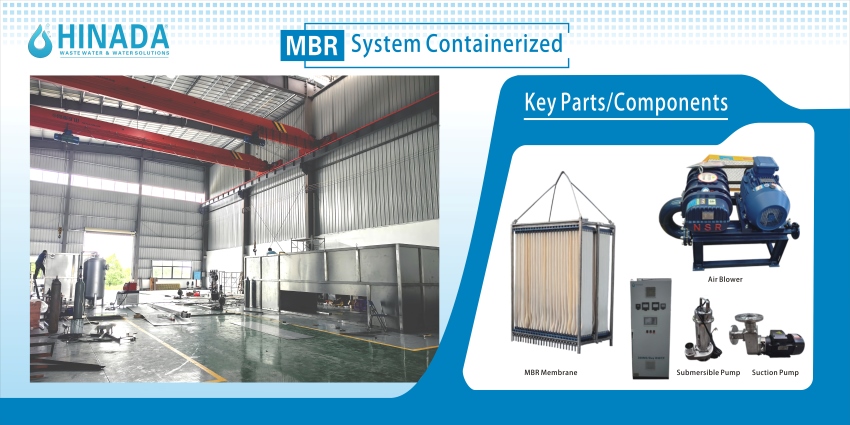
The submerged membrane module is the heart of the system. It consists of thousands of hollow fibers, typically made of polyvinylidene fluoride or polyvinyl chloride, potted into headers at both ends. The fibers provide the physical separation barrier. Their pore structure determines effluent quality. Their mechanical strength determines service life. Their potting integrity determines whether bacteria can bypass the barrier entirely.
Because the membrane is the most expensive single component and the one most directly linked to effluent quality, membrane quality checks dominate the factory quality program. A single compromised fiber can allow turbidity, bacteria, or viruses into the permeate and can trigger regulatory non-compliance for the end user.
The Biological Tank and Aeration System
The biological tank houses the mixed liquor and provides the environment for biological treatment. In a containerized system, the tank is usually fabricated from stainless steel or coated carbon steel and is integrated into the structural frame. Aeration serves two purposes: supplying oxygen to the microorganisms and scouring the membrane surface to control fouling. Aeration headers, diffusers, and blowers must be correctly sized and evenly balanced.
Blowers, Pumps, and Valves
Blowers provide process air. Permeate pumps draw filtered water through the membranes. Sludge pumps manage waste activated sludge. Backwash and chemical cleaning pumps circulate cleaning solutions. Valves direct flow between filtration, backwash, relaxation, and cleaning modes. Each of these components is a potential failure point, and each must be verified for capacity, alignment, sealing, and electrical protection.
The Control Panel and SCADA
The control panel is the brain of the system. It houses the programmable logic controller, variable frequency drives, motor protection devices, relays, terminals, and often a touchscreen interface and remote telemetry module. Because containerized systems frequently operate unattended, the control logic must be robust, the alarms must be meaningful, and the fail-safe behavior must be correct.
Structural and Enclosure Integrity
The enclosure must withstand transport, lifting, wind, snow, seismic events, and corrosion. It must also manage thermal load, since biological processes and electrical equipment both generate heat, while cold climates require freeze protection. Insulation, cladding, doors, seals, and ventilation all contribute to enclosure quality.
Why Quality Checks Matter: The Business Case
Quality checks are sometimes viewed as a cost center. In the containerized MBR industry, they are more accurately understood as an insurance policy, a marketing asset, and a source of competitive advantage. Several distinct arguments support this view.
Total Cost of Ownership
The purchase price of a containerized MBR system is only the beginning of its cost. Over a service life of ten to twenty years, the owner pays for energy, membrane replacement, chemicals, spare parts, maintenance labor, and downtime. Poor manufacturing quality inflates every one of these categories.
An unbalanced aeration header causes uneven fouling, which increases cleaning frequency and shortens membrane life. A misaligned pump causes premature bearing failure. An undersized cable causes voltage drop, motor overheating, and energy waste. A poorly sealed enclosure allows humidity to corrode terminals and trip protective devices. A control logic error causes unnecessary shutdowns and emergency call-outs. Each of these problems traces back to a quality check that was skipped, weakened, or performed without rigor.
Risk of Failure in Remote Locations
Containerized MBR systems are frequently deployed where conventional infrastructure is absent. They serve remote villages, mining camps, construction sites, island resorts, military bases, and industrial facilities far from municipal services. In such locations, a failed blower is not a minor inconvenience. It is a biological crisis, because the microorganisms in the tank begin to die within hours of oxygen loss, and the membrane begins to foul irreversibly.
Spare parts may take weeks to arrive. A qualified technician may be hundreds of kilometers away. Under these conditions, the value of a factory quality check that catches a defective bearing before shipment is incalculable.
Regulatory Compliance and Discharge Permits
Effluent standards are tightening worldwide. Regulators increasingly require low turbidity, low biochemical oxygen demand, low total suspended solids, and reliable pathogen reduction. A membrane barrier is capable of meeting these standards, but only if it is intact. A single leaking module potting or a cracked fiber can cause a permit violation, a fine, or an order to cease discharge.
Quality checks that verify membrane integrity, that confirm proper installation of seals and gaskets, and that document test results provide the evidence that regulators and owners need.
Reputation and Export Markets
For manufacturers exporting to more than seventy countries, reputation is everything. A single well-publicized failure in a distant market can damage years of business development. Conversely, a track record of reliable startup and stable operation becomes the strongest possible sales argument.
HINADA Water Treatment Tech Co., Ltd., founded in 2012 in Guangzhou, China, and later expanding its manufacturing base to Chenzhou in Hunan Province, has built its international presence on exactly this principle. Serving clients across Asia, Africa, Europe, and the Americas, the company competes in markets where buyers have limited ability to inspect the factory and must rely on documented quality systems instead.
Quality Checks at Every Stage of Manufacturing
A serious containerized MBR factory does not rely on a single final inspection. Quality is built in through a sequence of stage gates, each with defined acceptance criteria, each with documented results, and each with a clear hold point where production cannot proceed until the check is passed.
Stage 1: Incoming Material Inspection
Quality begins before manufacturing. Raw materials and purchased components arrive with certificates of analysis and must be verified against specifications. Membrane polymers are checked for molecular weight, purity, and additive content. Stainless steel sheets and profiles are verified for grade, thickness, and surface finish. Pumps and blowers are checked for nameplate data, motor rating, and mechanical condition. Electrical components are verified for certification marks and rated current.
Material traceability is essential. If a corrosion failure occurs in the field, the factory must be able to trace the failed component back to its heat number, supplier, and incoming inspection record. Without traceability, root cause analysis becomes guesswork.
Stage 2: Membrane Spinning and Hollow Fiber QC
Hollow fiber membranes are produced by a phase inversion process in which a polymer solution is extruded through a spinneret and coagulated in a bath. Fiber quality depends on precise control of dope formulation, extrusion rate, air gap, coagulation temperature, and drawing ratio. In-process checks include outer and inner diameter measurement, wall thickness, tensile strength, elongation at break, and bubble point testing to confirm pore size distribution.
Fibers that fail mechanical or permeability criteria are rejected before they ever reach a module. This early screening is far more economical than discovering a defect after potting, when an entire module must be scrapped.
Stage 3: Module Potting and Leak Testing
Potting is the process of embedding fiber ends in a resin header to create a sealed barrier between the feed side and the permeate side. Potting defects are among the most serious quality problems in membrane manufacturing because they allow direct bypass of unfiltered water into the permeate. Potting quality depends on resin formulation, curing temperature and time, fiber spacing, and the absence of voids or bubbles.
After potting and curing, each module undergoes leak testing. This may include air pressure decay testing, vacuum testing, or water immersion testing to detect bubbles escaping from compromised fibers or potting interfaces. Only modules that pass are released for assembly.
Stage 4: Frame Fabrication and Welding Inspection
The container frame must carry the weight of tanks full of water, blowers, pumps, piping, and electrical equipment, and it must survive lifting and transport. Welds are inspected visually and, where required, by dye penetrant, magnetic particle, or ultrasonic methods. Dimensional checks confirm that mounting points align with equipment footprints and that the overall envelope matches shipping and road transport limits.
Stage 5: Tank Fabrication and Hydrostatic Testing
Biological and membrane tanks are fabricated and then hydrostatically tested to confirm watertightness. The test typically involves filling with water, holding for a defined period, and measuring any drop in level or visible leakage. Tanks that leak are repaired and retested. This is a non-negotiable check because a leaking tank inside a closed container is extremely difficult to repair after shipment.
Stage 6: Piping, Skid, and Pressure Testing
Piping systems are assembled according to isometric drawings, with attention to support spacing, slope, thermal expansion, and accessibility for maintenance. Pressure testing of permeate, backwash, chemical cleaning, and sludge lines confirms joint integrity. Flow testing confirms that valves operate through their full range and that instruments read plausibly.
Stage 7: Electrical Panel and Instrumentation Checks
Control panels are inspected for correct component layout, torque of terminal connections, wire labeling, color coding, grounding continuity, insulation resistance, and dielectric strength. Instrumentation is calibrated and verified, including level transmitters, flow meters, pressure gauges, turbidity meters, dissolved oxygen sensors, and oxidation-reduction potential probes.
Stage 8: Container Enclosure and Insulation
Enclosure quality checks include verification of insulation thickness and continuity, door alignment and gasket sealing, ventilation fan operation, louver screens, and coating thickness. Corrosion protection is verified through dry film thickness measurement and, where specified, holiday testing. In cold climates, trace heating circuits are tested. In hot climates, ventilation capacity is verified against calculated heat loads.
Stage 9: Factory Assembly and Integrated Pre-Commissioning
Once subsystems are individually verified, they are integrated and tested as a complete system. Tanks are filled with clean water, blowers are run, pumps are operated, valves are cycled, and the control system is exercised through its full sequence. This integrated pre-commissioning stage is where interface problems appear: a valve that opens in the wrong sequence, a sensor that reports a value inconsistent with the actual level, a pump that trips on overload because the discharge line was throttled during testing.
Stage 10: Factory Acceptance Testing
Factory acceptance testing is the formal demonstration that the system meets its specification. It is usually witnessed by the customer or a third-party inspector and produces a signed test report. The test typically covers mechanical operation, electrical safety, control logic, alarm annunciation, membrane integrity, and sometimes short-term biological performance with seeded biomass.
Stage 11: Packaging, Shipping, and Documentation
Quality checks do not end at the factory gate. Packaging must protect the equipment from moisture, vibration, and impact during transit. Desiccant is added where appropriate. Lifting points are marked. Documentation, including test reports, material certificates, operation and maintenance manuals, spare parts lists, and electrical drawings, must be complete and accurate. Missing documentation is itself a quality defect because it undermines the owner ability to operate and maintain the system.
Key Quality Checkpoints in Detail
While the stage-gate structure provides the framework, the technical content of specific checks determines whether quality assurance is meaningful or merely ceremonial.
Membrane Integrity Testing
Membrane integrity testing verifies that the physical barrier is unbroken. Common methods include pressure decay testing, in which the permeate side is pressurized and the rate of pressure loss is measured, and bubble testing, in which air pressure is applied to one side of a submerged module and escaping bubbles indicate defects. More advanced facilities use particle challenge testing or turbidity monitoring to detect very small breaches.
Because membrane integrity is directly linked to effluent quality and regulatory compliance, it should be performed on every module, not on a statistical sample.
Bubble Point and Pressure Decay Tests
Bubble point testing measures the pressure at which air first passes through a wetted membrane pore. It provides an indirect indication of maximum pore size and is a useful quality indicator for the membrane itself. Pressure decay testing is more commonly applied at module level and provides a practical, repeatable, and relatively fast check.
Permeability and Flux Testing
Permeability testing measures the flow of clean water through the membrane at a defined pressure and temperature. Results are normalized to a reference temperature to allow comparison between tests. Modules that fall below the specified permeability range may indicate blocked pores, excessive potting resin intrusion, or fiber damage. Modules above the range may indicate oversized pores and potential pathogen passage.
Aeration Uniformity Testing
Aeration uniformity is critical for both biological treatment and membrane scouring. It can be assessed by visual observation of bubble patterns across the tank surface, by measuring dissolved oxygen at multiple points, or by using airflow measurement devices on individual headers. Uneven aeration leads to dead zones where sludge accumulates and membranes foul prematurely.
Electrical Safety Tests
Electrical safety checks include insulation resistance measurement, protective conductor continuity, dielectric withstand testing, residual current device testing, and verification of short-circuit protection coordination. These tests protect both the equipment and the personnel who will operate it. In containerized systems where operators may work in damp conditions, grounding and residual current protection are especially important.
Instrument Calibration
Every instrument that influences control decisions must be calibrated against a traceable reference. Calibration records should include the as-found value, the as-left value, the reference standard used, the technician identity, and the date. Instruments that drift outside acceptable limits must be adjusted or replaced, and the control logic must be re-verified afterward.
PLC Logic and Alarm Simulation
Control logic testing involves simulating inputs and verifying outputs. For example, simulating a high level should stop the feed pump and start the recirculation or alarm sequence. Simulating a low dissolved oxygen reading should increase blower output or trigger an alarm. Simulating a membrane differential pressure alarm should initiate a backwash or chemical cleaning cycle.
Alarm simulation is particularly important for unattended systems. An alarm that never fires is worse than no alarm at all, because it creates false confidence.
Structural Load and Lifting Tests
Containerized systems are lifted by crane or forklift and transported over rough roads. Lifting point verification, frame deflection measurement, and load distribution checks confirm that the structure can withstand these forces. Where required, third-party certification of lifting points is obtained.
Leak and Hydrostatic Tests
Hydrostatic testing of tanks, pressure testing of piping, and vacuum testing of suction lines are standard requirements. These tests are documented with pressure, duration, temperature, and acceptance criteria. Any leak, however minor, must be repaired and the test repeated.
The Role of Standards and Certifications
Quality checks do not exist in a vacuum. They are structured by international standards and by customer specifications that often exceed them.
ISO 9001 and Quality Management Systems
ISO 9001 provides a framework for quality management, including document control, process control, corrective action, internal audit, and management review. Certification demonstrates that a manufacturer has defined processes and that those processes are followed. It does not guarantee product quality by itself, but it provides the structure within which technical checks can be reliably performed.
CE, UL, and Regional Compliance
Equipment exported to Europe may require CE marking, which involves conformity assessment against applicable directives such as the Machinery Directive, Low Voltage Directive, and Electromagnetic Compatibility Directive. Equipment exported to North America may require UL or equivalent listing for electrical components. Other regions have their own requirements, including certification for potable water contact materials. Quality checks must include verification that these requirements are met.
Material Traceability
Traceability allows a manufacturer to link finished products to raw material batches, process parameters, and inspection records. This is essential for root cause analysis, for warranty claims, and for regulatory audits. A robust traceability system typically assigns unique identifiers to membrane modules, tanks, panels, and major components, and records their inspection history in a database.
Common Failure Modes and How Quality Checks Prevent Them
The value of quality checks becomes concrete when they are mapped against the failure modes they prevent.
Failure Mode
Root Cause
Preventive Quality Check
Fecal coliform in permeate
Broken fiber or potting leak
Pressure decay and bubble point testing on every module
Rapid membrane fouling
Uneven aeration or low dissolved oxygen
Aeration uniformity testing and dissolved oxygen profiling
Premature pump failure
Misalignment, cavitation, or overload
Alignment check, suction pressure verification, motor current measurement
Blower overheating
Blocked filter, undersized wiring, wrong rotation
Rotation check, current measurement, airflow verification
Control system lockout
Logic error or instrument drift
PLC simulation testing and instrument calibration
Corrosion of terminals
Enclosure sealing failure or condensation
Door gasket inspection, ventilation check, coating thickness measurement
Tank leakage
Weld defect or inadequate sealing
Hydrostatic testing with hold period
Structural deformation
Insufficient frame reinforcement
Lifting test and deflection measurement
Communication loss in remote site
Telemetry misconfiguration
End-to-end data transmission test before shipment
Each row in this table represents a scenario that has occurred in real projects somewhere in the world. Each preventive check represents a modest investment at the factory that eliminates a disproportionately expensive field problem.
Quality Checks and the Total Cost of Ownership
Owners increasingly evaluate containerized MBR systems on total cost of ownership rather than purchase price. Quality checks influence every component of that calculation.
Energy consumption is the largest operating cost in most MBR plants. Blowers and pumps dominate energy use. A factory check that verifies blower efficiency, confirms correct impeller selection, and validates control setpoints can reduce energy consumption measurably over the life of the system.
Membrane replacement is the largest periodic capital cost. Membrane life depends on fouling rate, cleaning frequency, and mechanical stress. Quality checks that ensure even aeration, correct backwash flow, and proper chemical cleaning protocols extend membrane life significantly.
Maintenance labor cost depends on accessibility and reliability. A factory check that confirms maintenance access, that labels every component, and that provides clear documentation reduces the time required for routine service.
Downtime cost depends on failure frequency and repair time. Quality checks reduce both by catching defects early and by ensuring that spare parts and documentation are available.
How HINADA Approaches Quality Assurance
HINADA Water Treatment Tech Co., Ltd. illustrates how a manufacturer with a comprehensive product portfolio structures quality across multiple product lines and multiple markets.
Thirteen Years in the Water Treatment Industry
Founded in 2012 in Guangzhou, China, HINADA has accumulated more than thirteen years of experience in the water treatment industry and more than ten years of experience in water treatment membrane and equipment manufacturing. That experience is embedded in the company quality procedures, in its failure mode libraries, and in the practical knowledge of its engineering and production teams.
From Membrane R&D to Turnkey Delivery
One of the distinguishing features of the company is its complete ecosystem, spanning membrane research and development, component manufacturing, equipment fabrication, and turnkey solution delivery. Because the company manufactures its own hollow fiber ultrafiltration and MBR membranes, it controls the quality of the most critical component rather than depending entirely on external suppliers. Because it also fabricates the equipment and delivers integrated solutions, it can trace field performance back to manufacturing parameters and feed that knowledge into design improvements.
Product Portfolio and Application Diversity
The company product range includes PVDF and PVC hollow fiber ultrafiltration membranes, submerged MBR membrane modules, containerized MBR systems and packaged wastewater treatment plants, dissolved air flotation systems, ultrafiltration systems, and industrial reverse osmosis systems. This diversity creates both a challenge and an advantage for quality management. The challenge is that each product line has its own quality requirements. The advantage is that lessons learned in one line often transfer to another, and that components and subsystems can be standardized across products.
Global Market Experience
Serving clients in more than seventy-five countries across Asia, Africa, Europe, and the Americas requires quality systems that accommodate diverse regulatory environments, climatic conditions, and customer expectations. A system destined for a cold northern climate requires different insulation and freeze protection than one destined for a hot coastal environment. A system destined for a region with stringent discharge standards requires more extensive membrane integrity documentation than one destined for a region with less demanding requirements. HINADA addresses this diversity through configurable designs and documented quality records.
Application Fields
The company serves industrial wastewater treatment and reuse, municipal sewage treatment and water recycling, rural decentralized water supply and sanitation, and drinking water purification from surface water and groundwater. Each application imposes different quality priorities. Industrial wastewater may contain solvents or heavy metals that attack certain membrane materials. Rural decentralized systems may operate with intermittent power and limited operator attention. Drinking water applications require rigorous verification of material safety and pathogen removal.
Quality Checks in the Field: Commissioning and After-Sales
Factory quality checks are the foundation, but they must be complemented by field verification. A complete quality program extends into commissioning, operator training, and after-sales support.
During commissioning, the system is filled with actual wastewater or a simulated feed, biological seed sludge is introduced if necessary, and the process is brought to steady state. Field checks verify that the assumptions made at the factory hold in the real environment: that power quality is adequate, that the feed characteristics match the design basis, that the discharge point is available, and that the control system communicates with the remote monitoring platform.
Operator training is a quality activity in its own right. A perfectly manufactured system operated incorrectly will fail. Training should cover normal operation, backwash and cleaning procedures, alarm response, routine maintenance, and troubleshooting.
After-sales support closes the loop. Field failures are documented, analyzed, and fed back into design and manufacturing. Spare parts availability, technical support responsiveness, and warranty handling all contribute to the perceived quality of the product.
The Human Factor: Training, Culture, and Accountability
Quality checks are performed by people, and people perform best when they understand why their work matters, when they are properly trained, and when they are held accountable for results.
A factory that treats inspection as a box to be ticked will eventually ship defective products, no matter how comprehensive its written procedures. A factory that treats inspection as a professional responsibility, where any worker can stop the line if something looks wrong, will catch problems that no procedure could anticipate.
Training must cover not only how to perform a check but also how to interpret results, when to escalate, and how to document findings. Accountability must be balanced with support: workers should be rewarded for finding problems, not punished for reporting them.
Testing in Extreme and Remote Conditions
Containerized MBR systems often operate in conditions far removed from the controlled environment of a factory test bay. Quality programs should therefore include simulation of extreme conditions wherever practical.
Cold climate testing verifies that insulation, trace heating, and freeze protection function correctly and that the biological process can be maintained at low temperatures. Hot climate testing verifies that ventilation and cooling capacity are adequate and that electrical components operate within their temperature ratings.
Power quality testing verifies that the system tolerates voltage fluctuation, frequency variation, and brief interruptions without damage or loss of process stability. This is particularly important in regions where grid quality is inconsistent.
Transport simulation, including vibration and shock testing of critical components or shipping containers, helps confirm that the system will arrive in working condition after a long journey.
Quality Checks and Sustainability
Sustainability has become a central concern in water treatment, and quality checks contribute directly to environmental performance.
Reliable systems reduce the risk of untreated discharge, which protects receiving water bodies and public health. Efficient systems reduce energy consumption and associated greenhouse gas emissions. Durable systems reduce the frequency of component replacement, which conserves raw materials and reduces waste. Proper documentation supports regulatory compliance and transparent reporting.
For decentralized applications in rural areas, quality is also a matter of equity. A village that receives a containerized MBR system depends on it for safe water. If the system fails because of a manufacturing defect, the consequences fall on people with the fewest resources to cope with them.
The Future of Quality Assurance in Containerized MBR Manufacturing
Quality assurance in this industry is evolving rapidly, driven by digital technology, by increasingly demanding customers, and by the growth of remote and decentralized applications.
Digital Twins and IoT Monitoring
Digital twins allow manufacturers to simulate system behavior before and after commissioning, comparing predicted performance with actual data. Internet of Things sensors embedded in the system transmit pressure, flow, turbidity, and energy data to a cloud platform, enabling remote diagnostics and predictive maintenance. This data also feeds back into quality improvement, revealing which components fail most often and under what conditions.
Automated Test Benches
Automated test benches can perform membrane integrity testing, pump performance testing, and electrical safety testing with greater speed, repeatability, and documentation quality than manual methods. As labor costs rise and quality expectations increase, automation becomes more attractive.
Data-Driven Quality Analytics
By collecting inspection data across thousands of units, a manufacturer can identify statistical trends, detect drift in process parameters, and prioritize improvement efforts. This transforms quality from a reactive inspection function into a proactive engineering discipline.
Conclusion
Quality checks matter at a containerized MBR system factory because the product itself is a promise: a promise that an entire wastewater treatment plant, compressed into a steel box and shipped across the world, will arrive intact, start on schedule, and operate reliably for years with minimal attention. That promise can only be kept through disciplined inspection at every stage, from incoming materials through membrane spinning, potting, module testing, frame fabrication, tank hydrostatic testing, piping pressure testing, electrical verification, control logic simulation, integrated pre-commissioning, and factory acceptance testing.
The economics are clear. Quality checks cost a fraction of the field failures they prevent. They protect effluent quality and public health. They reduce total cost of ownership. They safeguard the reputation of manufacturers who compete in global markets. They support regulatory compliance and sustainability goals. And they protect the end users, often in remote and underserved communities, who depend on the system for something as fundamental as clean water.
Manufacturers such as HINADA Water Treatment Tech Co., Ltd., with more than thirteen years of industry experience, a complete ecosystem from membrane research and development to turnkey delivery, and a customer base spanning more than seventy-five countries, demonstrate that quality is not a constraint on growth but the foundation of it. In an industry where the product leaves the factory sealed and silent, the quality check is the last and most important conversation between the maker and the user.