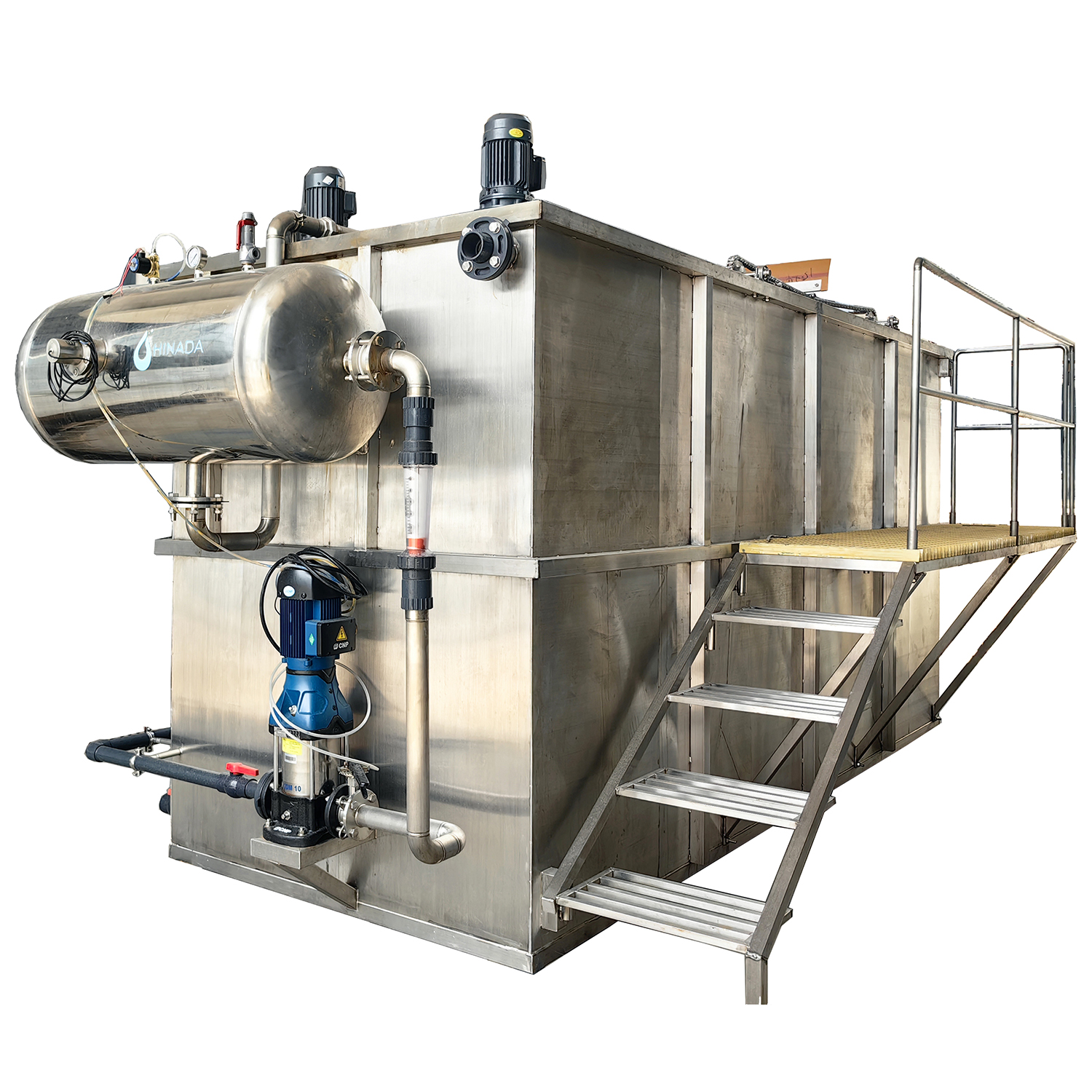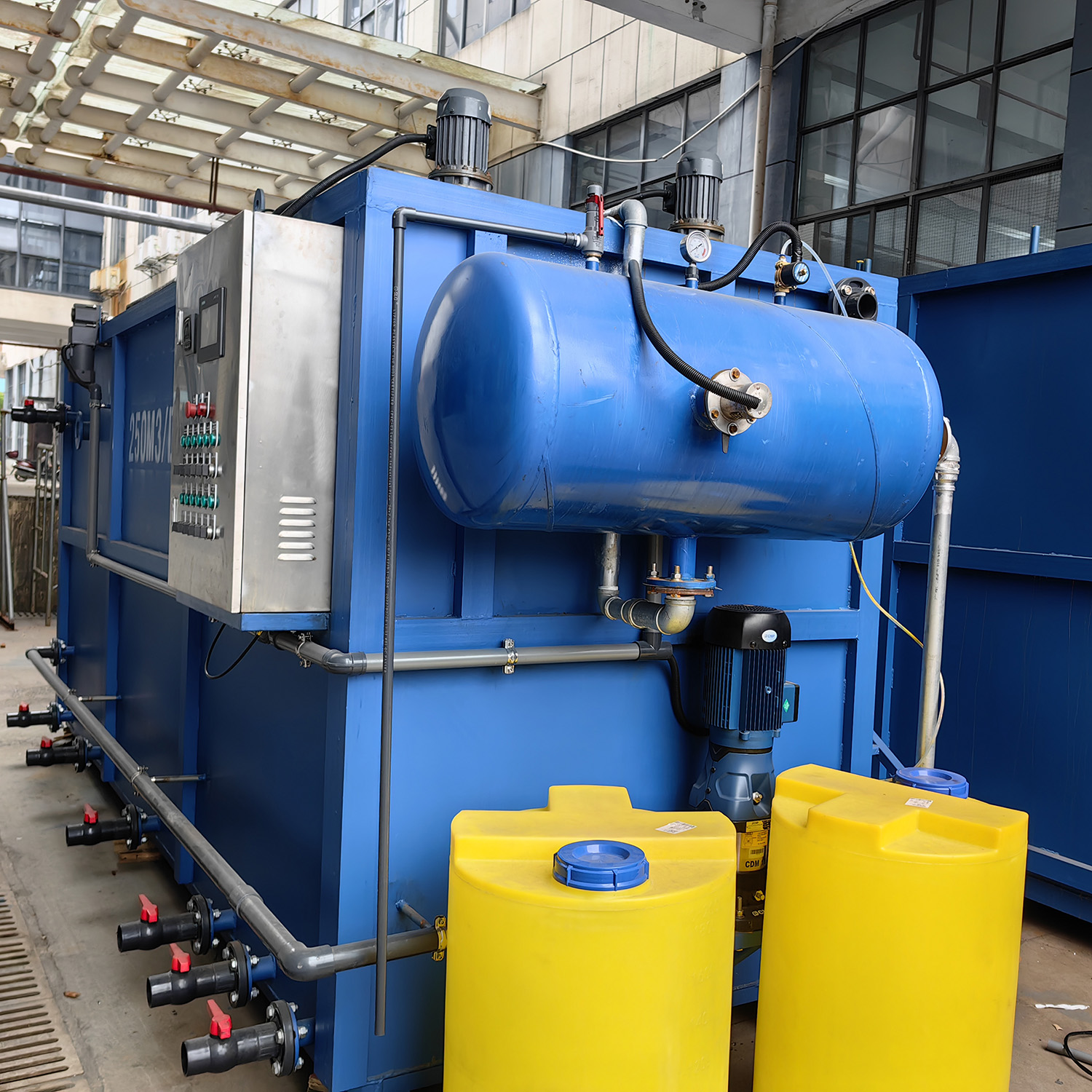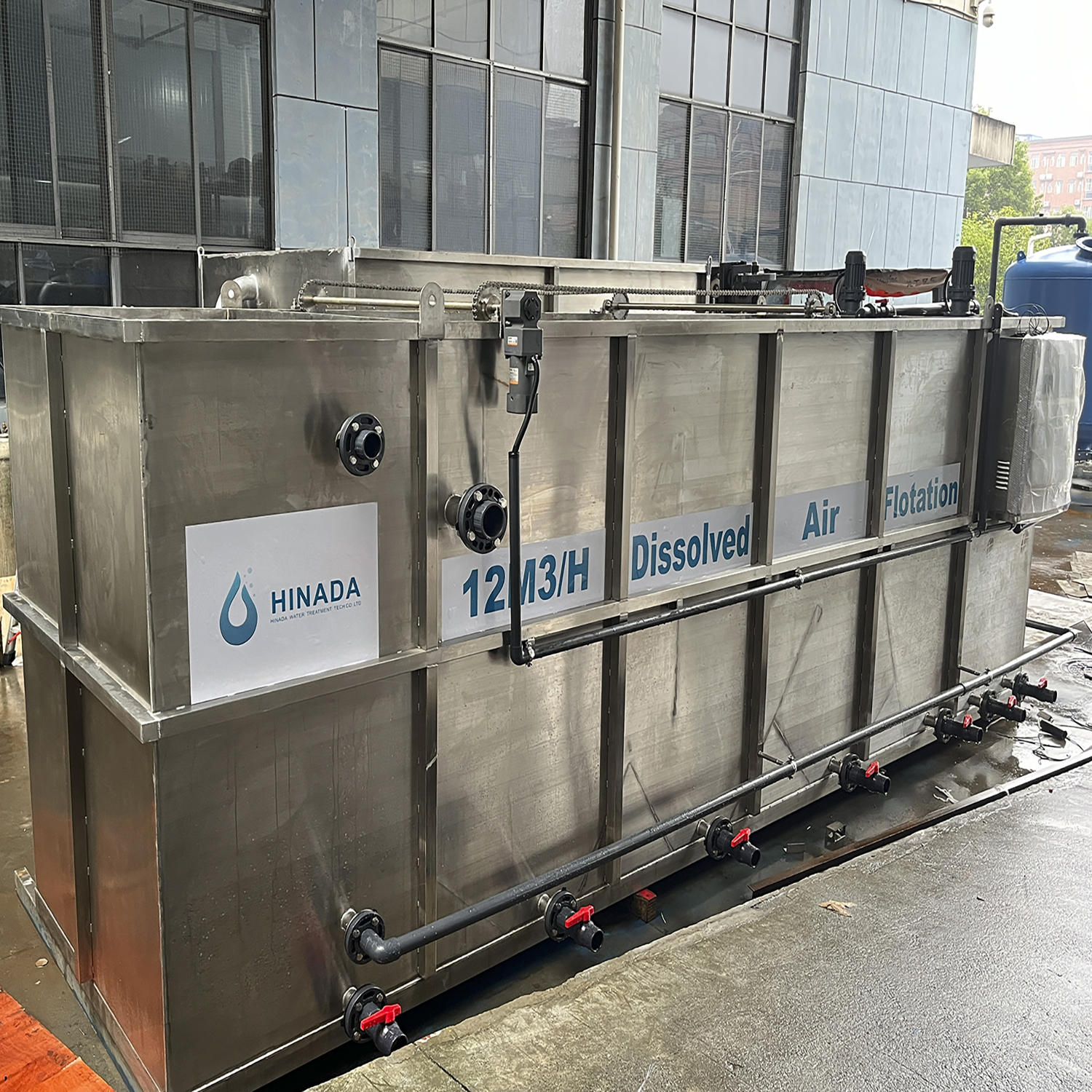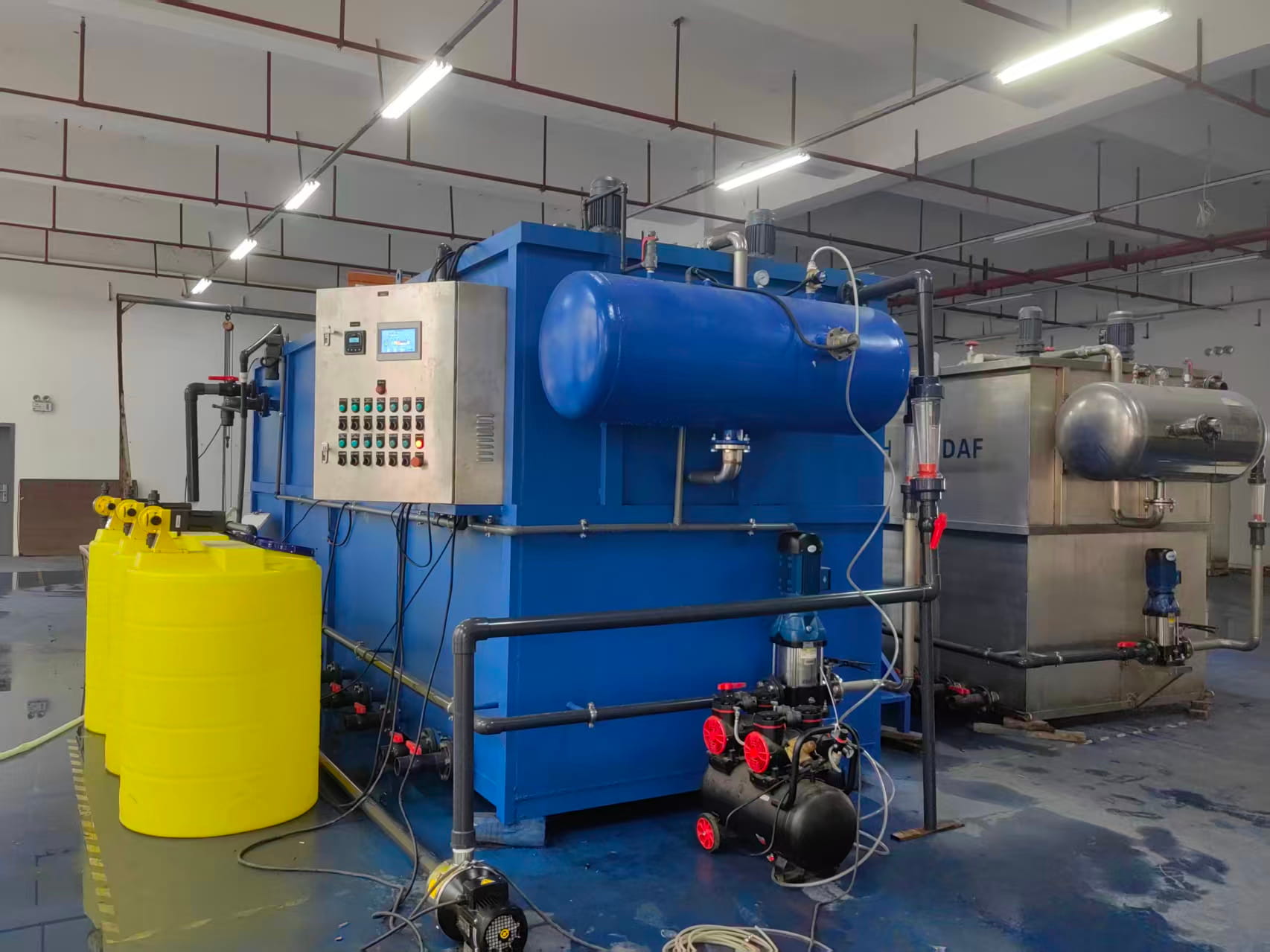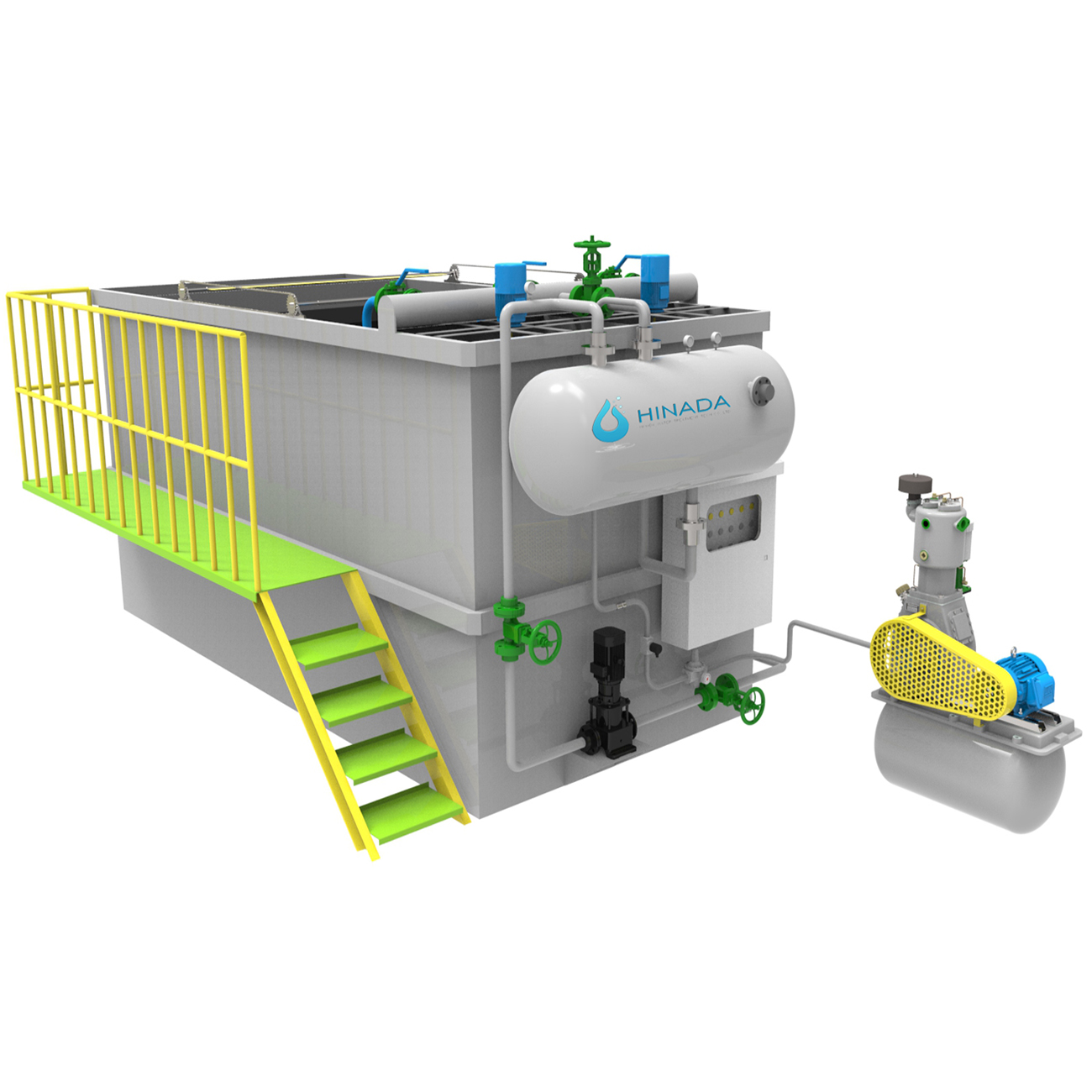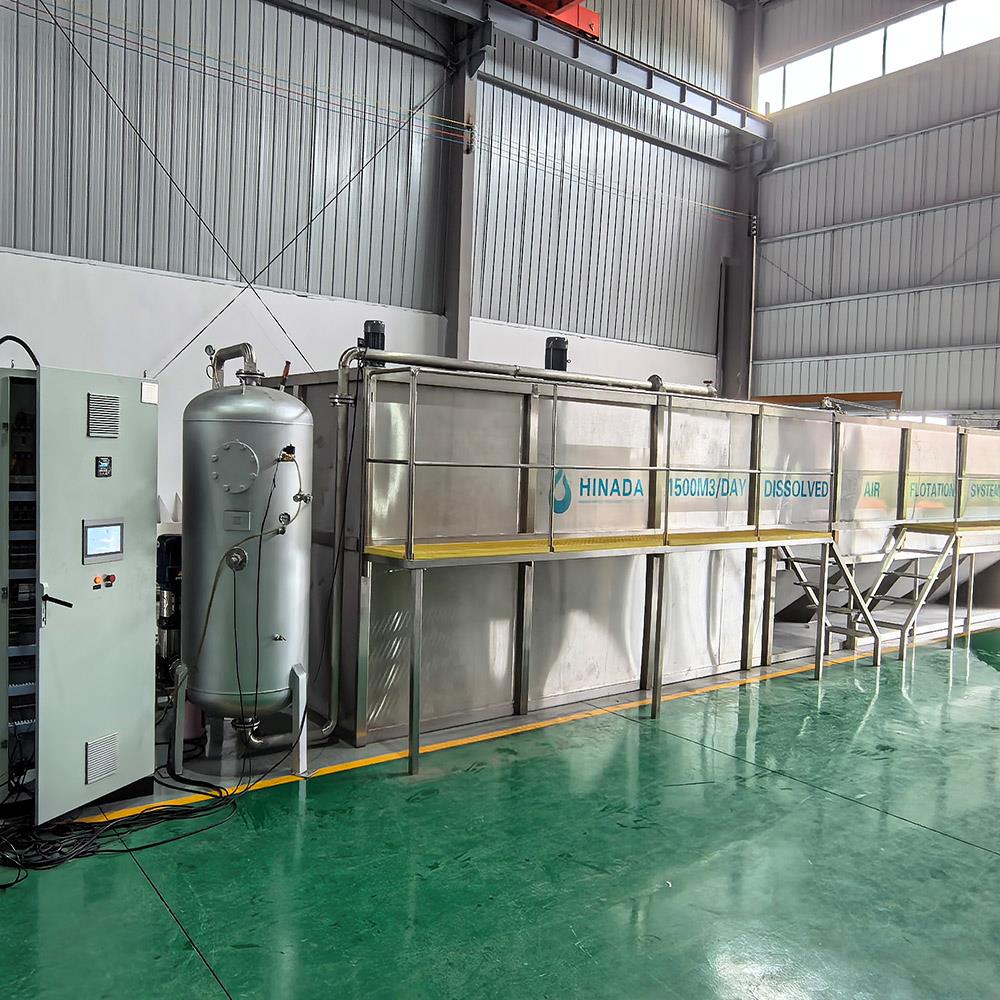


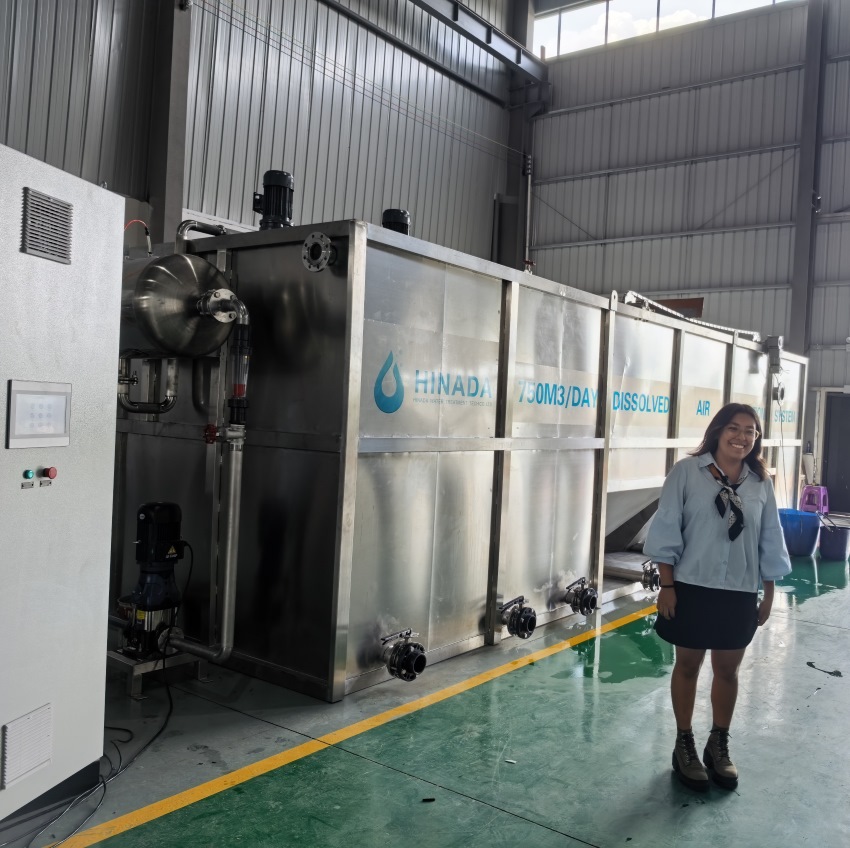
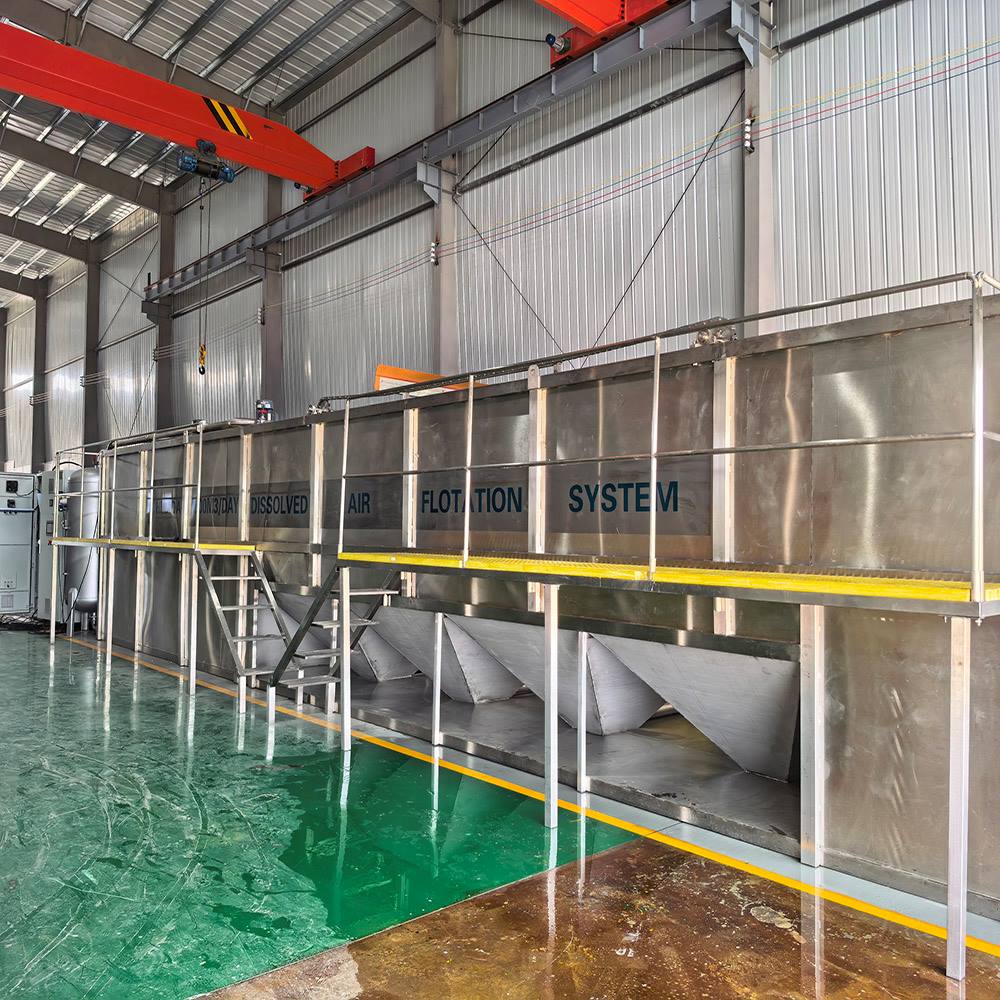
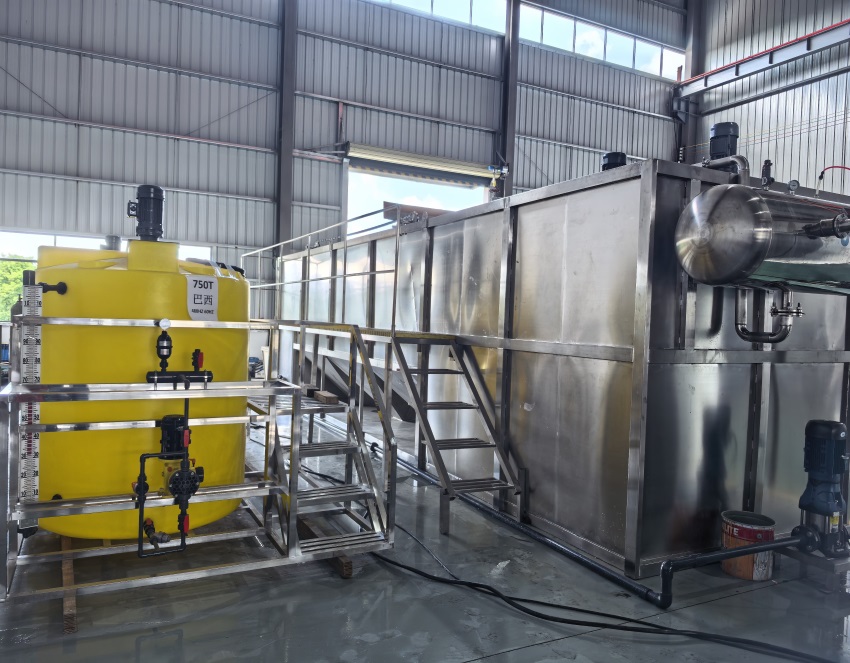
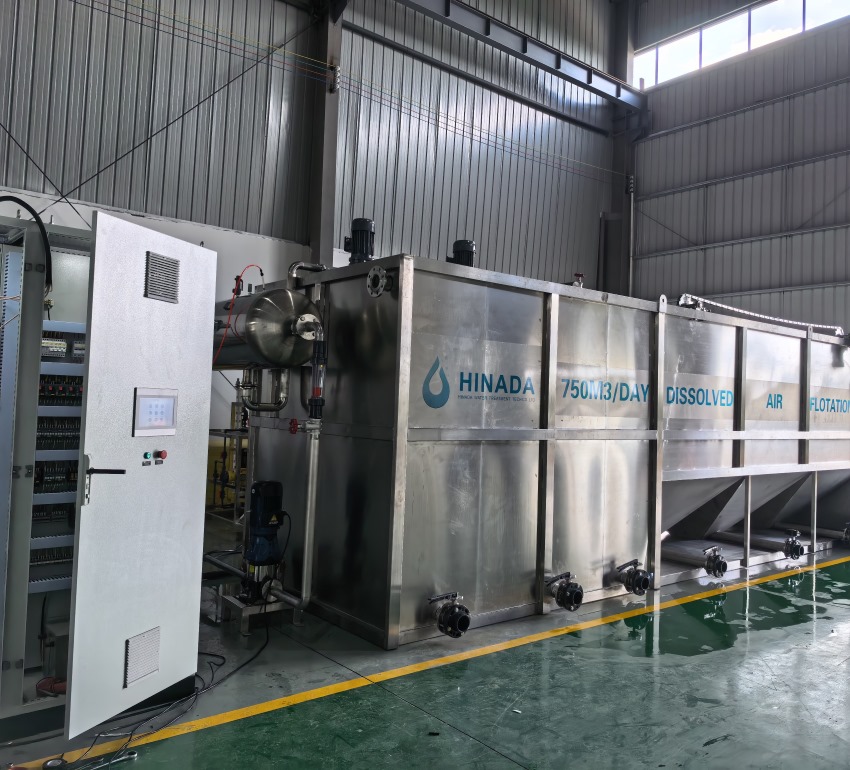
750m3/Day Dissolved Air Flotation Machine for industrial wastewater treatment
Dissolved Air Flotation Machine
An air flotation machine (using the most typical Dissolved Air Flotation, or DAF, as an example) is a high-efficiency solid-liquid separation device for water treatment. Its core principle involves using highly dispersed micro-bubbles to adsorb suspended particles and oil droplets in the water; this reduces the overall density of the particles to below that of water, forcing them to rise to the surface for separation. 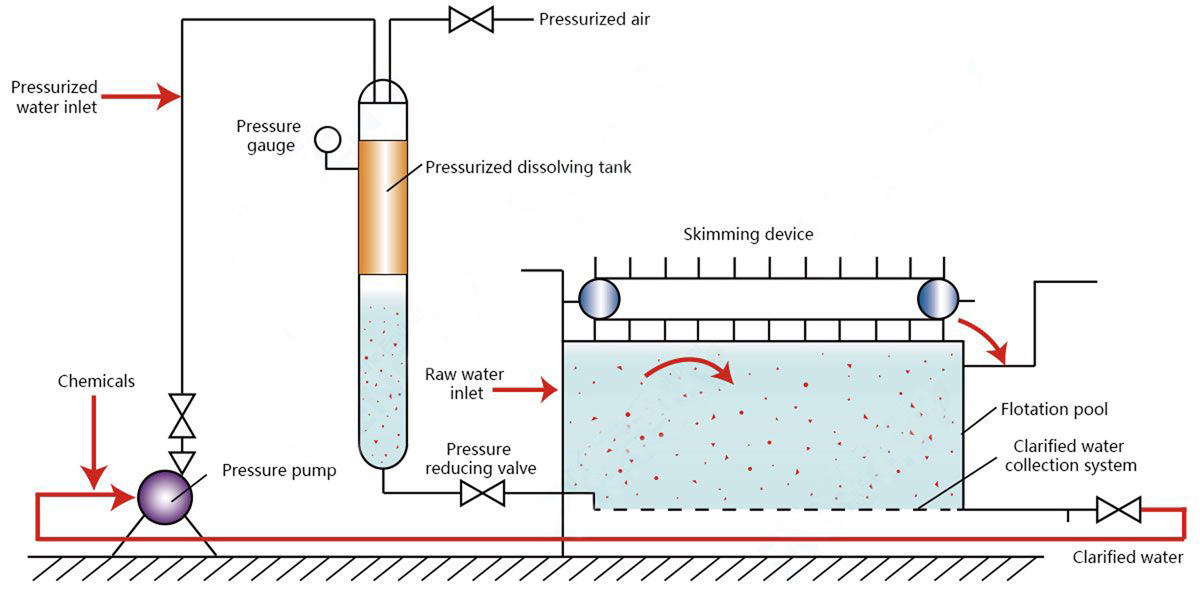
The specific operational process consists of three key stages:
1). Gas Dissolution and Release (Bubble Generation):
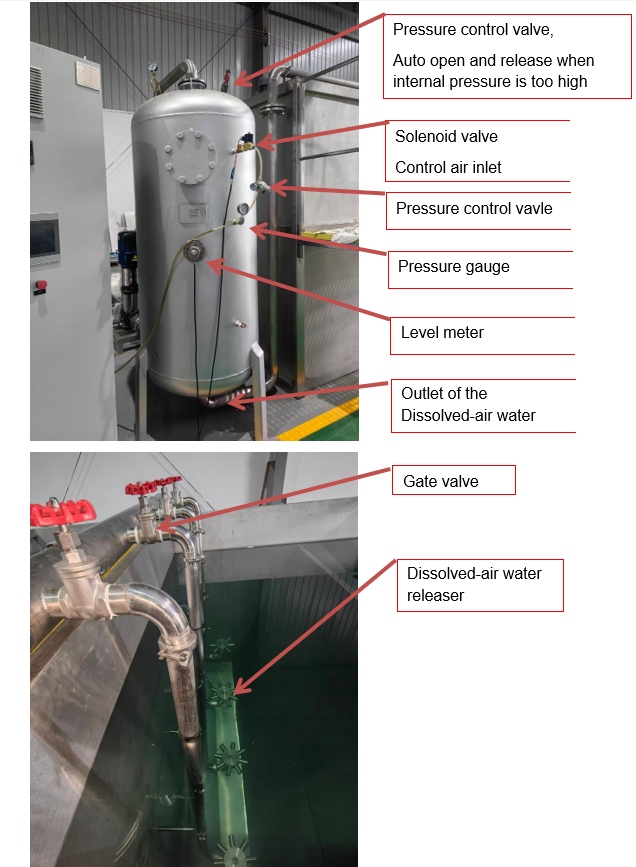
A pressurized water pump boosts the pressure of a portion of treated effluent or raw water to 3–5 atmospheres. Air is injected into a pressure tank, forcing it to dissolve into the water and creating "high-pressure dissolved-air water." When this water passes through a specialized release valve into the atmospheric-pressure flotation tank, the pressure drops abruptly. The dissolved air instantly comes out of solution, releasing a vast number of minute bubbles with diameters of only 20–50 micrometers.
2). Air Flotation Attachment (Solid-Gas Bonding):
In the release zone, these micro-bubbles come into full contact with the raw water, which has already been mixed with flocculants. Due to their tiny size and high surface activity, the bubbles rapidly collide with and physically adsorb onto suspended solids, colloidal matter, and oil droplets in the wastewater, firmly attaching to the surface of the pollutants to form "bubble-floc" aggregates.
3). Flotation Separation and Scum Skimming:
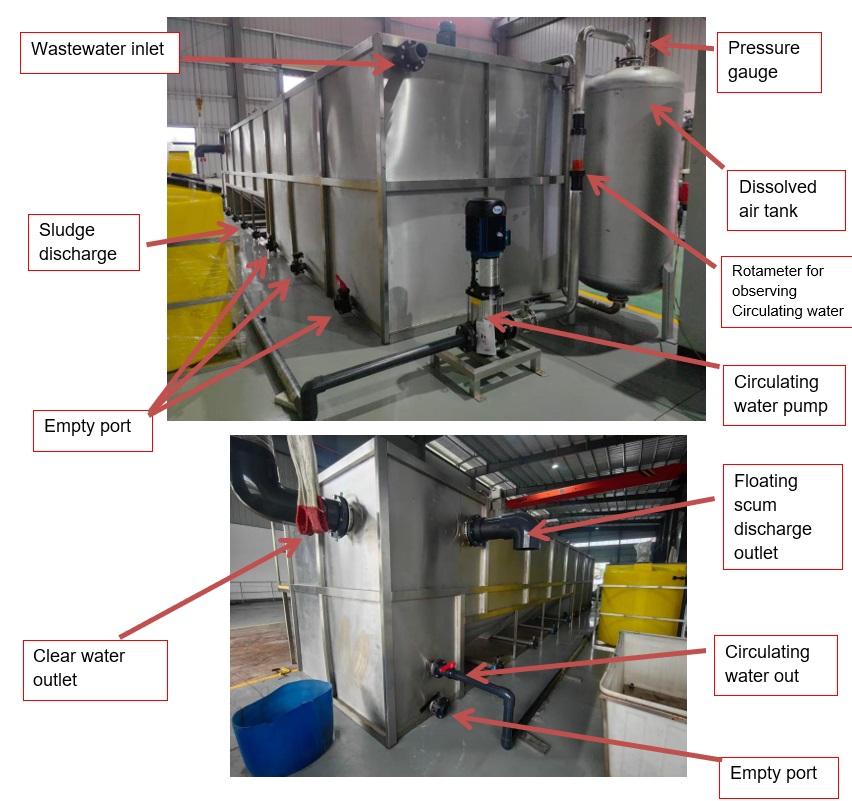
Driven by the buoyancy of the bubbles, the bubble-floc aggregates—having an overall specific gravity much lower than that of water—rise rapidly to the surface, accumulating into a thick layer of scum. A skimmer mechanism at the top of the tank operates continuously to scrape this scum into a sludge trough for discharge, while the clarified water is collected and discharged via a collection system at the bottom of the tank.
4)Applications and Advantages:
Compared to traditional natural sedimentation, air flotation offers rapid processing speeds, short retention times, and a compact footprint. It is particularly well-suited for the pretreatment of wastewater containing lightweight suspended matter with a density close to that of water, effectively removing suspended solids (SS) and a portion of the chemical oxygen demand (COD).
DAF System Advantages:
- Oil and Grease: remove 70—90% of input
- Suspended matter: remove 50—80% / COD: low down 40%
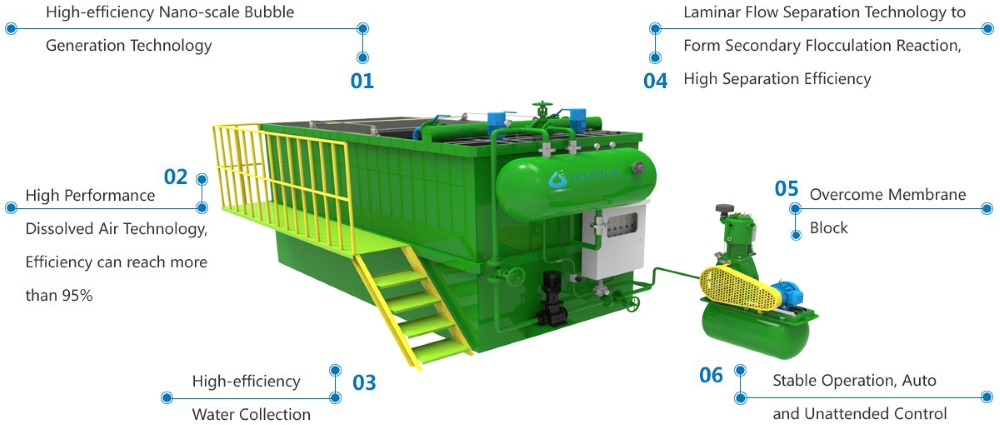
- The DAF system utilises nano-scale air bubbles, also known as ‘White Water’, which attach themselves to the suspended material within the waste stream, increasing buoyancy and floating them to the surface. The floated solids are then removed by a simple but effective scraper mechanism.
- DAF System for emulsified oily and color removed need working with chemical
- Fast Separation with low Footprint
- Operation flexibility
Dissolved Air Flotation System main feature