< img height="1" width="1" src="https://www.facebook.com/tr?id=957592723535502&ev=PageView&noscript=1"/>
inquiry_img
Leave A Message
If you are interested in our products and want to know more details,please leave a message here,we will reply you as soon as we can.
submit
Building B1, BYC-AI Industrial District, Chenzhou , Chenzhou Pilot Free Trade Zone, Hunan, China
whatsapp. y in
Home Containerized MBR System

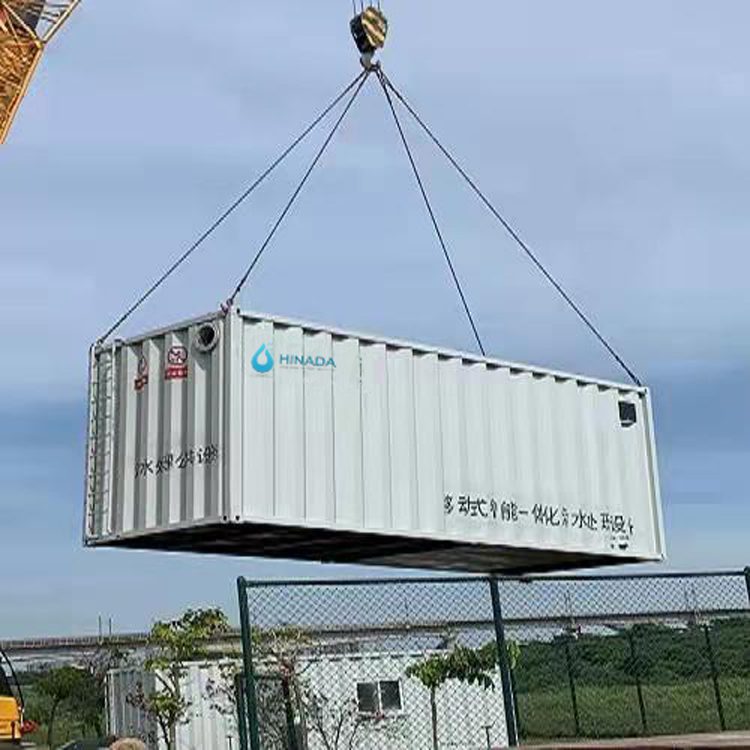
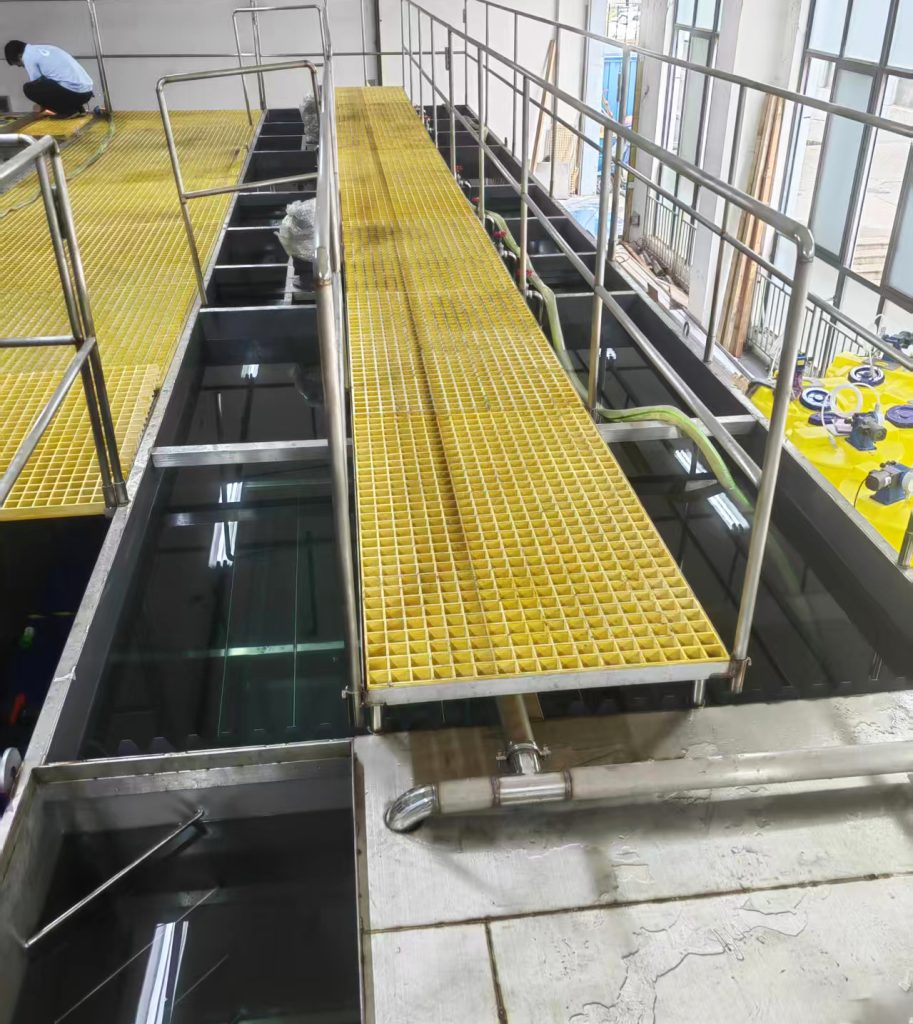
Industrial Wastewater Surface Metal Wastewater Treatment Equipment Containerized

Industrial Wastewater Surface Metal Wastewater Treatment Equipment Containerized

Surface Metal wastewater or equivalent or electroplating industrial wastewater treatment, it's need to removing heavy metals like Ni (Nickle removing ) and Cu (Copper removing )  and other contaminants high COD / BOD.

Average Capacity : 120m3/Day

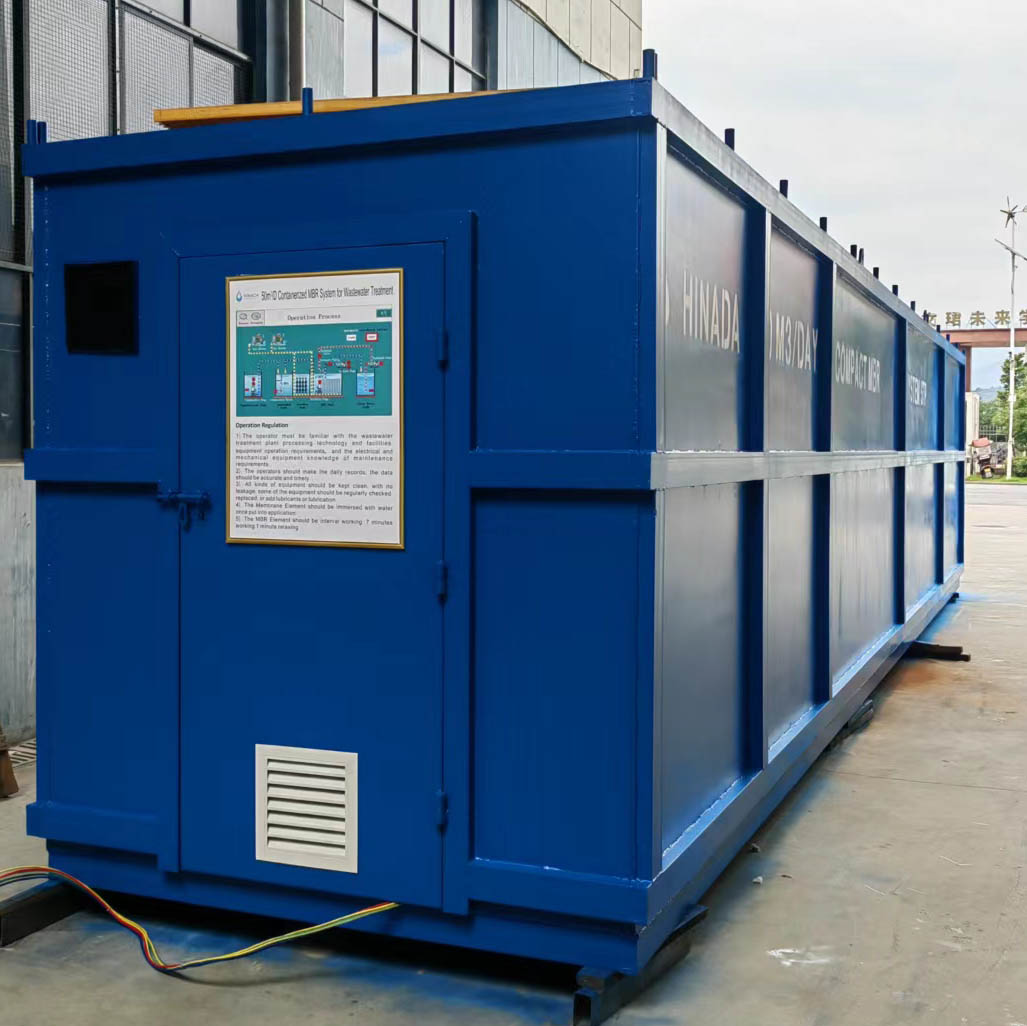
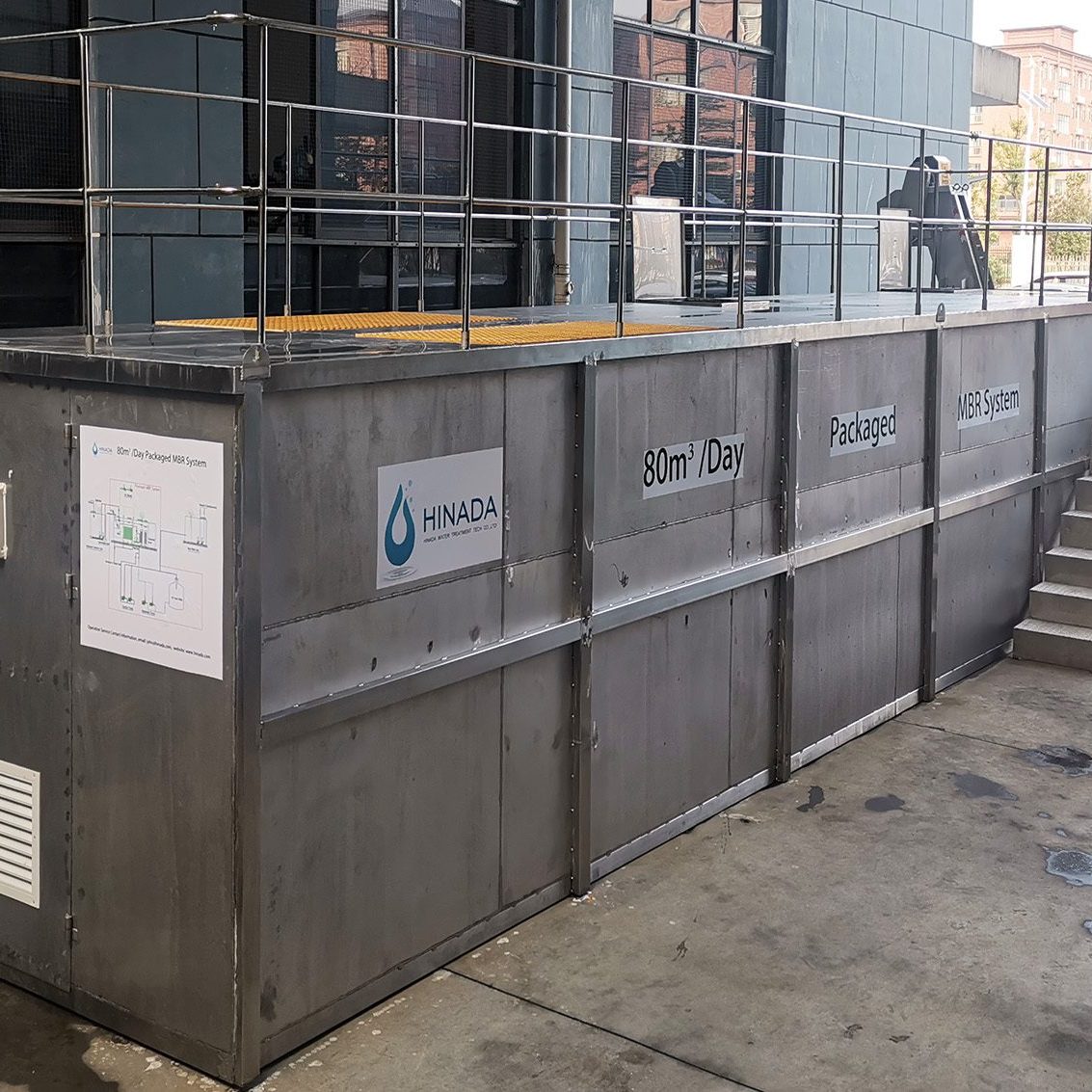
Material of Container : SUS304 Material Tank + .Epoxy +Fluorocarbon top painting

Dimension :2.3×2.5×11.5m <W*H* L> * 2 set

Power Consumption :7.5KW/H

Controlling : Automatic Running

Output Water Quality : Meet the international standards, for discharge or reuse in irrigation.
More details of similar industrial wastewater treatment solution, please contact with us

The Treatment Process:

Wastewater——Bar Screening——Dosing System for Ni remove———Dosing System for Cu remove /——— Anaerobic Tank (MBBR)——Aerobic Tank (MBBR) ——MBR Tank MBR Membrane ——Clean Water Tank ——Equipment Room—–sand/carbon filter—-RO system

Pretreatment System Dosing System (Ni Removing)

For electroplating nickel-containing wastewater and electroless nickel plating wastewater, chemical precipitation can be used for treatment. This method does not require complex equipment. Specifically, for electroplating nickel-containing wastewater, alkali can be directly added to adjust the pH to 11, followed by the addition of PAC (polyalanine chloride) and PAM (polyacrylamide) for coagulation and sedimentation. This process allows the nickel content to meet the discharge standards. If the nickel-containing wastewater is mixed with pretreatment wastewater, a small amount of heavy metal capture agent should be added after alkalization to facilitate chelation. The heavy metal capture agent can reduce nickel ion concentrations from low levels to compliant levels.
Reaction Principle:

Ni² + 2OH Ni(OH) ()

Reaction Condition: pH = 10–11

For nickel-containing wastewater with complexing agents, the first step should be to break down the complexes, followed by chemical precipitation.

Pretreatment System (Cu Removing)

 copper is easily oxidized from the +1 valence state to the +2 valence state, although the stability constant of the Cu(CN)² complex ion is relatively large, divalent copper cannot form a stable complex with cyanide ions. Therefore, Cu(CN)² is still readily oxidized, resulting in the conversion of +1 valence copper to +2 valence copper and the oxidation of cyanide. In contrast, Fe(CN) is different. Due to its relatively large stability constant, it is not easily oxidized under conditions of low effective chlorine concentration or low reaction temperature. When the reaction conditions are intensified to oxidize +2 valence iron to +3 valence, since Fe(CN)³ remains very stable, the cyanide ions do not dissociate and are not oxidized.

Reaction Principle:
Cu²
+ 2OH → Cu(OH) (↓)
Reaction Condition: pH = 9.5–10.5
For copper-containing wastewater with complexing agents, the first step should be to break down the complexes, followed by chemical precipitation.
Complex Breaking Reaction
• Sodium Sulfide (Na
S)
The principle of the Na
S method is as follows:
Na
S + Cu[M] → CuS↓ + Na[M]
Sulfide (sodium sulfide) is added to wastewater containing complexed copper, followed by sodium hydroxide to adjust the wastewater pH to between 9 and 10. An appropriate amount of polyacrylamide (PAM) is then added to form copper sulfide (CuS), a precipitate with very low solubility. Under the action of PAM, copper ions are removed from the wastewater. The sulfide precipitation method can reduce the copper content in wastewater containing complexed copper to below 0.5 mg/L.

Containerized MBR System treatment process :
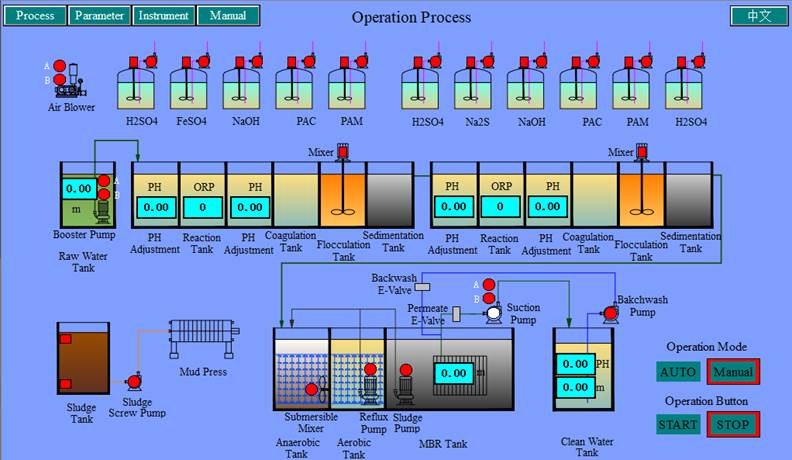
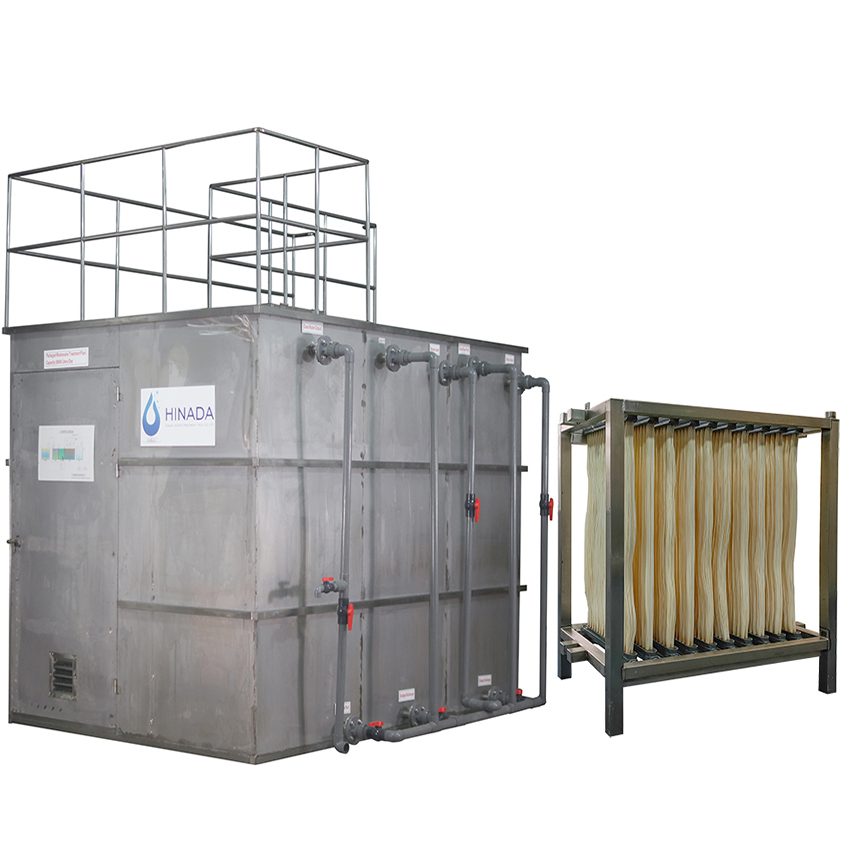
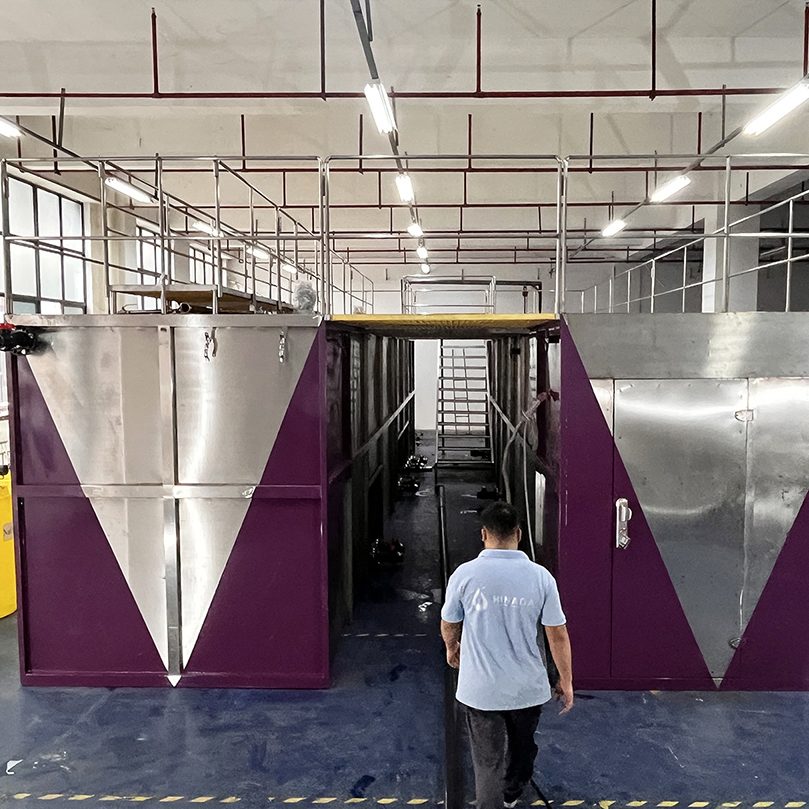
The Standard components for the mobile containerized MBR System  
The advantages of mobile MBR wastewater plant:

  1. Cost savings,  it’s especially for small capacity project.
  2. Moveable and Less Constructuion works
  3. High Quality, Assembly it according to ISO standard and with quality parts
  4. Fully automatic, easy operation and management
  5. Everything from one source provider
  6. Customerized wastewater treatment plant, according to your project requirement.

Integrated System Commissioning and Optimization

1.      72-Hour Continuous Operation: Connect all units in series to treat actual wastewater at the design flow rate continuously for 72 hours.

2.      Data Monitoring and Recording: Sample and test every 2-4 hours at key points including: raw water, post-nickel removal water, post-copper removal water, biological treatment influent, and MBR permeate. Analysis items: pH, Ni, Cu, COD, NH-N, TN, TP, turbidity.

3.      System Adjustment and Optimization:

o   Fine-tune the dosing rates at each chemical addition point based on monitoring data.

o   Optimize DO, recycle ratios, and sludge wasting rate (to control Sludge Retention Time - SRT) in the biological tank.

o   Confirm stable operation and meet target (compliance) of the MBR system permeate.

4.      Establish Baseline Data: Record all operational parameters, energy consumption, chemical usage, and water recovery rate under stable operating conditions as a baseline for future operation.


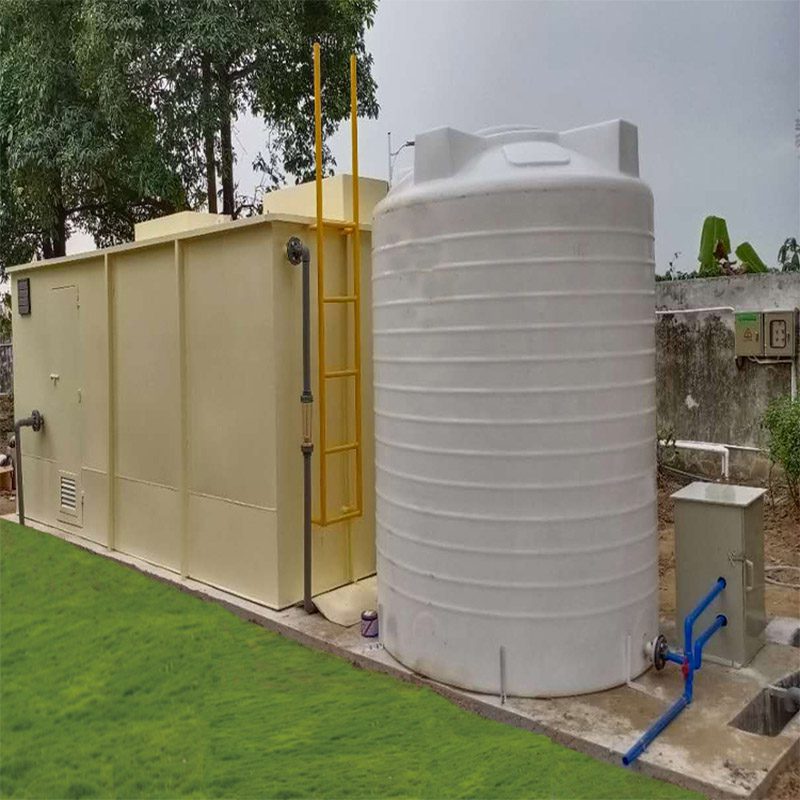
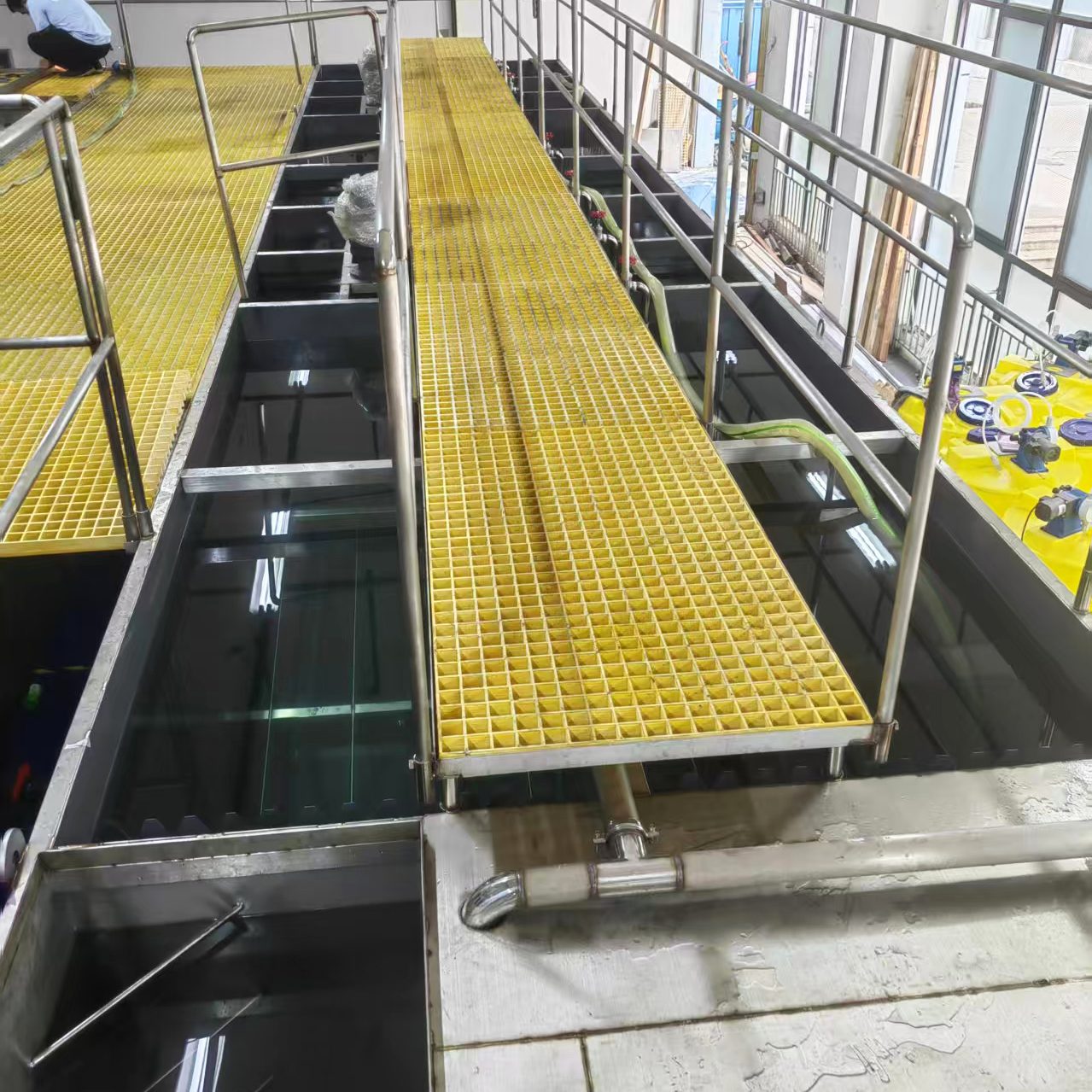
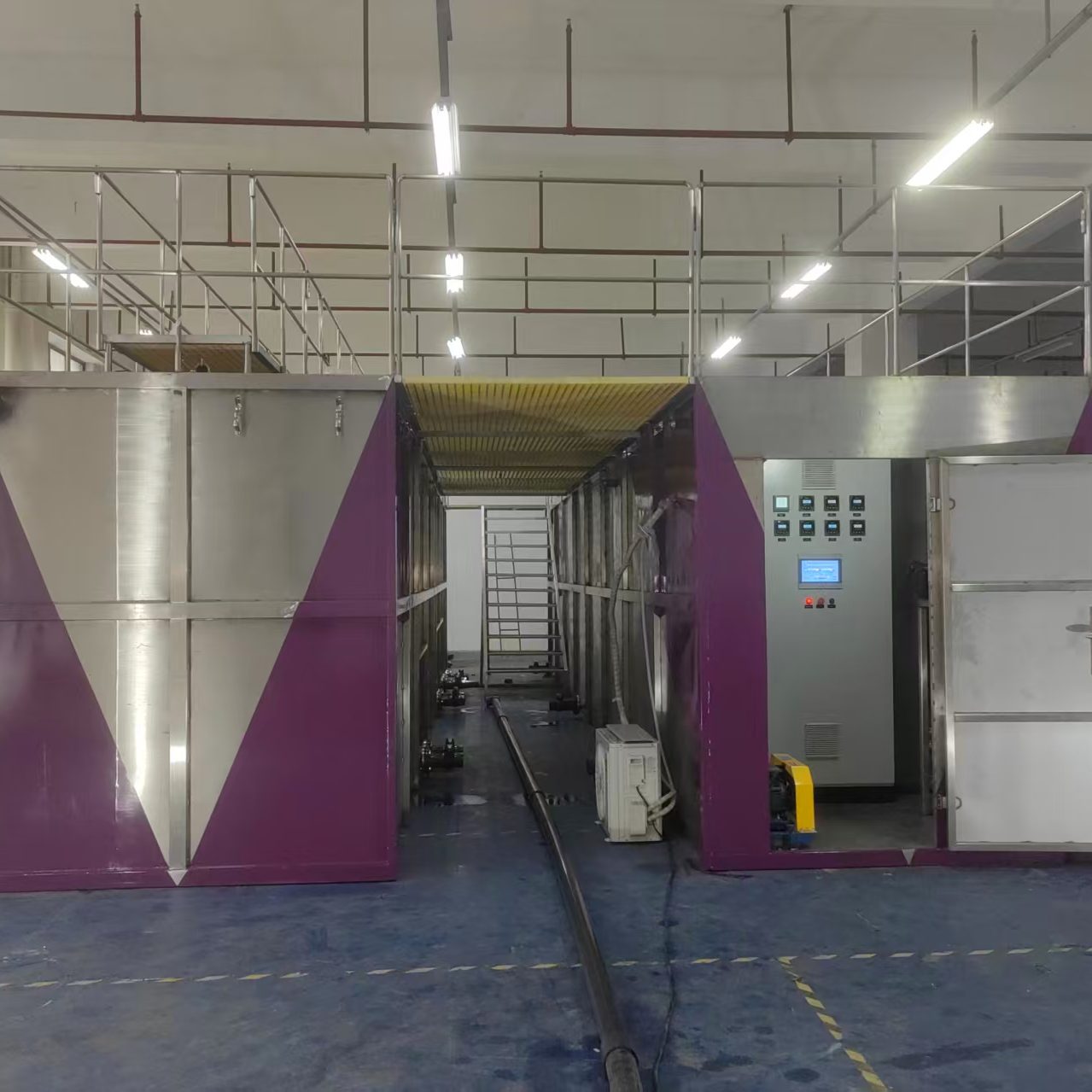
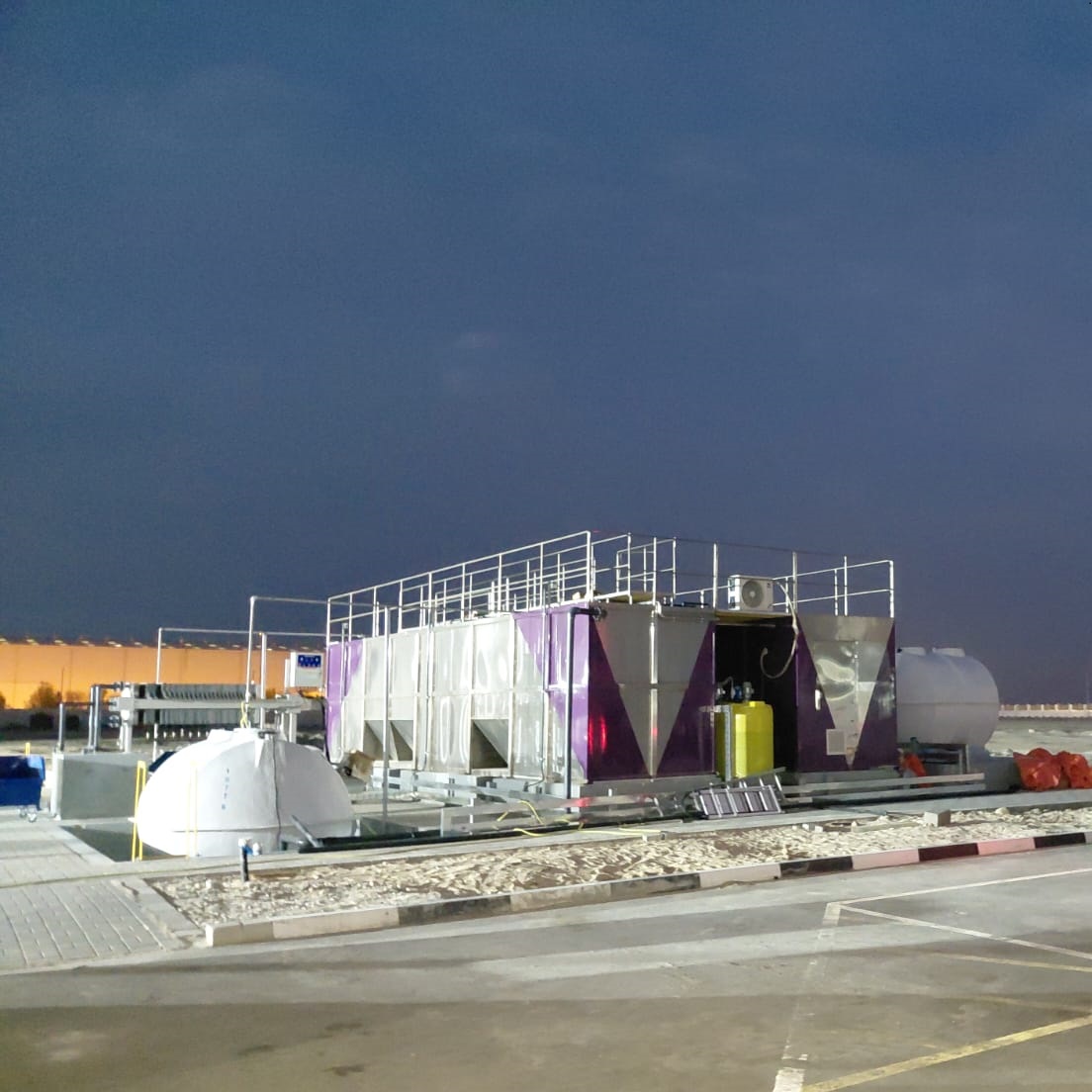
Equipment and project sample as your reference.

leave a message
If you are interested in our products and want to know more details,please leave a message here,we will reply you as soon as we can.

Related Products

We sincerely hope that customers to visit and exchange, We will be committed to customer personalized products to help customers win the market and achieve a win-win situation.
Industrial Wastewater Surface Metal Wastewater Treatment Equipment Containerized

Surface Metal wastewater or equivalent or electroplating industrial wastewater treatment, it's need to removing heavy metals like Ni (Nickle removing ) and Cu (Copper removing )&nbsp; and other contaminants high COD / BOD. Average Capacity : 120m3/Day Material of Container : SUS304 Material Tank + .Epoxy +Fluorocarbon top painting Dimension :2.3&times;2.5&times;11.5m &lt;W*H* L&gt; * 2 set Power Consumption :7.5KW/H Controlling : Automatic Running Output Water Quality : Meet the international standards, for discharge or reuse in irrigation.More details of similar industrial wastewater treatment solution, please contact with us

Read More
mbr wastewater plant
10 m3/Day Containerized MBR System Wastewater Equipment

Containerized MBR System for Wastewater Treatment, a modern, efficient way, plug-and-play, especially for remote area without municipal pipeline and WWTP, or new project requirement like seashore Hotel or factory. Average Capacity : 10m3/Day Material of Container : Carbon Steel + Anti-corrosion Painting; 5mm thickness of the Carbon Steel or SUS304. Dimension :1.5&times;2.0&times;4.0m &lt;W*H* L&gt; Power Consumption :2.5KW/H Controlling : Automatic Running Output Water Quality : Meet the international standards, for discharge or reuse in irrigation.

Read More
80m3 per day Packaged MBR System in containerized for wastewater treatment

The parameters of this MBR System: Average Capacity : 80m3/Day Material of Container : SUS304; 3mm thickness Dimension :2.3&times;2.5&times;11.5m &lt;W*H* L&gt; Power Consumption :6.5KW/H Controlling : Automatic Running Output Water Quality : Meet the international standards, for discharge or reuse in irrigation.

Read More
Hotel Wastewater Treatment System

Hotel Wastewater Treatment System Average Capacity : 5&mdash;50m3/Day Material of Container : Carbon Steel + Anti-corrosion Painting; 6mm thickness of the Carbon Steel /&nbsp; or the SUS304. Controlling : Automatic Running Output Water Quality : Meet the international standards, for discharge or reuse in irrigation.

Read More
20m3/Day MBR System in Container

20m3/Day MBR System in Container for wastewater treatment, input water quality: Domestic residual Sewage wastewater or sewage for irrigation purpose or discharge.&nbsp; This packaged wastewater system in container no included the septic tank, oil separator, collection wastewater tank, clean water tank The designed average capacity will be 20m&sup3;/Day, peak capacity less than around:24m&sup3;/day, 24hours working per day, because of MBR interval working feature, the calculation flow rate as 1m&sup3;/hour &nbsp; &nbsp; &nbsp;Material of Container : Carbon Steel + Anti-corrosion Painting; 6mm thickness of the Carbon Steel or SUS304 Material. &nbsp; &nbsp; &nbsp;Dimension :1.5&times;2.0&times;4.8m &lt;W*H* L&gt; &nbsp; &nbsp; &nbsp;Power Consumption :3.5KW/H &nbsp; &nbsp; &nbsp;Treatment Process : Manual Bar Screen + A/O Biological treatment + MBR Filtration &nbsp; &nbsp; &nbsp;Output Water Quality : Meet the international standards, for discharge or reuse in irrigation.

Read More
200m3/Day Mobile Wastewater STP
Mobile Containerized MBR System for Wastewater STP

Mobile Containerized MBR System for&nbsp; Wastewater treatment is ideal choose for resorts, hotels or remote areas,&nbsp;The key issues always from economics consideration that budget on-site civil concrete tank cost and it delivers high-quality wastewater permeate, low operational cost. Average Capacity : 10----200m3/Day (Better less than 200m3/day) Material of Container : Carbon Steel + Anti-corrosion Painting; 8mm thickness of the Carbon Steel or SUS304 Controlling : Automatic Running + PLC + Touch Screen Output Water Quality : Meet the international standards, for discharge or reuse in irrigation or recyce application.

Read More
Start a Conversation

Hi! Click one of our members below to chat on