

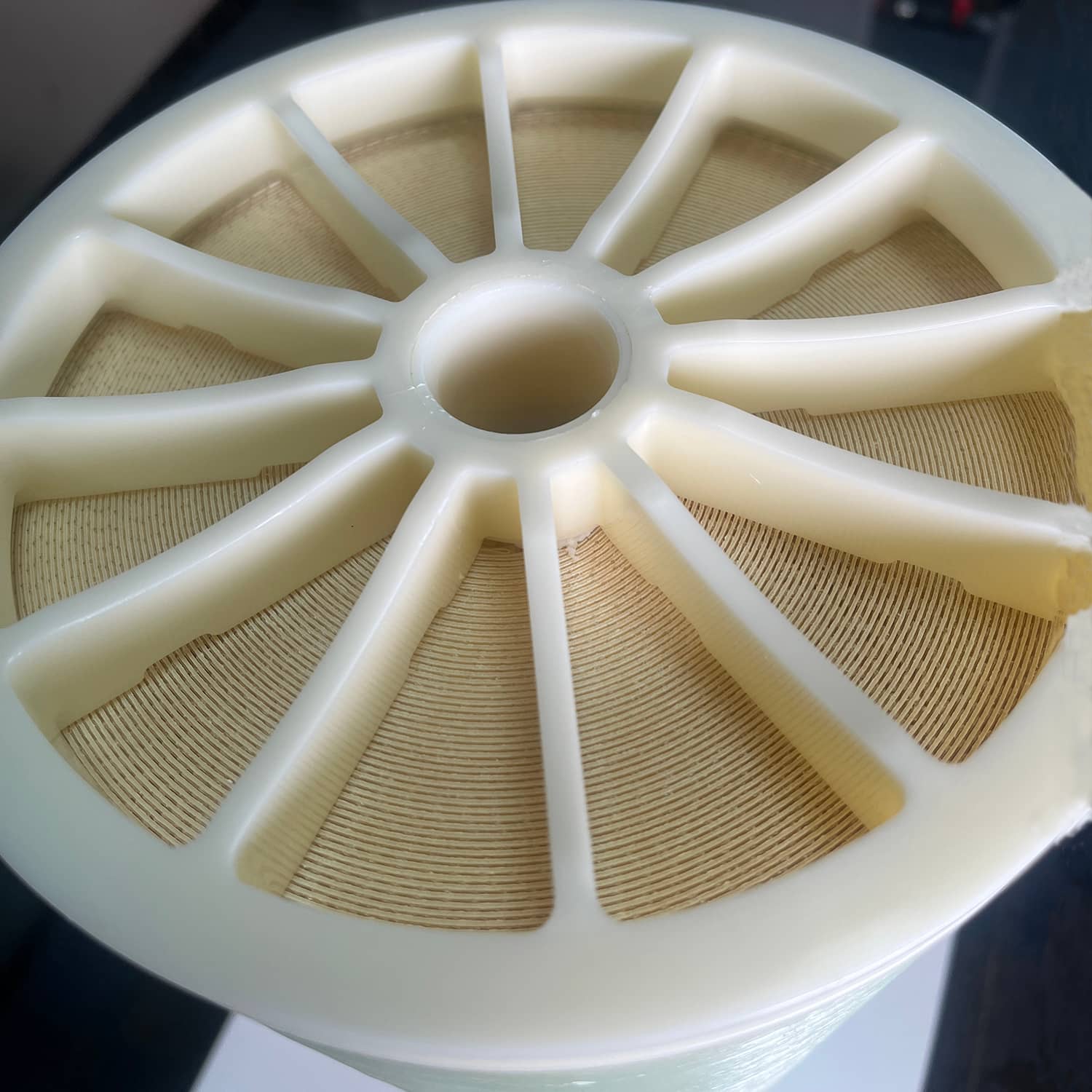
Nanofiltration refers to a specialty-membrane process that rejects dissolved solutes in the approximate size range of 1 nanometer (10 Angstroms) — hence the term “nanofiltration.”
With respect to the size and weight of solutes that nanofiltration membranes reject, NF operates in the realm between reverse osmosis (RO) and ultrafiltration (UF) : Organic molecules with molecular weights greater than 200 – 400 are rejected. Nanofiltration membranes can effectively reject, among other contaminants:
- Dissolved organics.
- Endotoxins/pyrogens.
- Insecticides/pesticides.
- Herbicides.
- Antibiotics.
- Nitrates.
- Sugars.
- Latex emulsions.
- Metal ions.
It also rejects certain soluble salts. Specifically, NF rejects dissolved salts in the range of 20 – 98 percent. Salts which have monovalent anions (e.g., sodium chloride or calcium chloride) have rejections of 20 – 80 percent, whereas salts with divalent anions (e.g., magnesium sulfate) have higher rejections of 90 – 98 percent. Transmembrane pressures are typically 50 – 225 psi (3.5 – 16 bar).
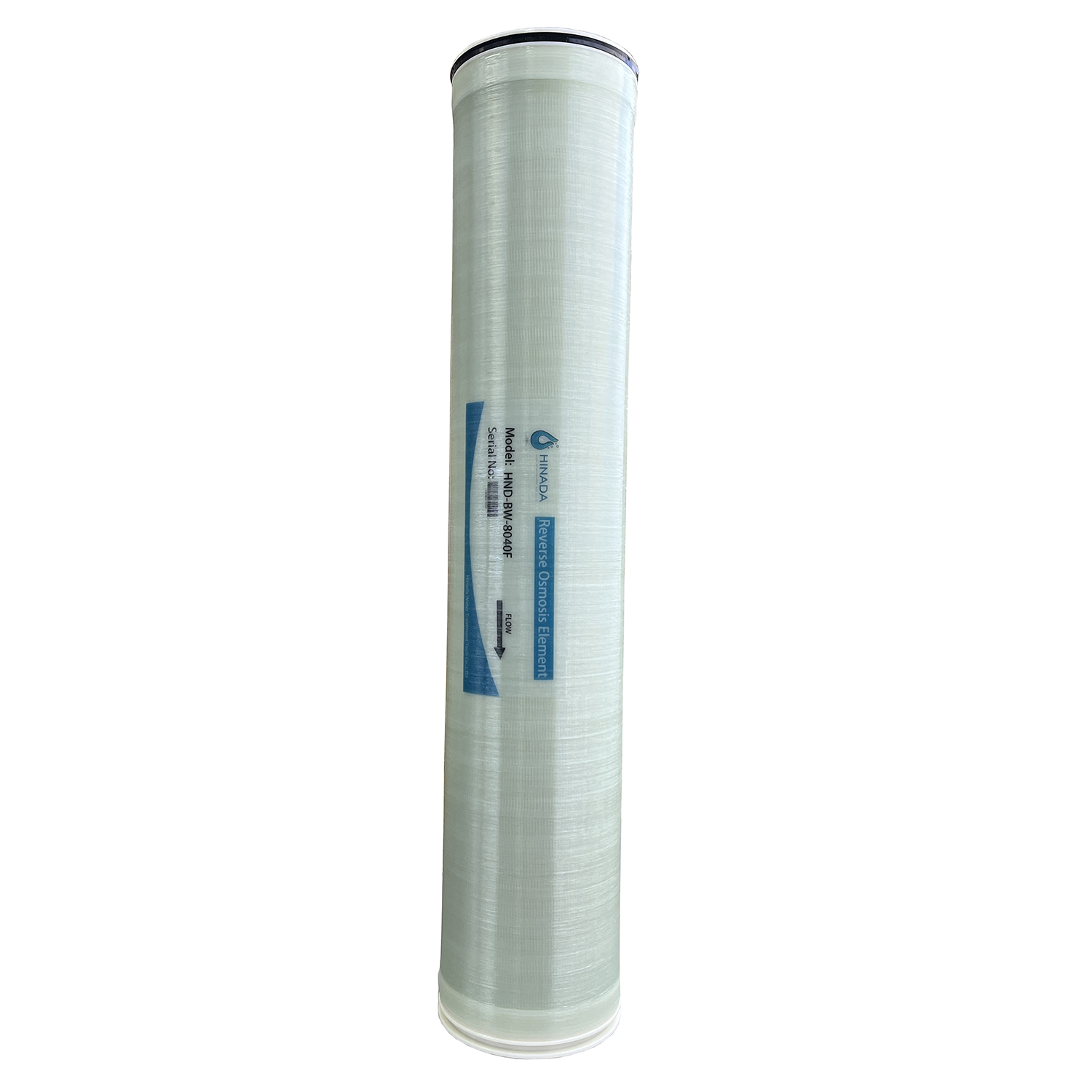
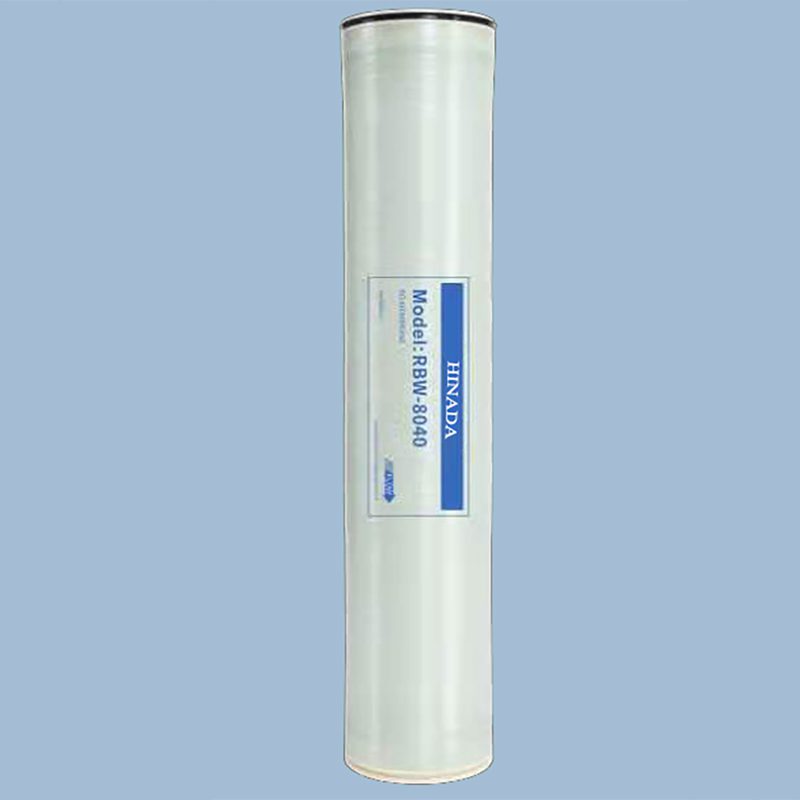
| Model | Area | Average Water Permeate | Avg MgSO4 Rejection% | Avg NaCl Rejection% | Testing Pressure (MPa) |
| NF1/NF2-8040 | 37 m² | 10000 GPD (38.0m³/D) | >98% | 30—60% | 0.5—0.75MPa |
| NF1/NF2-4040 | 7.6 m² | 2000 GPD (7.6m³/D) | >98% | 30—60% | 0.5—0.75MPa |
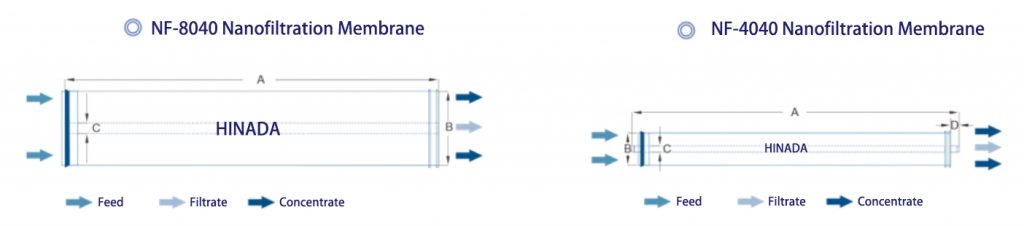
| Model | A (mm/in) | B (mm/in) | C (mm/in) | D (mm/in) |
| NF1/NF2-8040 | 1016 /40 | 201 /7.9 | 29 /1.125 | —– |
| NF1/NF2-4040 | 1016 /40 | 96 /3.8 | 19 /0.75 | 27 /1.05 |