< img height="1" width="1" src="https://www.facebook.com/tr?id=957592723535502&ev=PageView&noscript=1"/>
inquiry_img
Leave A Message
If you are interested in our products and want to know more details,please leave a message here,we will reply you as soon as we can.
submit
Building B1, BYC-AI Industrial District, Chenzhou , Chenzhou Pilot Free Trade Zone, Hunan, China
whatsapp. y in
banner

Blog

Home

Blog

  • How to choose Mining Domestic Wastewater Treatment Equipment?
    How to choose Mining Domestic Wastewater Treatment Equipment?
    May 27, 2026
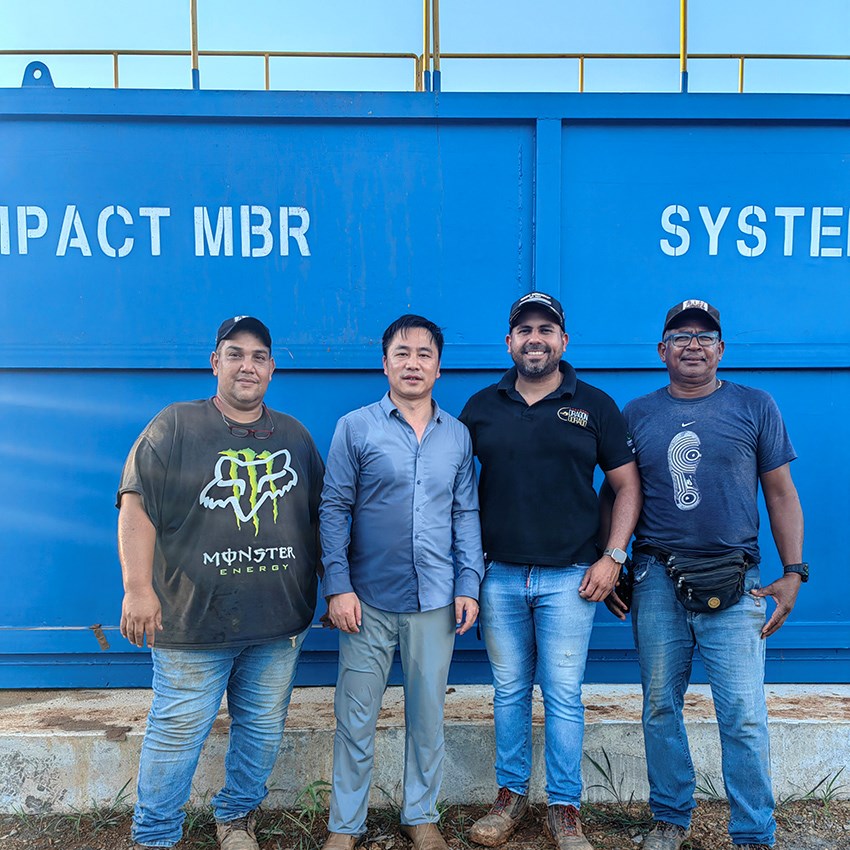
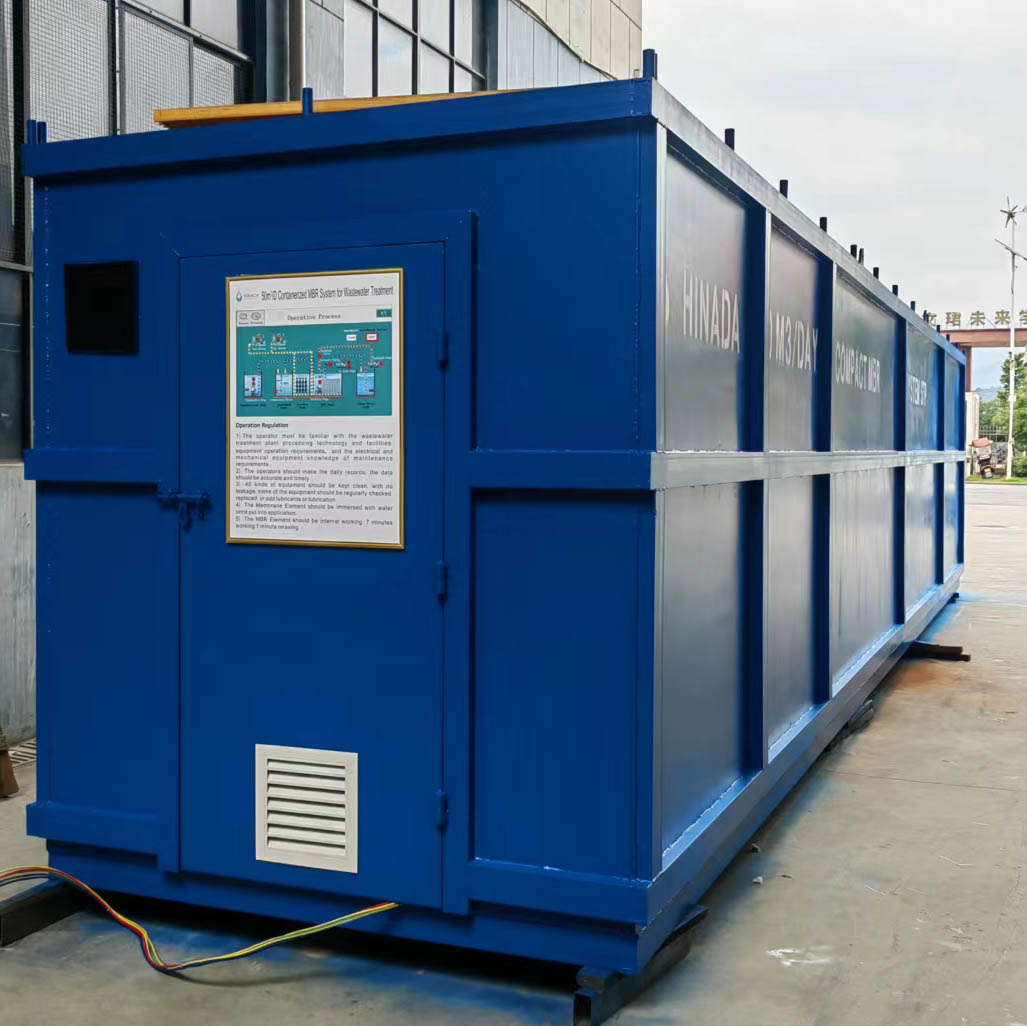
    The mining industry often operates in remote locations with sensitive ecosystems, creating a unique challenge for managing domestic sewage (non-process water). Traditional wastewater treatment systems (like septic tanks or lagoons) often struggle to meet strict environmental discharge permits.  Packaged MBR System in container for wastewater treatment, it's ideal for mining domestic wastewater treatment or sewage.  the advantages included:  1. No need the Pipeline or Municipal Sewers, It treats all wastewater on-site 2. Really Plug-and-Play,automated with PLC controls +Touch Screen 3. Footprint less – Saves Valuable Land 4. MBR Effluent with features of High-Quality and stable    Capacity can be: 20---to 100 m3/day in one containerized MBR System Treatment Process: Pretreatment Bar Screen-------Anaerobic Biological treatment-----Aerobic Biological -------MBR Filtration-------UV Disinfection   Our previous Similar Projects:     Mongolia Gold Mining,    Venezuela Gold Mining,  Kyrgyzstan Gold Mining   For mining operations that get the Exploration licenses,   minimize environmental pollution, MBR technology provides a reliable solution. It treated mine camp wastewater from a compliance burden into a sustainable water resource, protecting the surrounding water long after the mine closes
    Read More
  • How MBR Membranes Help Reduce COD in Wastewater
    How MBR Membranes Help Reduce COD in Wastewater
    May 25, 2026
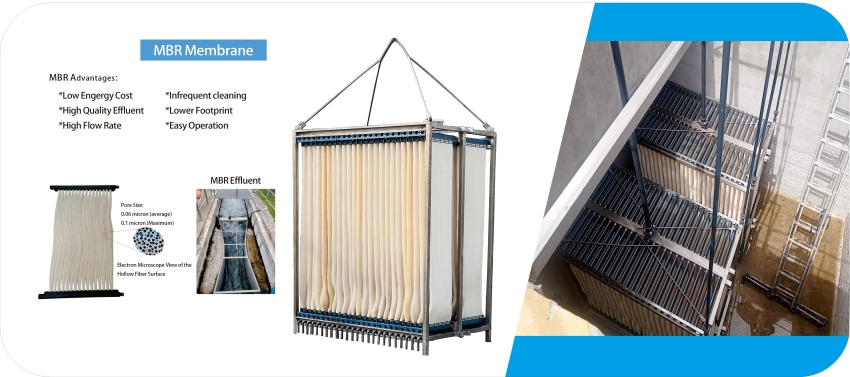
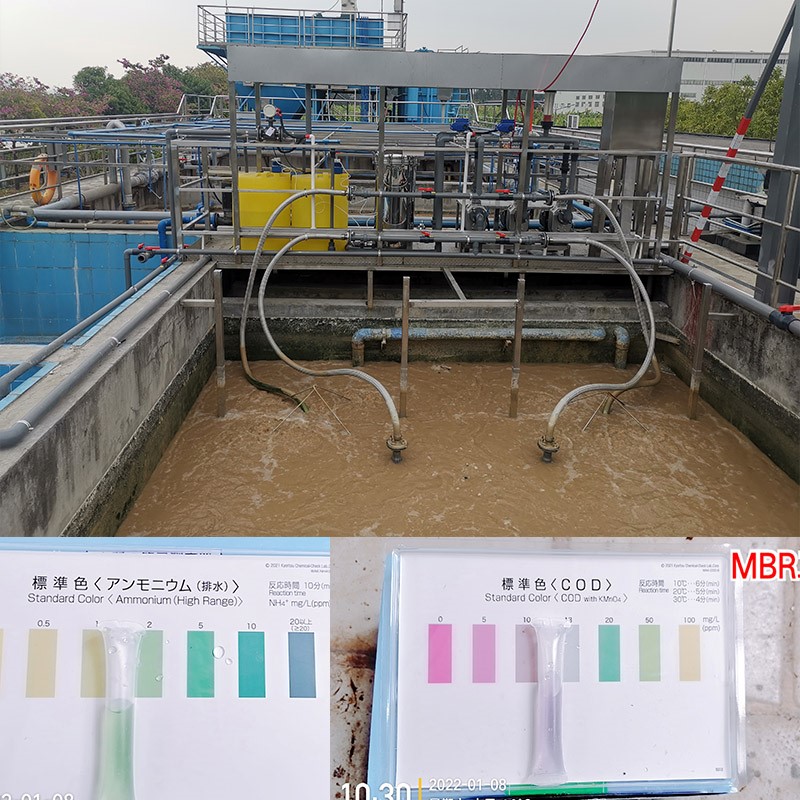
    Hinada: A Leading MBR Membrane Supplier in China since 2012, MBR as advance technology that work together with biological treatment, as one of the effective solutions for achieving strict discharge standards or meet water reuse requirement.  MBR membrane technology plays a pivotal role in addressing two of the most pressing challenges in environmental management: how to reduce COD in wastewater and how to treat industrial wastewater effectively and reliably.   How MBR Membranes Help Reduce COD in Wastewater Chemical Oxygen Demand (COD) is a critical indicator of organic pollution in wastewater. Especailly industrial wastewater, the COD value reach 3000----10000mg/L and even higher, This high value COD always a tough challenge for wastewater specialist, but as MBR membrane this advance technology that can by combining biological degradation with membrane filtration. MLSS can reach 6000---8000mg/L, enhancing the degradation of COD organic matter. the COD removal efficiencies ranging from approximately 80% to 94% under various industrial conditions.   How MBR Technology Treats Industrial Wastewater When addressing how to treat industrial wastewater, To treat industrial wastewater effectively, an MBR system typically consists of three key steps: (1) biological treatment where microorganisms break down be organic pollutants under high MLSS ; (2) membrane filtration with pore size average of 0.06micron, where treated water is separated from the biomass using low-pressure ultrafiltration membranes; and (3) MBR eliminates the need for secondary clarifiers and tertiary filtration, drastically reducing the footprint of the treatment plant—typically to half or two-thirds of traditional systems—making it particularly suitable for space-constrained industrial sites. Hinada supplied an MBR Membrane to Liby Co., Ltd., a leading Chinese laundry care brand, demonstrating the technology’s reliability in demanding industrial environments. As industries face increasing regulatory pressure to reduce COD and manage wastewater responsibly, choosing a proven MBR partner like Hinada becomes a strategic advantage for achieving environmental compliance, operational efficiency, and long-term cost savings.
    Read More
  • Industrial Packaged Sewage Treatment Plants
    Industrial Packaged Sewage Treatment Plants
    May 22, 2026
    Industrial Sewage Treatment Plants (STPs)  is practical, efficient solution for treating sewage or industrial wastewater in locations where large-scale, centralized WWTP systems are not viable, and it play a critical role in helping industries manage wastewater efficiently while meeting strict environmental regulations. Application: l  Manufacturing or Mining or Farm FacilitiesHandles sewage generated by employee amenities such as restrooms and cafeterias within industrial campuses. l  Commercial building and Industrial Parks Provides efficient sewage treatment for centralized facilities, ensuring compliance with regulatory requirements. l  Hospitality and Recreational Areas Offers an excellent solution for resorts, hotels, and remote areas without city STP pipeline but has high sewage loads, ensuring clean water output for reuse or safe disposal. l  Construction Sites and Temporary Facilities camp Ideal for temporary installations where a compact and moveable sewage treatment system is required.      STPs is a robust system engineered to treat up to 10,000 to 100,000 liters of industrial wastewater per day. Designed for small to medium-scale industries, this prefabricated or civil-based plant efficiently removes BOD, COD, TSS, oil, and other industrial contaminants, ensuring discharge compliance and enabling treated, MBR System uses a combination of physical, biological, and chemical processes to remove pollutants. The core of the system is the biological treatment stage, and the specific technology used has the greatest impact on a plant's performance, footprint, and cost.   Hinada focuses on industrial sustainability with MBBR and MBR solutions, Ultimately, an industrial packaged sewage treatment plant is more than just equipment; it's environmental protection only choose with sustainability, and operational efficiency in a world where water is an increasingly saftety resource. If you have a requirement of wastewater treat or problems, feel free to contact with us, and I can provide more suitable proposal.  
    Read More
  • Why Containerized MBR System for Resorts, Hotels, or Remote AreasIs an ideal Choose?
    Why Containerized MBR System for Resorts, Hotels, or Remote AreasIs an ideal Choose?
    May 16, 2026
    Why Containerized MBR System for Resorts, Hotels, or Remote AreasIs an ideal Choose?   For resorts, hotels, and remote locations without municipal pipeline and WWTP, the containerized MBR (Membrane Bioreactor) system is often the ideal choose and most practical solution. The key issues always from economics consideration that budget on-site civil concrete tank cost and it delivers high-quality wastewater permeate, low operational cost.   1. No need the Pipeline or Municipal Sewers  Most of WWTP, the municipal pipeline or sewers always the big cost of whole WWTP Project, and Resorts, hotels, and remote facilities are often built in scenic or isolated areas—mountain sides, coastlines, or rural locations—where municipal sewer lines do not exist. And Containerized MBR is a self-contained. It treats all wastewater on-site, eliminating the need for sewer connections. 2. Really Plug-and-Play   Containerized MBR systems all standards with automatically controlled, highly automated with PLC controls, which are pre-assembled and tested before loading, in project site only need connection to power, wastewater inlet, and treated water outlet. Installation takes few days, not months. 3. Footprint less – Saves Valuable Land MBR technology replace large clarifier tanks, and more important, MBR membrane with 0.06micron pore size, that activated sludge keep inside biological system breeding and fast growing, then MLSS will reach around 6000----8000mg/L, that consume more contaminations. Then biological tanks also smaller. 4. MBR Effluent with features of High-Quality and stable Hinada top brand MBR Membrane with uniformity and good hydrophily that make sure good and stable effluent. In short, for resorts, hotels, and remote areas, a containerized MBR is not just a wastewater treatment option—it is often the most reliable, cost-effective, and environmentally responsible choice available
    Read More
  • TIPS for Biological Treatment without Testing Instruments
    TIPS for Biological Treatment without Testing Instruments
    May 06, 2026
                      TIPS for Biological Treatment without Testing Instruments    For a small wastewater treatment plant without testing instruments, how to judge the health of cultivated bacteria based on water color, sediment, and touch? Without instruments, sensory methods (look, smell, touch) are common on-site empirical techniques to assess activated sludge (bacteria culture) health. Although not as precise as data, they allow quick identification of problem trends. The logic below uses color, sediment, and touch and applies to aerobic activated sludge processes (e.g., AO, SBR, etc.). 1. Color: The most intuitive health indicator Under normal conditions, healthy bacteria (activated sludge) appear tea-brown or earth-brown with an earthy, musty smell (not foul). Color Possible Cause Judgement Yellow-brown / Earth-brown Good bacterial activity, adequate DO Good Dark brown / Black Low DO (hypoxia), or sludge decay Bad Gray-white / Pale yellow Excess DO, or very low organic load (sludge self-oxidation) Bad Greenish Algae bloom (usually sunlight exposure, long retention) Fair (may affect effluent SS but not necessarily bacteria) Key point: Look at the color of the mixed liquor in the aeration tank. If black → increase aeration immediately. If pale → reduce aeration or increase influent load. 2. Sediment: Use a beaker or clear bottle for a 30‑minute settling test No instrument? Take a 2‑liter transparent plastic bottle or beaker of mixed liquor from the aeration tank and let it settle for 30 minutes.   2.1 Settling speed and sludge interface Healthy sludge: After 30 min, clear interface between sludge and water, clear supernatant, sludge volume about 30‑40% (SV30 = 30‑40%). Bulking sludge (bad): Small/fluffy flocs do not settle, or settle very slowly; after 30 min the interface is fuzzy, sludge volume >80%. Aged sludge (bad): Settles very fast – reaches bottom in 5‑10 minutes, but supernatant has fine floating flocs resembling "fine sand". 2.2 Supernatant condition Crystal clear → Good sludge, good settleability Turbid (like muddy water) → Sludge deflocculation or high organic shock load Many fine flocs remaining in suspension → Sludge aging or excessive aeration breaking flocs Scum / floating sludge with bubbles → Denitrification or sludge putrefaction 2.3 Floc morphology (observe with naked eye or phone magnifier) Healthy: Large flocs, distinct edges, granular appearance Bad: Very fine flocs, cloudy / diffused shape 3. Touch: Feel the sludge texture with fingers Take a small amount of settled sludge from the bottom and gently rub it between fingers (wear gloves or wash hands thoroughly afterward). Healthy sludge: Smooth, slightly gritty, loose, not sticky. When gently rubbed, flocs break apart but don't turn into paste.               Unhealthy indications: Sticky, slimy → Likely filamentous bulking. Dry, coarse/gritty → Too much inorganic matter or sand, low active biomass. Watery mud without any granular feel → Severely dispersed sludge or over‑aged. ⚠️ Note: Smell your fingers after touching – healthy sludge smells like earth. Foul or rotten egg smell indicates anaerobic sludge decay. 4. Auxiliary judgement: Smell Normal: Slight earthy musty odour Foul (hydrogen sulfide, rotten eggs) → Severe hypoxia or sludge decay Sour odour → Overload of organic matter (acidification) 5. If you have no instruments, build these three habits Do a 30‑minute settleability test every day (same time, same duration)Record sludge volume trend and whether supernatant becomes turbid. Trend is more important than a single reading. Color memory ruleBrown → good; Black → low DO; White/pale → over‑aeration or low load. Compare influent and effluent colourDark influent does not mean bad bacteria, but dark / foul effluent definitely indicates a problem. Quick reference table Sensory observation Judgement Action Brown colour, settles well, gritty/loose feel ✅ Good bacteria Maintain current operation Black colour, foul smell, turbid supernatant ❌ Low DO or decay Increase aeration, waste some sludge Pale/white colour, very slow settling, clear supernatant ❌ Sludge bulking Check for filaments; add a little chlorine (if allowed) or raise DO Earth-brown but many fine flocs in supernatant ❌ Over‑aged sludge Waste more sludge (reduce SRT) Earth-brown but supernatant muddy / turbid ❌ Overload (high F/M) Reduce influent flow or increase aeration Final note: Sensory methods can tell you "good vs bad", but they cannot give precise quantities. If your budget is extremely limited, at least buy a portable dissolved oxygen meter (a few hundred yuan) and a graduated cylinder – they will greatly improve accuracy. The most common risks during bacteria cultivation are prolonged hypoxia or excessive aeration, which are hard to detect perfectly by eye and hand alone. Hinada is the leading manufacturer of WWTP Equipments and Solutions provider, further inquiry or questions please contact with us.
    Read More
  • How to Choose the Packaged MBR System for Sewage or Industrial Wastewater Project
    How to Choose the Packaged MBR System for Sewage or Industrial Wastewater Project
    Apr 18, 2026
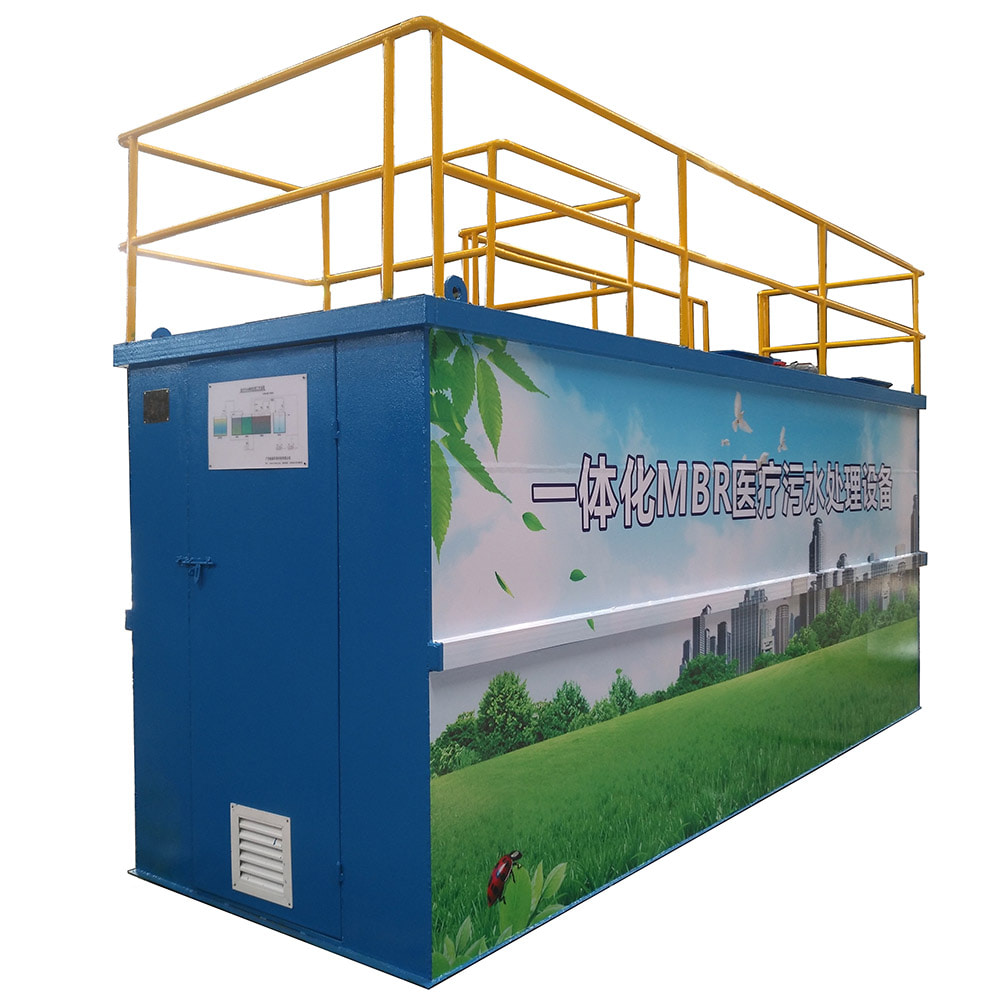
    How to Choose the Packaged MBR System for Sewage or Industrial Wastewater Project A packaged MBR system combines biological treatment and MBR filtration in a compact, pre-engineered unit (often containerized or skid-mounted). For small projects (typically 5–120 m³/day), choosing the right system requires balancing performance, cost, and operational simplicity. 1. Define Your Project Basics Before evaluating any equipment, establish: Flow rate – Average daily flow (m³/day or GPD) and peak hourly flow. Influent characteristics – Domestic sewage only ? Or mixed with industrial discharge? Key parameters: BOD, COD, TSS, ammonia, phosphorus, fats/oil/grease. Effluent requirements – Discharge to surface water (e.g., Class 1A or EU standards) or reuse (irrigation, toilet flushing, car washing). MBR typically produces very high quality, but check local limits for nitrogen, phosphorus, and pathogens. Site conditions – Ambient temperature (affects biological activity), available space, access for delivery, noise restrictions, and power availability (single or three-phase). 2. Select the Right Membrane Type Recommendation for small projects with limited operator skill: Choose PVDF Hollow Fiber MBR. It is more forgiving and easier to maintain. 3. Check Pre-treatment Requirements MBR is not a "dump-and-run" system. Inadequate pre-treatment will ruin membranes. Coarse screen – Must have a fine screen (1–3 mm) before the MBR. Some packaged units include an internal rotary drum or wedge-wire screen. Grit removal – For projects with sand or heavy solids (e.g., from roads), include a grit chamber. Flow equalization – A balancing tank is strongly recommended if flow varies greatly (e.g., hotels or schools). It protects the MBR from hydraulic shock. Red flag: Any packaged MBR that claims "no pre-treatment" for raw sewage – avoid it. 4. Evaluate Automation & Controls Small projects usually have minimal on-site staff. Therefore: PLC with HMI (touchscreen) – Must be included. Look for intuitive alarms (high TMP, low air flow, pump failures). Remote monitoring – Increasingly standard. Allows you (or a service provider) to check status and receive alerts via cellular or Wi-Fi. Automatic cleaning sequences – The system should perform daily maintenance cleans (e.g., relaxations, backwashes) and prompt for periodic chemical cleaning (CIP). Low-maintenance design – Ask: How often does an operator need to handle sludge wasting? Is there an easy way to check mixed liquor suspended solids (MLSS)? 5. Compare Physical Footprint & Installation Containerized (shipping container) – Truly plug-and-play, delivered with internal piping, blowers, pumps, and controls. Requires only concrete pad, power, and pipe connections. Ideal for remote sites. Skid-mounted (open frame) – More flexible for fitting into existing buildings. May need an enclosure or shelter. Dimensions – Ensure the unit can be transported to your site (road width, crane access, etc.). For very small flows (<20 m³/day), a single 20-ft container is common. For up to 100 m³/day, a 40-ft container or multiple smaller units. 6. Assess Energy Efficiency MBR consumes more energy than conventional activated sludge (CAS) because of membrane air scouring. For small systems: Specific energy consumption – Ask for kWh per m³ of treated water. Good small MBRs: 0.6–1.2 kWh/m³ (domestic sewage). Higher than 1.5 kWh/m³ indicates inefficiency. Air blowers – Use high-efficiency blowers (e.g., rotary lobe or side-channel) with variable frequency drives (VFDs) to match airflow to demand. Recovery of cleaning chemicals – Not critical for small projects, but avoid designs that waste excessive water during backwashes. 7. Verify Manufacturer & After-Sales Support Because small projects often lack specialized operators, vendor support is crucial. Proven reference – Ask for at least 3 similar projects (same flow range, same wastewater type) that have run for >2 years. Spare parts availability – Membranes, pumps, blowers, and seals must be available without long delays. Training – Hinada can provide on-site or remote training, with a manual written in clear language Local service – If you are outside a major market, check if the manufacturer has a local representative or service partner. Beware of very cheap units from unknown brands – membrane replacement alone can cost more than the original system. 8. Compare Costs (CAPEX & OPEX) Cost Type What to Include Capital cost (CAPEX) Equipment, shipping, import duties, foundation/installation, electrical hookup, initial chemicals, training Operational cost (OPEX) Membrane replacement (every 5–8 years), energy, chemicals (cleaning agents, antichlor if needed), sludge disposal, spare parts, remote monitoring subscription Typical budget range (for small MBR, 10–50 m³/day, delivered but not installed): Basic containerized unit: $20,000 – $60,000 USD Complete with all auxiliaries (pre-screen, equalization, sludge handling): $35,000 – $100,000 USD Always get a lifecycle cost estimate (10 years). A slightly more expensive system with lower energy and easier maintenance often pays back. 9. Consider Sludge Handling MBR produces less sludge than conventional plants, but it still needs removal. Sludge storage tank – Does the packaged unit include a small tank or must you add one? De-watering – For very small projects, a simple sludge bag or drying bed may suffice. For larger small projects, consider a filter press. Disposal route – Check local regulations. Can sludge be land-applied? Or must it be hauled to a treatment plant? 10. Regulatory Compliance & Permitting Ensure the chosen MBR can consistently meet your permit limits – not just in ideal conditions but in winter (low temperature) or during peak flow. Ask for performance test data from a third-party or certified factory test. For discharge to sensitive waters, you may need additional disinfection (UV or chlorine) – some MBR units already include it. Quick Selection Checklist Flow rate matches manufacturer’s nameplate (including peak factor). Membrane type: Hollow fibers MBR preferred for small, low-skill sites. Fine screen (≤2 mm) included or specified separately. Automatic cleaning and remote monitoring available. Energy use <1.2 kWh/m³. Manufacturer has verifiable references. Spare membranes can be delivered within 2 weeks. Total 10-year cost fits your budget (not just purchase price). Sludge handling is addressed. Effluent quality meets all local discharge or reuse standards. Example: Choosing for a 30 m³/day Hotel in a Remote Area Need – Discharge to a nearby stream, strict nutrient limits. Choice – 40-ft containerized flat-sheet MBR with automatic backwash, integral UV disinfection, and cellular remote monitoring. Pre-treatment – 2 mm rotary drum screen + 10 m³ equalization tank. Result – Effluent BOD <15 mg/L, TSS <1 mg/L, NH₃-N <10 mg/L. Operator checks unit once per week via smartphone. If you share your specific flow rate, wastewater type, and discharge standard, I can narrow down the recommendation further.  
    Read More
  • Common Problems In UF Systems And How To Solve Them
    Common Problems In UF Systems And How To Solve Them
    Apr 05, 2026
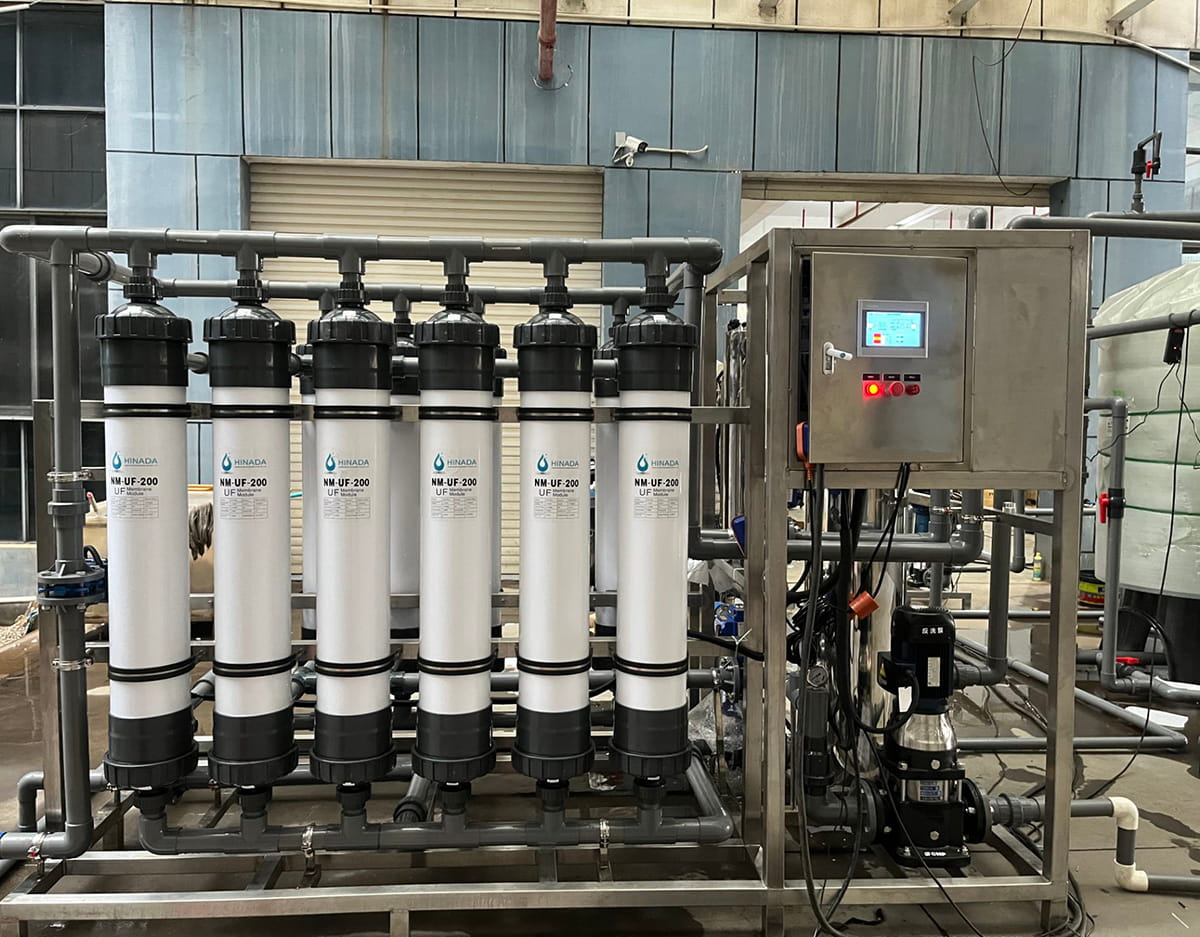
    The modern water treatment process needs ultrafiltration technology as its essential component. Industries use UF ultrafiltration to eliminate suspended solids and colloids and microorganisms from their water supplies. The systems produce drinking water and industrial process water while treating both surface water and wastewater.  The UF System operates through hollow fiber membranes which function as a selective filter. The membrane permits water flow but it stops all other particles and pollutants from entering. The technology shows reliable performance and high efficiency but it can experience operational difficulties. The facility team needs to know about typical operational issues because they affect system performance.  The guide shows common problems that happen in a UF System while presenting solutions to handle these issues through three specific problems which include decreased flow rate and membrane fouling and pressure variations.   Understanding Ultrafiltration in Water Treatment   UF ultrafiltration technology uses membranes with very small pore sizes to separate suspended solids and microorganisms from water. The filtration process ensures that purified water can be used for drinking, industrial processes, and environmental discharge.  Ultrafiltration systems often use hollow fiber membranes that operate through filtration methods such as outside-in filtration. The membranes remove pollutants from water but they allow clean water to flow through.  The UF System maintains effective filtration through proper upkeep which leads to stable pressure levels and dependable purification results. The system experiences operational problems which need urgent resolution to maintain its efficiency.   Reduced Flow Rate  The decline of filtration flow rate stands as the most frequent difficulty that operators must manage. The drop in flow rate directly impacts both system performance and treatment efficiency.  Causes of Reduced Flow Rate  The system experiences a drop in flow rate because of multiple operational issues. Waterborne suspended solids and particles will build up on the membrane surface over an extended period. The build-up on the membrane will obstruct water flow through the membrane.  The changes in operating pressure and temperature create another possible explanation. Researchers conduct flow rate tests to determine system functionality under various working pressures and water temperatures.  Solutions to Improve Flow Rate  The engineering team needs to conduct flow rate assessments on a regular basis to verify whether the system operates at its required stability. The flow rate testing method serves to assess how well ultrafiltration systems operate.  The operators need to investigate all potential solid build-up when the flow rate declines. The system will function at its best when operators maintain the correct operating pressure while using the system appropriately.  Daily monitoring enables operators to catch issues before they develop into problems that impact the whole UF System.  Membrane Fouling  The ultrafiltration process faces operational difficulties because of membrane fouling. The membrane surface and its pores become clogged when contaminants or particles build up.  Causes of Membrane Fouling  Fouling can occur when incoming water contains excessive suspended solids along with colloids and microorganisms. The substances that accumulate on the membrane will decrease filtration efficiency while they create a complete block of water flow.  The performance of the system depends on operators keeping the membrane surface clean because UF ultrafiltration functions through this method.  Preventing and Managing Fouling  The inspection process discovers fouling problems before they reach critical levels. Engineers can check the thickness and uniformity of hollow fiber membranes through microscopic inspection techniques.  The testing process uses bubbles to determine whether there are any structural integrity problems within the membrane system. The inspection methods help operators determine whether the system experiences fouling issues or if structural problems exist.  The operational conditions of water treatment need to stay constant while operators need to monitor membrane performance to create a protective barrier against UF ultrafiltration system fouling.  Pressure Changes  The UF System experiences pressure fluctuations which decrease its operational efficiency. The system needs stable operating pressures to achieve its filtration efficiency.  Causes of Pressure Changes  The filtration system experiences pressure variations because blockages interfere with water flow through the system. The accumulation of particles or solids leads to water flow restrictions which create pressure fluctuations.  The operational aspects of ultrafiltration systems use water temperature variations and flow condition changes to create pressure stability issues.  Addressing Pressure Issues  The system requires continuous pressure level monitoring as an essential operational requirement. Engineers should conduct routine performance checks to determine whether pressure changes are affecting filtration efficiency.  The system shows irregular operation patterns when pressure tests reveal abnormal pressure conditions. The operators need to conduct a system component and membrane check when they detect unusual pressure patterns.  The system will function at its highest level when all operational parameters remain steady.  Importance of Routine Inspection  The UF ultrafiltration system needs routine inspection to preserve its functional performance throughout its operational life. The process of monitoring continuously detects small issues which lead to serious operational disturbances.  The inspection methods function as tools to evaluate the condition of membranes and the performance of the system.  Flow Rate Testing  The testing process evaluates flow rates under different pressure conditions and water temperatures to reveal how the system performs. The UF System maintains consistent operational flow results when filtration conditions remain stable.  Bubble Testing  Bubble testing helps verify the integrity of membrane components. This technique can detect structural issues that may affect filtration efficiency.  Microscopic Examination  Microscopic inspection allows engineers to examine the hollow fiber membranes closely. This method helps check the thickness and uniformity of fibers to ensure the membranes remain in good condition.  Mechanical Strength Testing  Testing the peeling strength and diameter of hollow fibers helps confirm their structural reliability. These inspections ensure that UF ultrafiltration systems continue operating effectively.  Why Choose Hinada for Water Treatment Solutions   Hinada is a professional manufacturer specializing in water and wastewater treatment membranes and equipment. Founded in Guangzhou in 2012, we have extensive experience in the water treatment industry and membrane technology.  We provide integrated solutions for water and wastewater projects, including system design, equipment supply, installation support, commissioning, and training. This comprehensive approach ensures that water treatment facilities can operate efficiently and effectively.  We also offer solutions for various industries, including textile wastewater treatment, food and beverage applications, seawater purification, and other wastewater treatment projects.  FAQs   1. Why does flow rate decrease in ultrafiltration systems?  Flow rate may decrease due to the accumulation of particles or solids on the membrane surface. Changes in operating pressure or temperature can also affect system performance.  2. How can membrane fouling be detected in a UF System?  Membrane fouling can be detected through inspection methods such as bubble testing, microscopic examination of hollow fibers, and monitoring flow rate performance.  3. Why is pressure monitoring important in ultrafiltration?  Pressure monitoring helps identify operational changes that may affect filtration efficiency. Stable pressure ensures that the system continues to operate effectively.
    Read More
  • Why MBR Technology Is Ideal For Dairy Wastewater Treatment
    Why MBR Technology Is Ideal For Dairy Wastewater Treatment
    Apr 05, 2026
    The industrial sector requires water as an essential resource for both its manufacturing activities and its efforts to preserve environmental protection. The requirement for advanced wastewater treatment systems grows as industrial sectors expand their operations. The dairy industry produces a lot of wastewater due to the need for large amounts of water for production and sanitation processes. The dairy industry requires appropriate dairy wastewater treatment procedures that will ensure the safety of the water resources and the ecological system.  New technologies have been developed to help solve the problems, and one of the most effective technologies for solving the problem is MBR  technology, which involves biological and membrane filtration processes that eliminate contaminants from the wastewater, thus producing clean and pure water.  The article analyzes the suitability of membrane bioreactor technology as a solution to dairy wastewater treatment needs while examining its role in wastewater treatment operations. Understanding Dairy Wastewater Challenges   Dairy processing operations use water throughout all their production phases. Water is used in dairy processing operations to clean equipment and move products through the facility while it also helps maintain hygienic conditions. The treatment process must remove suspended solids and organic materials from dairy wastewater before it can be safely discharged into water bodies.   Wastewater treatment systems exist to extract maximum suspended solid material from wastewater before they discharge the remaining water which is called effluent into natural water systems. The breakdown of organic substances in water results in oxygen depletion which threatens the survival of aquatic plants and animals that inhabit natural water bodies. The efficiency of dairy waste treatment is a major determinant of health within aquatic ecosystems.   Conventional methods of wastewater treatment are effective in removing some of the wastes from dairy products, but better results are achieved through MBR wastewater treatment.   What Is MBR Wastewater Treatment?   Membrane bioreactor is a technology that incorporates biological treatment methods with membrane filtration technology. The biological process involves microorganisms that use their digestive capabilities to break down organic wastes within the water.   The membrane operates as a barrier that permits water to flow through while it keeps all solids and microorganisms from passing through. The filtration system creates pure water while it retains all impurities inside the treatment facility.   The combination of biological treatment and membrane filtration in MBR wastewater treatment achieves effective suspended solid removal which produces treated water that meets discharge requirements and reuse patterns.   High-Quality Treated Water   Membrane bioreactor technology provides the significant benefit of producing treated water that meets high cleanliness standards. The dairy industry must first remove all organic waste materials from its wastewater before it can release treated water into natural water systems.   Membrane filtration allows more efficient solid separation from treated water than various conventional treatment approaches. The membrane barrier retains all suspended solids while it allows the purified water to flow through the entire treatment process.  The MBR wastewater treatment process achieves cleaner effluent production because it meets all required environmental standards. High-quality treated water serves as the central objective in dairy wastewater treatment because it prevents pollution incidents and safeguards all natural water resources.   Efficient Removal of Suspended Solids   Wastewater treatment operations exist to eliminate all suspended solid particles from polluted water streams. The presence of solid waste materials in wastewater leads to environmental contamination which negatively impacts all aquatic life in nearby ecosystems.   Membrane filtration systems operate to separate all solid particles from the treated water. The membrane system acts as a barrier which keeps all contaminants inside the treatment facility while it allows purified water to flow through.   MBR wastewater treatment systems use their filtration capability to achieve effective suspended solid waste removal. The treatment process results in lower levels of contaminants within the treated effluent when compared to the untreated wastewater sample.   The removal of solids becomes a critical factor in dairy wastewater treatment because this process must eliminate all organic residuals from wastewater streams.   Compact and Efficient Treatment Process   Membrane bioreactor systems provide multiple benefits to their operational functions which enhance wastewater treatment processes. The system generates one main advantage by performing effective treatment operations inside its small operational footprint.   The information about membrane bioreactor technology shows that the MBR membrane process delivers three main advantages which include producing high-quality effluent while requiring less operational area and achieving efficient system performance. The industrial wastewater treatment process uses membrane bioreactor systems because they provide multiple operational advantages.   The MBR wastewater treatment system offers dairy processing facilities an effective and dependable treatment method which meets their needs for optimal space usage and operational efficiency.   Why Choose Hinada   Hinada establishes itself as a water and wastewater treatment membrane and equipment manufacturer which operates in Chenzhou China. The company has dedicated its resources to water treatment solutions since it began operations in 2012.  Our company has operated for more than 14 years as experts in both water treatment and membrane manufacturing. Our expertise includes membrane filtration technology used in both municipal and industrial wastewater treatment applications.  Our company delivers complete solutions for water and wastewater projects through its combination of a professional engineering team and extensive project management expertise. Our company provides comprehensive solutions which include process design and equipment supply and installation support and commissioning and training.  Our company culture establishes its core values on our dedication to major principles which include quality and integrity and professional conduct and ongoing educational development. Our company provides wastewater treatment solutions through our technical expertise and dependable service which we deliver to various industries.    Through advanced membrane technology and dedicated technical support, Hinada works with clients to address water challenges and improve wastewater treatment efficiency.  
    Read More
  • How To Reduce High Suspended Solids In Industrial Wastewater
    How To Reduce High Suspended Solids In Industrial Wastewater
    Apr 04, 2026
    Industrial activities produce wastewater which contains particles that remain suspended in water and organic materials and various other pollutants. The presence of these suspended solids in water leads to ecological damage and decreased water quality when they remain in water bodies. Industries need to decrease suspended solids through wastewater management because it helps them achieve environmental regulations and safeguards environmental resources.   The purification process uses modern membrane filtration technologies together with effective treatment systems to eliminate all kinds of contaminating substances from the water. Industries should learn about suspended solid formation and filtration system operation to enhance their wastewater treatment results and produce cleaner water discharge.   Understanding Suspended Solids in Industrial Wastewater   Wastewater contains suspended solids which remain in the water as floating particles that do not dissolve into the liquid. The industrial processes create these particles which contain organic materials and sediments and various other impurities. The unsanitary discharge of suspended solids into water bodies results in oxygen depletion which harms aquatic organisms.   Wastewater treatment centers aim to achieve maximum suspended solid removal from wastewater before they discharge the treated liquid waste which functions as effluent into natural water bodies. The process of solid decay leads to oxygen consumption which aquatic organisms and plants depend on for their existence. Environmental stability depends on proper treatment processes which protect natural ecosystems from damage.   Advanced industrial facilities use sophisticated treatment systems and technologies for effective solid separation from their wastewater streams. The industrial sector needs reliable water treatment equipment suppliers who provide equipment for wastewater treatment but need help to meet these challenges.   The Role of Membrane Filtration in Solid Removal   Membrane filtration technology enables efficient removal of suspended solids from wastewater through its wastewater treatment process. The process utilizes a semi-permeable membrane which permits liquid to flow through while holding back all solid particles that are present in the water.  The barrier-based filtration system removes solids from wastewater while creating clean water which can be discharged or reused without risk. Membrane filtration allows particles to pass through the membrane based on their size because it functions at its most fundamental level.  The selection of membrane pore size determines the success of the filtration process. The membrane will allow unwanted particles to escape when its pores are bigger than necessary. The treatment process will experience problems when treatment facilities use extremely small pores because these will remove excessive materials that should remain. The selection process enables the efficient removal of suspended solids while maintaining the performance value of the system.   Ultrafiltration systems water treatment serves as essential technologies for multiple industries because they enhance the purification process for both surface water and industrial wastewater. The water purification process uses hollow fiber membranes which successfully eliminate suspended solids and colloids and microorganisms from water.  Importance of Proper Treatment Processes  1) The primary clarifier tank  2) Choose DAF (Dissolved Air Flotation) System for high TSS with oily grease wastewater 3) Sediment tank Why Choose Hinada As Your Trusted Water Treatment Equipment Suppliers  Hinada specializes in manufacturing water treatment equipment and wastewater treatment membranes and systems. We have been providing water treatment solutions since 2012, which makes us a leading company in the industry with over 13 years of operational experience and more than 10 years of manufacturing ultrafiltration systems water treatment membranes and equipment.  Our company provides integrated membrane separation technology solutions for water and wastewater treatment projects as the top Water Treatment Equipment Suppliers. We provide complete project support which includes all project stages from design and supply to installation support and commissioning and training.  Our membrane manufacturing process maintains its quality standards through our environmental control procedures which include our dedicated hollow fiber production line and our team of professional engineers. Our company uses different testing methods to evaluate membrane integrity, which includes flow rate testing and bubble testing and hollow fiber microscopic inspection and fiber strength and uniformity measurement.  Our ultrafiltration systems water treatment operates in multiple sectors, which include textile wastewater treatment, dyeing wastewater treatment, seawater purification, and food and beverage industry wastewater treatment. Through innovation and quality manufacturing and professional support, we enable industries to establish effective wastewater treatment processes.  FAQs   1. Why is it important to remove suspended solids from industrial wastewater?  Suspended solids can harm aquatic ecosystems and reduce oxygen levels in water bodies. Removing these particles helps protect the environment and ensures wastewater can be safely discharged or reused.  2. What industries commonly require wastewater treatment systems?   Multiple industries need wastewater treatment systems, which include textile processing, dyeing industries, food and beverage production and seawater purification facilities. These industries depend on treatment technologies to handle wastewater disposal in an environmentally sustainable manner.
    Read More
  • Containerized MBR System for Advanced Biological Treatment
    Sep 15, 2026
    Summary HINADA Water Treatment Tech Co., Ltd. (HINADA) is a leading Chinese manufacturer offering advanced containerized MBR systems for biological treatment of wastewater. These modular, compact, and plug-and-play solutions integrate membrane bioreactor technology within containerized units, making them ideal for industrial effluent treatment, municipal wastewater, holiday resort wastewater management, and mining camp water treatment. HINADA’s systems stand out with rapid deployment, high-efficiency filtration, customizable containerized solutions, robust water treatment, and smart water management controls. The company addresses buyers’ needs for risk mitigation, cost efficiency, reliability, and professional support, ensuring that each system is pre-tested, certified, and supported by comprehensive after-sales service. The integration of IoT-enabled controls, flexible modular units, and tailor-made engineering makes HINADA the preferred choice for genuine buyers seeking operational excellence and sustainable water solutions. Reference projects and customer testimonials confirm HINADA’s commitment to quality and innovation. Buyers are encouraged to contact HINADA for personalized quotations, technical consultations, and turnkey containerized MBR system solutions.   Introduction to Containerized MBR System Product Overview: Containerized MBR System Technical Advantages and Core Components Membrane Bioreactor (MBR) Technology Containerized Modular Solutions Application Scenarios and Use Cases Buyer Psychology: What Sets HINADA Apart? Product Keywords Integrated in Solution Design Holiday Resort Wastewater Management & Mining Camp Water Treatment Holiday Resort Wastewater Management Mining Camp Water Treatment Professional Perspective: Technical and Procurement Insights Technical Personnel Viewpoint Procurement Personnel Viewpoint Why Choose HINADA as Your Partner for Containerized MBR Systems? Smart Water Management and Customizable Containerized Solutions Smart Water Management Customizable Containerized Solutions Cost-Effective Biological Treatment and Flexible Wastewater Units Rapid Deployment and Low Footprint Robust Water Treatment and High-Efficiency Filtration Certifications, Quality Assurance, and After-Sales Service References, Case Studies, and Customer Testimonials How to Engage with HINADA Conclusion: Engineered for Genuine Buyers Contact HINADA for Your Containerized MBR System Solution     Introduction to Containerized MBR System As international demand for compact, efficient, and reliable wastewater treatment solutions increases, HINADA Water Treatment Tech Co., Ltd. (HINADA) stands at the forefront of innovation with the Containerized MBR System for Advanced Biological Treatment. Our containerized MBR system integrates modern Membrane Bioreactor (MBR) technology within a modular, containerized design, providing scalable solutions for industrial, municipal, and remote applications. With keywords such as containerized MBR system, advanced biological treatment, membrane bioreactor, modular wastewater solution, compact design, high-efficiency filtration, industrial effluent treatment, remote site installation, plug-and-play water treatment, customizable containerized solutions, low footprint, rapid deployment, robust water treatment, cost-effective biological treatment, flexible wastewater units, and smart water management, HINADA delivers a product tailored for genuine buyers seeking advanced, reliable, and efficient water treatment systems. Product Overview: Containerized MBR System Our Containerized MBR System combines the advantages of membrane bioreactor technology with the convenience and flexibility of containerized modular systems. Designed for advanced biological treatment, these units offer high-efficiency filtration, robust performance, and rapid deployment capabilities. HINADA’s containerized MBR system is ideal for industrial effluent treatment, municipal wastewater, and specialized applications such as holiday resorts, mining camps, and construction sites. Key features include: Modular and compact design for easy transportation and installation Plug-and-play operation for immediate water treatment High-efficiency filtration and advanced biological treatment Customizable solutions for diverse water quality requirements Smart water management controls with remote monitoring capabilities Technical Advantages and Core Components Membrane Bioreactor (MBR) Technology MBR technology is the cornerstone of advanced biological treatment, providing superior filtration and organic removal compared to conventional systems. HINADA’s containerized MBR system utilizes high-quality hollow fiber or flat-sheet membranes, ensuring outstanding effluent quality and minimal maintenance. Buyers can expect: Consistent effluent suitable for reuse or discharge Higher organic and suspended solids removal rates Reduced footprint due to integrated design Containerized Modular Solutions Our containerized units, available in 10ft, 20ft, and 40ft sizes, offer flexibility for scaling up or down based on project requirements. Each containerized MBR system is pre-installed, pre-tested, and ready for rapid deployment, ensuring minimal disruption and fast commissioning. The modular approach allows buyers to expand capacity easily, accommodating evolving site demands. Application Scenarios and Use Cases HINADA’s containerized MBR system is engineered for a wide range of applications: Industrial Effluent Treatment: Factories and manufacturing plants benefit from efficient, high-quality advanced biological treatment that meets stringent discharge regulations. Municipal Wastewater: Urban and rural communities gain access to robust, scalable, and low-footprint solutions for population growth and infrastructure expansion. Remote Site Installation: Mining camps, resorts, and temporary construction sites need flexible, plug-and-play water treatment units that operate reliably under harsh conditions. Holiday Resort Wastewater Management: Containerized MBR systems provide discreet, efficient treatment that blends into resort environments, maintaining water quality and aesthetics. Buyer Psychology: What Sets HINADA Apart? Purchasing managers and technical professionals value reliability, cost-effectiveness, and proven performance. From the perspective of experienced procurement personnel, HINADA delivers on key buyer criteria: Risk Mitigation: Pre-tested, certified containerized MBR systems minimize installation risks and guarantee operational reliability. Cost Efficiency: Modular containerized solutions reduce civil works, infrastructure costs, and labor requirements. Speed of Deployment: Rapid installation ensures immediate water treatment capability—critical for urgent projects or remote locations. Technical Support: HINADA’s professional technical team provides ongoing support, training, and after-sales service, ensuring long-term system performance. Product Keywords Integrated in Solution Design Our containerized MBR system delivers on the following integrated product keywords: Containerized MBR system Advanced biological treatment Membrane bioreactor Modular wastewater solution Compact design High-efficiency filtration Industrial effluent treatment Remote site installation Plug-and-play water treatment Customizable containerized solutions Low footprint Rapid deployment Robust water treatment Cost-effective biological treatment Flexible wastewater units Smart water management Holiday Resort Wastewater Management & Mining Camp Water Treatment Holiday Resort Wastewater Management Holiday resort owners face challenges in maintaining water quality without compromising the guest experience. HINADA’s containerized MBR system offers discreet, compact, and efficient wastewater treatment. The low footprint and silent operation integrate seamlessly into resort environments, ensuring compliance with environmental regulations while supporting sustainable tourism. Mining Camp Water Treatment Mining camps require rugged, reliable water treatment solutions that can be deployed quickly and withstand harsh operating conditions. HINADA’s modular containerized MBR system delivers plug-and-play installation, robust performance, and advanced biological treatment, making it the ideal choice for mining companies seeking operational efficiency and environmental responsibility. Professional Perspective: Technical and Procurement Insights Technical Personnel Viewpoint From a technical standpoint, HINADA’s containerized MBR systems are engineered for durability, ease of operation, and minimal maintenance. The advanced membrane bioreactor technology guarantees high-efficiency filtration and stable performance, while smart water management controls enable real-time monitoring and remote diagnostics.   Procurement Personnel Viewpoint Experienced procurement professionals prioritize suppliers with proven track records, certifications, and transparent processes. HINADA offers full documentation, reliable logistics, and strong after-sales service, reducing buyer risk and ensuring project success. Our customizable containerized solutions enable buyers to tailor systems to specific site needs, optimizing cost and operational efficiency. Why Choose HINADA as Your Partner for Containerized MBR Systems? Industry-leading expertise in advanced biological treatment Extensive manufacturing experience and quality assurance Flexible, scalable containerized solutions for any site Full technical and procurement support from project start to finish Proven success in industrial, municipal, and remote installations Integrated smart water management for enhanced system control Smart Water Management and Customizable Containerized Solutions Smart Water Management HINADA incorporates IoT-enabled controls and remote monitoring into every containerized MBR system. Buyers benefit from real-time performance data, predictive maintenance alerts, and seamless integration with existing infrastructure. Customizable Containerized Solutions Our engineering team works closely with buyers to design containerized MBR systems tailored to unique project requirements. Whether you need additional filtration, post-treatment, or specialized container configurations, HINADA delivers a solution that meets your specifications and budget. Cost-Effective Biological Treatment and Flexible Wastewater Units Cost efficiency is a primary concern for buyers. HINADA’s containerized MBR system reduces installation costs, eliminates the need for large civil works, and streamlines maintenance. The flexible wastewater units allow for easy expansion as site demand grows, delivering long-term value and operational savings. Rapid Deployment and Low Footprint Projects often require immediate water treatment solutions. HINADA’s containerized MBR systems are pre-assembled, pre-tested, and shipped globally for rapid deployment. The compact design ensures minimal site impact, making them ideal for urban installations, sensitive environments, and temporary use cases. Robust Water Treatment and High-Efficiency Filtration Our membrane bioreactor technology ensures robust water treatment, consistently delivering high-efficiency filtration and exceptional effluent quality. The advanced biological treatment process removes organic contaminants and suspended solids, exceeding compliance requirements and supporting sustainable operations. Certifications, Quality Assurance, and After-Sales Service HINADA provides full certifications, quality assurance documentation, and comprehensive after-sales service. Buyers receive system manuals, training, and ongoing support, ensuring operational excellence and peace of mind. References, Case Studies, and Customer Testimonials HINADA’s containerized MBR systems are trusted by leading industrial clients, municipal authorities, and remote site operators worldwide. Reference projects and case studies are available upon request, demonstrating proven performance, reliability, and buyer satisfaction. Customer testimonials affirm our commitment to quality and service. How to Engage with HINADA Genuine buyers are invited to contact HINADA’s professional technical and procurement teams for tailored containerized MBR system quotations, site evaluations, and engineering support. We welcome inquiries, project specifications, and collaboration requests, ensuring that every solution is matched to your needs. Conclusion: Engineered for Genuine Buyers HINADA Water Treatment Tech Co., Ltd. delivers containerized MBR systems designed for advanced biological treatment, integrating modular solutions, high-efficiency filtration, and smart water management into a robust, cost-effective package. Our systems meet the needs of industrial effluent treatment, municipal wastewater, remote sites, holiday resorts, and mining camps. For buyers seeking proven technology, operational reliability, and professional support, HINADA is your trusted Chinese manufacturer partner. Contact HINADA for Your Containerized MBR System Solution Discover how HINADA’s containerized MBR systems can elevate your water treatment project. Contact our expert team today for a personalized consultation and competitive quotation. Tags:Slaughter House Wastewater Treatment,Ultrafiltration Plant Equipment,Municipal Wastewater Treatment Plant,Industrial RO System    
    Read More
  • Can DAF Effluent Treatment Enhance Contaminant Removal
    Sep 10, 2026
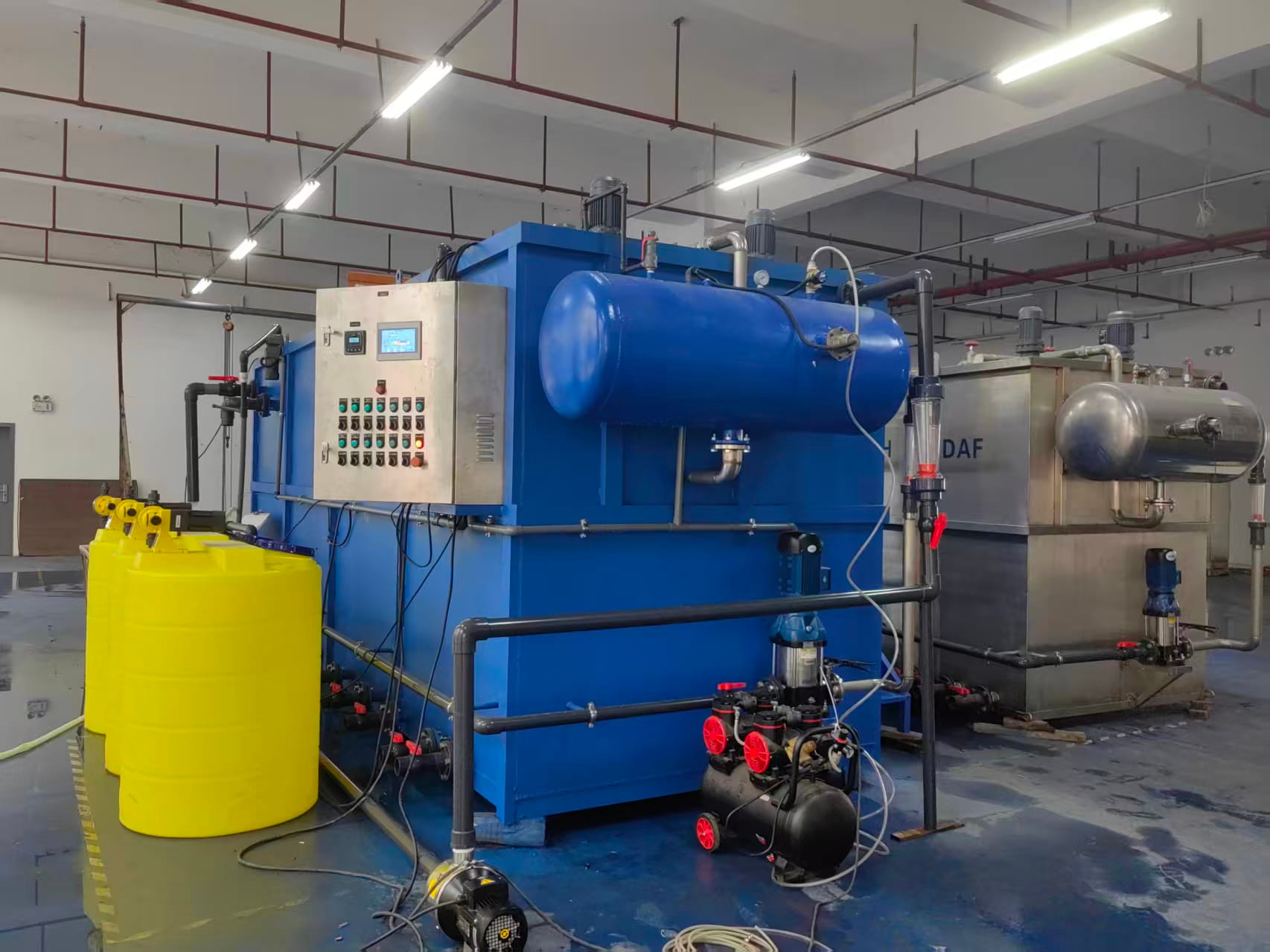
    daf effluent treatment is a powerful, efficient solution for removing contaminants such as suspended solids, oils, and greases from wastewater across various industries. Hinada Water Treatment Tech Co., Ltd. (HINADA) stands out as a trusted Chinese manufacturer and supplier of advanced DAF systems, offering tailored solutions for applications in municipal, industrial, and food processing sectors. HINADA’s DAF equipment leverages precision engineering, robust materials, modular designs, and integrated automation to deliver superior contaminant removal, energy efficiency, and compliance with discharge regulations. By focusing on customization, low lifecycle costs, and comprehensive after-sales support, HINADA appeals to genuine purchasing buyers seeking reliable, high-performance water treatment technologies. The company’s global reach, export experience, and commitment to quality assurance make it a preferred partner for buyers worldwide. With proven results and industry-leading innovations, HINADA’s DAF effluent treatment systems are engineered for long-term value, ease of integration, and operational excellence. Introduction: The Power Behind DAF Effluent Treatment for Enhanced Removal Comprehensive Overview: What is DAF Effluent Treatment? Key Product Keywords: The Heart of HINADA’s DAF Solutions How DAF Effluent Treatment Works: Engineered for Excellence DAF System Manufacturer: Why HINADA is Your Trusted Partner Deep Industry Knowhow and Customization Capabilities Key Advantages for Genuine Purchasing Buyers Industrial Applications: DAF Effluent Treatment Across Sectors Case Study: Upgrading Effluent Standards with HINADA DAF Equipment Enhanced Features of HINADA DAF Solutions Cost Advantages: Saving More Than Just Water DAF System Supplier China: Why Choose HINADA Integration with Other Technologies: From Membrane Filtration to RO Systems Customization: Built to Fit Your Application Purchasing Guidance: What Genuine Buyers Should Consider Technical Innovations Setting HINADA Apart Global Reach: HINADA as a Chinese Water Treatment Supplier Buyers’ Results: Testimonials and Performance Data Expert Recommendations: Ensuring Long-Term Value FAQs: Addressing Buyers’ Most Pressing Questions Conclusion: The Strategic Edge of HINADA DAF Effluent Treatment     Introduction: The Power Behind DAF Effluent Treatment for Enhanced Removal For organizations striving for sustainable water management, DAF effluent treatment has emerged as a revolution in contaminant removal, delivering efficiency, operational savings, and regulatory compliance. Hinada Water Treatment Tech Co., Ltd. (HINADA) is synonymous with excellence in the water treatment manufacturing sector. As a trusted DAF system manufacturer and Chinese water treatment supplier, HINADA offers innovative solutions customized for diverse industries, including municipal wastewater, food and beverage, oil and gas, and chemical processing. Comprehensive Overview: What is DAF Effluent Treatment? DAF (Dissolved Air Flotation) effluent treatment is a leading technology that separates suspended solids, oils, greases, and contaminants from wastewater using the principle of microbubble flotation. This process increases the removal efficiency of various pollutants, enabling facilities to meet stringent effluent discharge standards and protect downstream water quality. HINADA’s DAF solutions are specifically engineered to deliver high-performance contaminant removal with minimal footprint and operational cost. Key Product Keywords: The Heart of HINADA’s DAF Solutions DAF effluent treatment Dissolved air flotation system DAF system manufacturer Industrial DAF water treatment DAF clarifier DAF separator Wastewater DAF equipment Flotation effluent clarifier DAF sludge removal High-efficiency DAF DAF machine for wastewater Advanced DAF technology Compact DAF unit Chemical dosing DAF DAF for oil removal Paper industry DAF Food industry DAF DAF system supplier China Turnkey DAF solution DAF plant supplier How Effluent Treatment Works: Engineered for Excellence At the core of DAF effluent treatment is the injection of pressurized air into wastewater, resulting in the formation of microbubbles. As these microbubbles rise, they attach to suspended particles, oils, and other contaminants, bringing them to the surface for easy removal via skimming. This process yields a clarified effluent that meets, and often exceeds, regulatory requirements. HINADA employs advanced DAF designs with precision engineering to optimize bubble size distribution, retention time, and flow dynamics—key factors that give their systems a decisive edge in both performance and reliability. undefined 5m3/H Dissolved Air Flotation Machine for Metal Furniture WastewaterDissolved Air Flotation (DAF) System in Textile Wastewater Treatment750m3/Day Dissolved Air Flotation Machine for industrial wastewater treatment DAF System Manufacturer: Why HINADA is Your Trusted Partner Deep Industry Knowhow and Customization Capabilities HINADA isn’t just another DAF system manufacturer. Our engineering team has decades of experience designing, fabricating, and commissioning DAF systems tailored to specific industry needs. From batch systems to continuous flow, and from compact DAF units to full-scale turnkey DAF solutions, HINADA’s portfolio is engineered for results. We partner with clients to analyze water chemistry, contaminant profiles, and site constraints, delivering DAF effluent treatment systems that optimize contaminant removal, minimize operational complexity, and maximize ROI. Key Advantages for Genuine Purchasing Buyers Superior Contaminant Removal Efficiency: HINADA’s DAF clarifiers deliver removal rates above 95% for suspended solids, fats, oils, and greases. Energy Efficient Operation: Advanced flow and saturation control reduce power and chemical consumption. High Throughput and Loading Capacity: Engineered for demanding industrial flows without compromising performance. Modular, Scalable Designs: From compact DAF units for small applications to large, modular DAF plants for municipal or industrial projects. Robust Construction and Materials: Built to withstand corrosive environments with stainless steel or custom coatings. Industrial Applications: DAF Effluent Treatment Across Sectors HINADA’s DAF technology is trusted across a wide spectrum of industries: Municipal Wastewater: Achieves compliance with discharge standards, improves secondary treatment efficiency. Oil and Gas: DAF separators effectively remove oil, hydrocarbons, and solids from produced water. Food and Beverage: Specialized DAF clarifiers for high-organic load effluent, reducing BOD and FOG. Pulp and Paper: DAF units address color, suspended solids, and resin contamination. Chemical Manufacturing: Removes emulsified oils, heavy metals, and complex compounds. For customers with textile or mining operations, DAF effluent treatment excels at removing dyes, fibers, and dense particulate, demonstrating its versatility and value. Case Study: Upgrading Effluent Standards with HINADA DAF Equipment A leading dairy processor struggled to meet local effluent regulations due to high FOG and BOD levels. After installing a HINADA DAF machine for wastewater, they achieved over 98% removal of contaminants, reduced chemical dosing by 30%, and saved significantly on sludge handling. The HINADA DAF system’s compact design enabled rapid installation, with minimal plant downtime—demonstrating the tangible benefits for genuine purchasing buyers seeking proven solutions. Enhanced Features of HINADA DAF Solutions Integrated Chemical Dosing: Automated coagulant and flocculant systems optimize particle aggregation, boosting flotation efficiency. Advanced Air Saturation Technology: Precision control of microbubble generation for consistent contaminant removal. Remote Monitoring and PLC Automation: Streamlines operation, reduces labor, and enables predictive maintenance. Low Maintenance Requirements: Self-cleaning mechanisms and robust construction minimize downtime. Cost Advantages: Saving More Than Just Water Genuine buyers prioritize lifecycle costs and ROI. HINADA’s DAF effluent treatment technology is engineered to minimize chemical, energy, and sludge disposal costs. Our DAF systems are designed for easy integration into existing treatment lines, reducing capital outlay and installation time. For large-scale buyers and EPC contractors, HINADA’s volume-based pricing and rapid manufacturing cycles deliver further cost efficiency, making us the preferred DAF system supplier in China for global partners. DAF System Supplier China: Why Choose HINADA Advanced Manufacturing Facilities: State-of-the-art workshops with CNC fabrication, laser cutting, and automated welding. Strict Quality Assurance: ISO9001-certified processes, multi-stage inspections, and comprehensive testing for every DAF clarifier and separator. Export Experience: Supplying DAF equipment to over 60 countries with full international shipping and on-site support. Bespoke Technical Support: Multilingual engineers, rapid response, and global commissioning teams. Integration with Other Technologies: From Membrane Filtration to RO Systems HINADA recognizes the importance of integrated water treatment solutions. Our DAF systems can be supplied alongside membrane filtration, biological treatment, or advanced oxidation. For customers seeking to further polish effluent or achieve zero liquid discharge, HINADA offers seamless integration with membrane bioreactor (MBR) and reverse osmosis (RO) systems. This enables tailored solutions for every contaminant profile and water reuse objective. Customization: Built to Fit Your Application No two water treatment challenges are identical. HINADA’s engineering team collaborates closely with buyers and consultants to configure DAF effluent treatment systems that match flow rates, contaminant loads, and site conditions. From compact skid-mounted units to large, containerized DAF plants, we offer flexible solutions with rapid lead times and global support. Every detail, from chemical dosing to control panel layout, is tailored for your project’s success. Purchasing Guidance: What Genuine Buyers Should Consider Contaminant Load Analysis: Work with HINADA’s technical specialists to analyze influent characteristics and select the right DAF configuration. Capacity and Footprint: Choose between compact DAF machines or modular plants based on available space and treatment volume. Integration Capabilities: Discuss potential for integration with MBR, RO, or biological treatment for multi-stage contaminant removal. LCC and Maintenance: Consider the total lifecycle cost, not just the initial price—HINADA’s robust systems are designed for long-term, low-maintenance operation. After-sales Support: Prioritize suppliers offering commissioning, training, and spare parts—HINADA provides comprehensive global support. Technical Innovations Setting HINADA Apart Proprietary Bubble Generator Design: Ensures uniform microbubble distribution for optimal flotation. Variable Flow Operation: Accommodates fluctuating influent conditions for peak performance. Automated Sludge Handling: Reduces operator intervention and improves safety. Global Reach: HINADA as a Chinese Water Treatment Supplier With an international client base, HINADA understands the importance of reliability, communication, and fast delivery. Our extensive logistics network and experience with export documentation ensure smooth shipping worldwide. As a Chinese water treatment supplier, HINADA delivers high-quality DAF effluent treatment systems at globally competitive prices backed by a responsive support team. Buyers’ Results: Testimonials and Performance Data Major beverage producers, municipal utilities, and industrial clients consistently report: Effluent contaminant reduction above 95% Operational cost savings of 20% to 40% Reliable compliance with discharge permits Rapid payback periods—often under two years References and case studies are available upon request for qualified purchasing buyers. Expert Recommendations: Ensuring Long-Term Value For procurement professionals and technical managers, choosing a DAF effluent treatment system is a strategic investment. HINADA recommends a consultative purchasing process—beginning with a site survey, pilot testing, and engineering review. Our specialists provide detailed ROI analysis, technical drawings, and commissioning plans so that buyers can make informed, confident decisions. FAQs: Addressing Buyers’ Most Pressing Questions How long is the lead time? Standard DAF units ship in 30-40 working days; complex, customized solutions may require 60-75 days. What is the typical lifespan? HINADA DAF clarifiers and separators are designed for 15-25 years of reliable service. Are spare parts and technical support available worldwide? Yes, HINADA maintains a global support network offering fast parts delivery and remote assistance. Can DAF systems be upgraded or expanded? Modular designs enable easy capacity upgrades and process integration. Conclusion: The Strategic Edge of HINADA DAF Effluent Treatment DAF effluent treatment is indispensable for industries striving to meet environmental targets and reduce water-related costs. With HINADA, buyers receive more than just equipment—they gain a strategic partner dedicated to engineering, quality, and long-term success. Trust HINADA Water Treatment Tech Co., Ltd. for advanced, reliable, and cost-effective DAF solutions. Contact us now for a custom proposal and join the ranks of global leaders benefiting from enhanced contaminant removal and operational excellence.      
    Read More
  • fat-laden dairy wastewater treatment handling FOG levels of 500 mg-L
    Sep 08, 2026
    Some information about fat-laden dairy wastewater treatment handling FOG levels of 500 mg-L: Type Wastewater Treatment System Industry experience 13+years Company Name HINADA Installation service Yes OEM/ODM Support Place of Origin China Product Features Flexible process combinations,Diverse treatment capacities,High level of integration,Enables resource recovery,Intelligent operation... Application Upgrading and retrofitting,Food processing wastewater,Industrial wastewater,Municipal sewage...etc Machinery test report Provided Payment Google Play,T/T,Visa...etc Certificate ISO9001... Warranty 1year Nearby ports Guangzhou,HK... Transportation TNT,EMS,FedEx,DHL...etc Packing Size 88 * 29 * 90 According to container size, standard export package Integrated Solution designation,supplying,installation support,commissioning,training... Selling Units Single item Color Yellow,Green,Grey,White... or according to customer requirements Material of Tanks Concrete Tank Trading Country Brazil,Turkey,Congo,Mexico,Singapore,Kyrgyzstan,Burkina Faso,Iran,Ethiopia,Pakistan,Sri Lanka,Algeria,Hungary,Jamaica,Saudi Arabia... Core Components Pressure Vessel,Pump,PLC... After-sales Service Professional Please note: The above table data is for reference only. For specific information, please contact us.   Slaughterhouse Wastewater Treatment Case Study   Wastewater treatment equipment for pig farms   Some of our Test Equipment of Hollow fibers   The Certificates about fat-laden dairy wastewater treatment handling FOG levels of 500 mg-L  
    Read More
1 2 3 4 5 6 7 8 9 10 82 83
A total of83pages
Start a Conversation

Hi! Click one of our members below to chat on